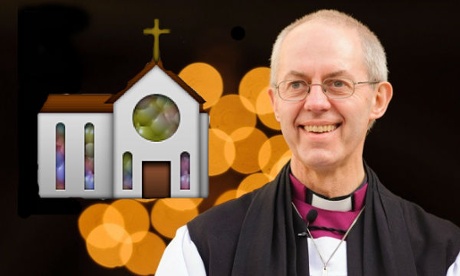
Justin Welby, the Archbishop of Canterbury, has marked himself out as something of a moderniser in the Church of England.
Ok, so he voted against the Same-Sex Marriage Act (in accordance with the Church’s position) and thus has work to do, but he has since called gay marriage “great”.
He supported the ordination of women bishops (congratulations Rev Libby Lane); and he also won plaudits for his stance against payday lender Wonga.
Writing on his blog, however, it seems there is one facet of modern life that Welby is still reluctant to embrace: social media.
While acknowledging in the post titled “On Tweeting and Touching” that social media is “valued enormously”, the Archbishop states:
The subtleties we lose when we communicate electronically have to do with expression, with touch, with the face-to-face aspect of relationship.
Social media does not show tears in the eye, a hand on the arm when saying something painful, body language that speaks of inner turmoil, deep distress – even gentle respect.
To which I say: Justin, meet emoji; emoji meet Justin. The Japanese–invented ideograms - the successor to emoticons and ASCII art - have raised the bar on communication, and negated the awkward pat on the back; the hug that lasts that little too long; the high five that swings impotently at thin air.
Described as “the first truly global language”, the emoji has become the universal tongue. It is possible that all the people of Babel were conversing via dancing girls with bunny ears.
You might think it is difficult to fully express emotions through small pictures: but then you realise that the most succinct way to tell your best friend to ignore the haters is via the nail-painting emoji (studied indifference).

Rather than bore your partner with the awful day you had at work, dragging you both into foul moods and reducing the chances of nookie that night to precisely nought, just get it all over with a “Today was…” text followed by the poo emoji.
They might not tell you that at Relate, but I promise: it works.
Welby continued:
Love often says don’t tweet. Love often says don’t write. Love often says if you must rebuke, then do so in person and with touch – with an arm around the shoulder and tears in your eyes that can be seen by the person being rebuked.
Of course the Archbishop does have a point. There is nothing more reassuring than a caring touch on the arm from a friend, or as great as a kiss in the rain. But, remember when Andrew Lincoln confessed his unrequited love to Keira Knightley via handwritten cards in Love Actually? Sometimes things are just easier to convey without talking or touching.
I’d even bet 40 characters of my 140 Twitter limit that someone somewhere has been dumped, proposed to, or has come out via emoji.
The rise of the emoji
The Unicode Consortium is responsible for all emoji: it’s a bit like the global mint of the emoji currency. And last summer, much excitement greeted the news that the consortium had approved an additional 250 emoji. But then we never got them, and we were all rather annoyed.
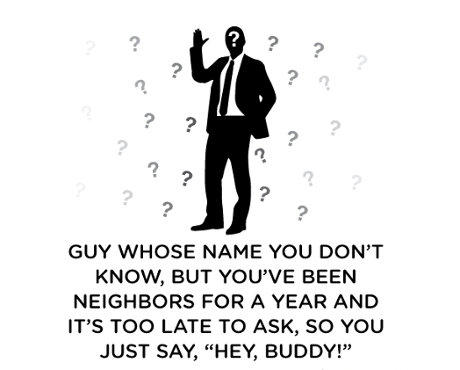
Indeed, there is a brilliant Tumblr dedicated to all emoji suggested but rejected by the consortium. Including a pictorial representation of the person whose name you don’t know but are too embarrassed to ask.
We have always used symbols to express meaning: imagery has always been a type of signifier. Anybody who has read Barthes on the semiology of photography knows that, or anyone who has the most rudimentary knowledge of Egyptians and their hieroglyphics. Logograms, pictograms – all an implicit part of language.
There are guides and quasi-dictionaries dedicated to unpacking the nuances of various emoji. Emojitracker.com will present to you a real-time monitoring of emoji on Twitter.
The Guardian analysed how the public interact with our politicians using emoji, and the New York Times even pondered whether emoji evidence would be admissible in court.
Works of literary genius (Beyoncé lyrics), and Moby Dick have been translated wholly into emoji. Who knows? It might not be too long until we see an emoji translation of the Bible.
Giles Fraser, parish priest at St Mary’s church and Guardian columnist has translated John 15:13 (“Greater love hath no man than this, that a man lay down his life for his friends”) into emoji for us:
The brilliant @giles_fraser translated a proverb from the Bible into emoji! Can you guess what it is? pic.twitter.com/At3qfHnWLq
— HannahJane Parkinson (@ladyhaja) January 30, 2015
Social media has just made it easier to communicate in this way. Sure, we need more emoji in our emoji-only apps. And there are some emoji that may not be brilliant at expressing one’s exact feeling (hairy heart, anybody?)
But I would say to Welby: don’t underestimate the emotional power of the emoji on social media to convey emotion and understanding. A well-timed pig snout or crying cat can say so much.
Or, to paraphrase Proverbs 25:11: “An emoji fitly spoken is like apples of gold in a setting of silver.”