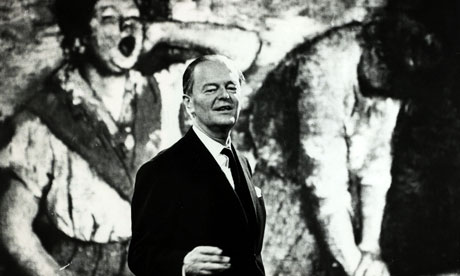
A wise choice by the BBC to showcase HD television with a state-of-the-art remastered version of Kenneth Clark's art history series Civilisation. The first thing that struck me when I watched this exquisitely intelligent documentary for the first time, on its DVD release a few years ago, was its overwhelming visual beauty.
I had never seen it, but had heard plenty about how "old fashioned" and "staid" it looked in comparison with modern television. Yet in truth, the camerawork and direction in Clark's perfectly paced essays on the story of European culture since the Dark Ages rise to the poetry of cinema. Instead of rapid cutting we get long, slow panning shots of landscapes in southern France and Italy, the corridors of the Vatican, or the ages-old lifestyle of a Benedictine monastery. Works of art are studied with acute focus, allowing you to really see and absorb them. You feel the late 1960s programme makers must have been steeped in the cinema of Rossellini and Visconti so rich and haunting is the style of Civilisation.
To see all this in HD will be glorious. It is above all a chance to learn about art from one of its great historians. Clark was treated as a straw man to be argued with by documentarians who followed in his wake – the epitome of elitist, sexist posh – but I have found that Civilisation holds up to modern viewing far better than programmes that followed it in the 70s and 80s . Why is that? Partly, the sheer visual quality – as the BBC evidently sees – makes it work well on today's powerful screens. But also it is Clark's intelligence and wisdom. You cannot get a clearer and more essentially truthful account of European art from AD 1000 to the 1800s in any textbook than you will find here.
The true classics are timeless – which was, of course, Clark's point.