

February has a way of making even simple household routines feel heavier. Across much of the US, winter is still very much in charge – icy mornings in the Midwest, damp chill in the Northeast, grey stretches in the Pacific Northwest. Even in milder Southern states, shorter days and cool air can slow everything down, including your laundry.
Which is exactly why the 30-minute laundry rule makes so much sense right now – and is the only laundry tip you should follow in February.
What Is the 30-Minute Laundry Rule?
At its core, it’s straightforward: use a shorter, cooler wash cycle for everyday clothes instead of defaulting to long, hot settings.
For years, many of us were taught that longer washes meant cleaner clothes, but that’s a common laundry mistake. The truth is, modern detergents are formulated to perform well at lower temperatures and in shorter cycles. In most cases, your standard weekly loads – such as T-shirts, sleepwear, and lightly worn layers – don’t need an hour (or more) to come out fresh.
The result? Less energy used, lower utility bills, and fabrics that hold their color and shape longer. It’s a small adjustment with surprisingly noticeable benefits.
Why February Is the Perfect Time to Try the Rule
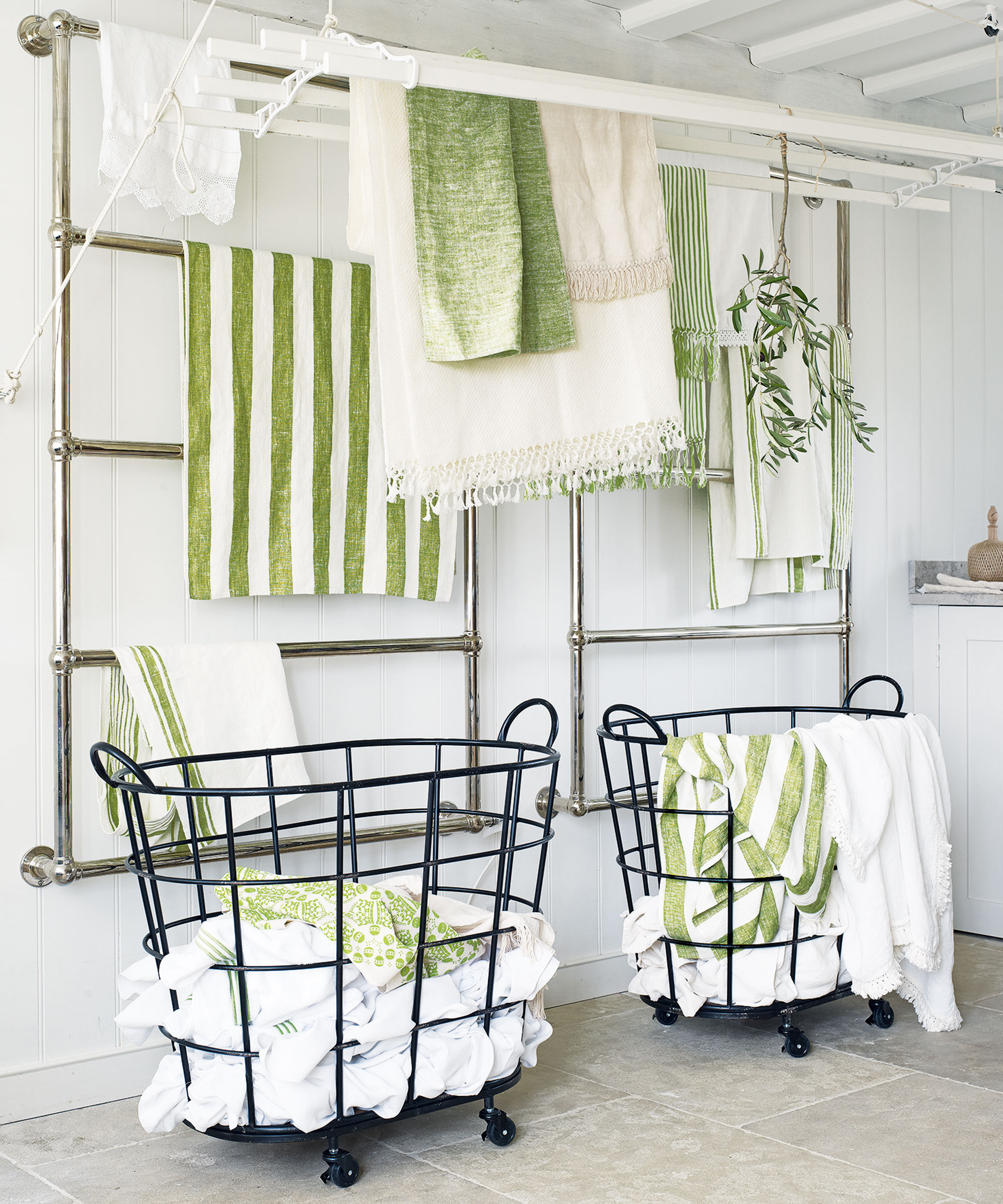
Winter has a way of changing how laundry behaves – often in subtle but important ways. Cold air slows evaporation, while high humidity can make drying unpredictable. Drying indoors adds another challenge: damp clothes release moisture into your home, leaving windowsills misty and poorly ventilated rooms feeling clammy. This best-selling small dehumidifier from Amazon can help, keeping the air dry and preventing condensation while your laundry dries.
If you know drying will take longer anyway, there’s little point in running long, hot wash cycles for items that aren’t heavily soiled. Shorter cycles save energy at a time when heating costs are already high, and they’re gentler on fibers – especially useful for winter knits and layering basics that get worn repeatedly.
In short, February is the month when efficiency really matters – and a little planning can go a long way toward keeping your laundry routine smooth and your clothes looking their best.
When to Stick With a Longer Cycle
The 30-minute rule isn’t about cutting corners. It’s about being intentional.
Gym clothes after a hard workout, kitchen towels, bedding, or anything visibly soiled still benefit from a longer, warmer wash. Heavier items need more agitation and time to properly rinse.
But most weekly loads don’t fall into that category. The habit of selecting 'normal' or 'heavy duty' every time is often just that – a habit.
For tougher, stubborn stains, I recommend pre-treating with OxiClean Max Force Laundry Stain Remover Spray, then washing with Tide Laundry Detergent Liquid – both available on Amazon and trusted for getting even set-in marks out.
The Real Winter Laundry Challenge: Drying
If there’s a bottleneck in February, it isn’t washing – it’s drying clothes in winter.
In warmer parts of the country, you may still manage a sunny afternoon of line-drying. Elsewhere, indoor racks and tumble dryers become essential. When drying indoors, spacing clothes properly and allowing airflow (even cracking a window briefly) can prevent excess condensation and mustiness.
Being strategic at the wash stage helps balance things out. A shorter cycle means less energy used upfront, which feels especially relevant during peak winter utility season.
The Joseph Joseph AirFrame 3-Tier Clothes Airer is my go-to for indoor drying – sleek, sturdy, and perfect for everyday use. For a more budget-friendly option, the Amazon Basics Foldable Portable Laundry Drying Rack is a top-rated alternative, with over 50,000 glowing reviews from happy users.
Why It Works
What makes the 30-minute laundry rule appealing isn’t that it’s trendy – it’s that it aligns with how modern homes function. It protects fabrics, saves time, and lowers energy use without compromising cleanliness.
In winter, when routines already feel slower and heavier, simplifying your laundry process can feel quietly transformative. Wash what truly needs washing. Adjust to your climate. Let your settings reflect the season.
The 30-minute rule isn’t about doing less – it’s about doing laundry smarter. By matching your wash cycle to what your clothes actually need (and what the season demands), you’ll conserve energy, extend the life of your wardrobe, and make winter chores feel far more manageable. And in February, that kind of quiet efficiency is a welcome win.
Shop Laundry Care Solutions
Made from 100% organic New Zealand wool, these reusable dryer balls are a natural, chemical-free way to soften clothes, reduce wrinkles, and cut drying time by 15–30%. Simply toss 3 balls in for a small to medium load, or 5–6 for larger loads. They’re gentle on fabrics, eco-friendly, and long-lasting.
Keep whites and colors neatly separated with this handcrafted willow basket. Lightweight yet sturdy, it features a removable inner bag and folds flat for easy storage. Made with recycled polyester, it’s an eco-friendly, one-of-a-kind addition that brings warmth and calm to any room – even bathrooms.
Make indoor air-drying effortless with this stylish, foldable drying rack. Crafted from durable rubberwood and rust-resistant stainless steel, it opens up to provide over 32 feet of hanging space – perfect for everything from delicate sweaters to everyday laundry. When you’re done, it folds flat for convenient, space-saving storage.
Versatile and durable, the TORKIS Flexi basket works indoors or outdoors. Made from soft, flexible plastic with two sturdy handles, it’s comfortable to carry and perfect for transporting damp laundry from the washer or collecting dry clothes for ironing.
Sometimes it’s the simplest touches that make a home feel elevated. This laundry stand pairs a sturdy folding metal frame with a sleek canvas bag, finished with brass bolts and a leather string for a stylish, functional accent that blends seamlessly with your decor.
Make laundry day effortless with this durable steel-frame cart. Its removable, machine-washable canvas liner bag is easy to carry straight to the laundry room, while three compartments let you pre-sort clothes into lights, darks, and underwear. Upgraded multi-directional wheels, two lockable, glide smoothly from room to room for ultimate convenience and stability.