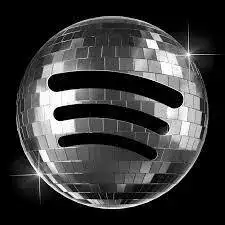
Why did Spotify change their logo? Millions of users opened Spotify this week and immediately noticed something strange. The familiar green app icon suddenly looked shinier, brighter, and almost like a spinning disco ball. Searches for “Spotify new logo,” “Spotify disco ball icon,” and “why did Spotify change its logo” exploded across Google and social media within hours as confused users wondered whether the streaming giant had quietly rebranded itself.
But the viral icon change is not a permanent logo replacement. The disco ball design is part of Spotify’s massive “Spotify 20” anniversary campaign celebrating two decades of music streaming culture. The temporary redesign connects directly to the company’s new nostalgia-driven experience called “Spotify 20: Your Party of the Year(s),” which lets users revisit their complete listening history, including their first streamed song and all-time favorite artists.
Why is Spotify using a disco ball logo during Spotify 20 celebrations?
The disco ball icon represents celebration, nightlife, music culture, fandom, and collective memory. Spotify wanted the anniversary campaign to feel less like a corporate milestone and more like a global music party built around listeners themselves.
According to Spotify marketing executives, the company deliberately avoided making the anniversary “about us.” Instead, the goal was to celebrate fans and the emotional role music played in their lives over the past 20 years. That is why the disco ball became the visual centerpiece of the campaign.
Disco balls reflect light in multiple directions, and Spotify appears to be using that imagery to represent millions of individual listening journeys happening simultaneously around the world. Every playlist, breakup song, workout anthem, or late-night favorite becomes part of one larger shared music culture.
Spotify also understands how strongly nostalgia performs online. Retro-inspired visuals, Y2K-inspired graphics, and emotionally driven “memory” experiences dominate modern internet culture. The company’s new icon taps directly into that psychological behavior.
Is the new Spotify disco ball logo permanent or temporary?
For users worried the classic green logo disappeared forever, the answer appears reassuring. Reports connected to Spotify’s anniversary campaign suggest the disco ball icon is temporary and tied specifically to the “Spotify 20” celebrations.
The redesign functions more like a commemorative edition rather than a full rebrand. Similar to how apps temporarily adopt themed icons during holidays or special campaigns, Spotify’s disco ball version is designed to mark a cultural moment.
Spotify's "Your Party of the Year(s)"
Spotify just turned 20 — and it's giving every user something genuinely surprising. Not a curated playlist or a limited-time badge, but a full, personalized retrospective of your entire listening history on the platform. Every song. Every obsession. Every late-night replay.
The feature is called "Spotify 20: Your Party of the Year(s)," and it offers users a fully personalized look at their entire music history — not just this year, not just last year, but from the very first day you opened the app.
The experience surfaces never-before-shared data, including your first day on Spotify, the total number of unique songs you've listened to, your first-ever streamed song, and your all-time most-streamed artist. It also generates something genuinely addictive: an All-Time Top Songs Playlist containing your top 120 tracks, complete with individual play counts.
People are already flooding social media with their results — rediscovering forgotten phases, cringing at old obsessions, and proudly defending their taste.
How "Your Party of the Year(s)" Is Different From Spotify Wrapped
Spotify Wrapped has become a cultural event every December. But this is different in one fundamental way. Your Party of the Year(s) marks the first time the app has offered a complete look back at users' entire Spotify listening experience.
Wrapped, released every December, is an annual round-up rather than a full retrospective. But Wrapped does include extra layers — most popular genres, podcasts, and audiobooks — which are absent from Your Party of the Year(s).
So think of them as complementary. Wrapped tells you who you were this year. Your Party of the Year(s) tells you who you've always been.
Spotify designed this as a personalized time capsule, built to capture the moments that defined listeners' music journeys and to celebrate the artists and fans who shaped music culture over the past two decades.
How to Find Your Own Spotify History Right Now
The feature was rolled out on May 12 and is exclusive to the Spotify mobile app. You can find it by searching "Spotify 20" or "Party of the Year(s)" directly in the app.
Alternatively, you can visit spotify.com/20 on your mobile device — but the experience only works on mobile. Desktop users will have to wait or grab their phones.
Once inside, the experience walks you through your data story card by card. Each story ends with a shareable card that lets you save your results, send them to friends, or post them on social media — which is exactly why your feeds are already filling up with them.
Spotify's All-Time Most-Streamed Songs and Artists
Spotify also released its global all-time charts as part of the 20th birthday celebration.
Taylor Swift holds the title of most-streamed artist in Spotify history, followed by Bad Bunny, Drake, The Weeknd, and Ariana Grande.
On the song side, The Weeknd's 2020 single "Blinding Lights" topped the list after accumulating more than 4 billion streams and inspiring a viral TikTok dance craze. It was followed by Ed Sheeran's "Shape of You," The Neighbourhood's "Sweater Weather," and several other tracks that defined the streaming era.
Bad Bunny topped the most-played albums list with his 2022 release Un Verano Sin Ti, beating out The Weeknd's Starboy, Ed Sheeran's ÷, and Olivia Rodrigo's debut Sour.
For podcasts, The Joe Rogan Experience claimed the top spot as Spotify's most-played podcast of all time.
Why This Feature Hits Differently Than Any Algorithm
Music is memory. That's not a metaphor — it's neuroscience. The songs you played on repeat during a breakup, a road trip, a period of grief, or a summer that felt endless are encoded alongside those emotions. Spotify has always known this. What's new is that it's finally showing you the proof.
Your "first song ever streamed" isn't just a data point. For millions of users, it's a timestamp on a chapter of their life they may not have thought about in years.
The broader celebration also features a Spotify 20 hub containing curated playlists and a visual history of the streaming service, drawn from years of listening across hundreds of millions of fans worldwide.
Twenty years of music, condensed into a few swipeable cards. It's worth seeing what yours says.