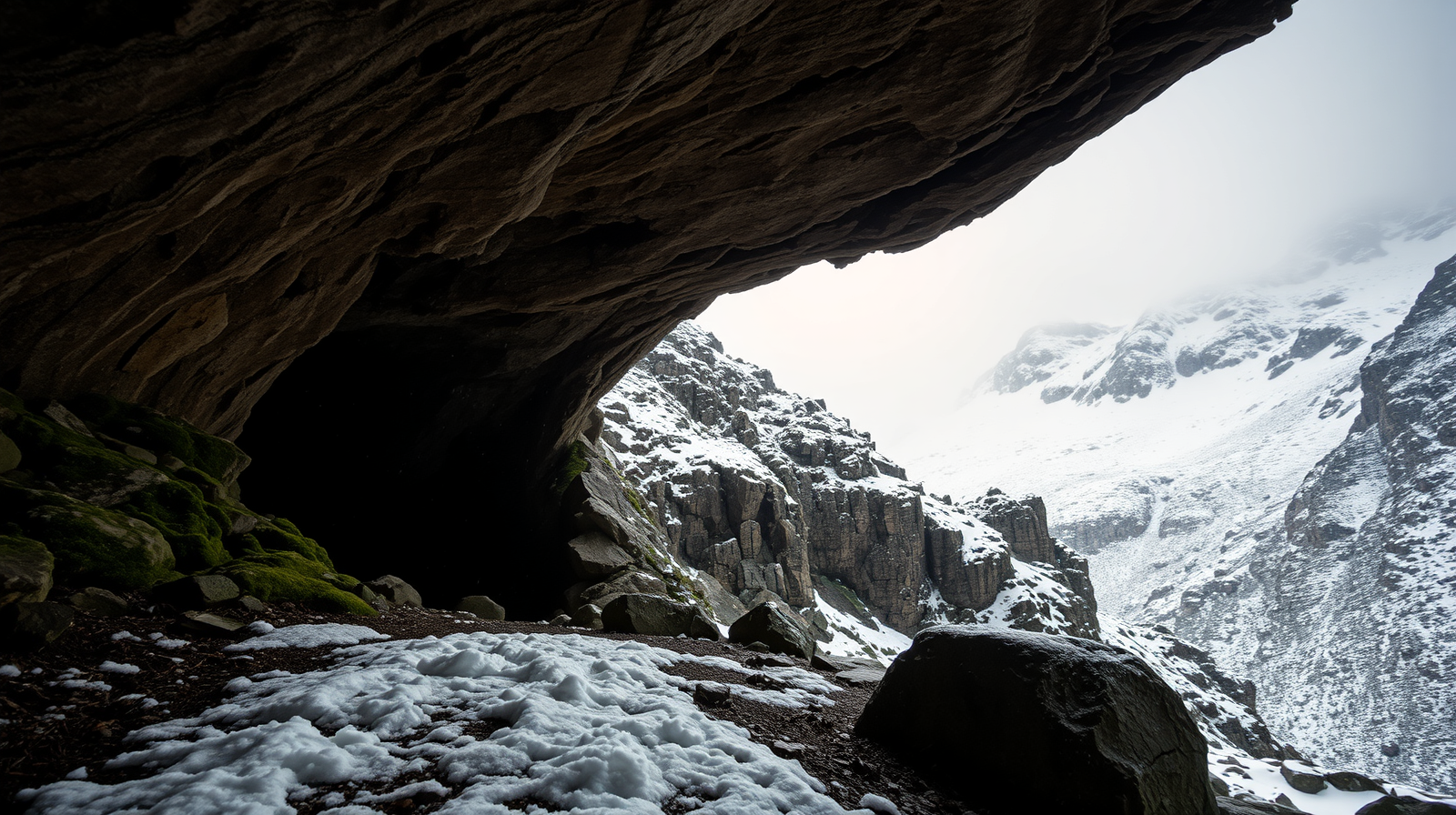
In northern Spain's Cantabrian Mountains, winter regularly buries the landscape in snow, yet step inside one of the region's limestone caves and the atmosphere feels almost calm, mild and strangely untouched by the storm raging just metres above. This is not a quirk unique to Spain; caves around the world are famous for staying remarkably stable no matter what the surface weather is doing, but the Cantabrian caves offer a particularly striking example simply because the contrast with the snow-covered slopes outside is so dramatic. Understanding why this happens comes down to some fairly straightforward physics involving rock, air and water, all working together to insulate these underground spaces from the extremes playing out overhead.
Get breaking news anytime, anywhere. Download the TOI app now!
Why caves stop following the weather at all
The caves found scattered across the Cantabrian Mountains are what geologists call karst caves, formed when slightly acidic water slowly dissolves limestone over thousands of years, carving out chambers and winding tunnels as it goes. Once a cave extends far enough below the surface, it becomes effectively cut off from the rapid day-to-day and season-to-season swings experienced above ground. Instead of tracking whatever the weather happens to be doing outside on any given day, the internal temperature of a cave settles instead around the long-term average annual temperature of the surrounding region, a figure that in the Cantabrian region sits comfortably above freezing even during the depths of winter.
Why caves can be more than 20 degrees warmer than the surface in winter
This pattern has been documented rigorously by researchers studying cave systems around the world. According to a study published in the journal Scientific Reports , researchers analysed temperature variability across caves in multiple climatic regions and found that cave temperatures generally follow the surface's long-term average pattern, though with a noticeable delay in the signal compared to what happens outside. The same study recorded some of the clearest evidence of this stability in colder climates, noting that even where surface air temperatures dropped well below freezing during winter, nearby cave temperatures stayed markedly higher, in some cases differing by more than twenty degrees Celsius from conditions recorded at the surface on the very same day.
Why thick rock is such an effective insulator
A large part of the explanation comes down to simple thermal physics. Rock has a considerably higher heat capacity than air, meaning it takes far more energy to change its temperature, and it also conducts heat far more slowly than air moves and mixes on the surface. This combination means that thick limestone walls surrounding a cave chamber act as a kind of thermal buffer, slowly absorbing heat during warmer months and just as slowly releasing it back during winter, smoothing out what would otherwise be sharp seasonal swings into a far gentler, more gradual pattern deep underground.
The role played by narrow passages and moving air
Rock alone does not fully explain the effect, since air movement between a cave's interior and the world outside also plays a meaningful role. According to the United States National Park Service's official explanation of cave climate , airflow patterns within a cave system are heavily influenced by the number, size and position of its entrances, with differences in temperature between the inside and outside driving convection currents that circulate air through the cave. Caves with narrow, winding entrances restrict just how much cold air can rush in at any given moment, and any cold air that does make its way inside tends to warm up quickly as it mixes with the far more thermally stable air already sitting deeper within the cave, further limiting how much surface weather can actually penetrate.
How water helps keep the temperature steady
Moisture inside a cave adds yet another layer of thermal stability to the whole system. Underground streams, dripping seepage water and generally high humidity levels all help store and slowly redistribute heat throughout a cave's interior, since water has an even higher heat capacity than the surrounding rock and resists rapid temperature swings just as effectively. This is part of why many caves feel notably humid as well as thermally stable; the same water responsible for carving out the cave over thousands of years continues playing an active role in regulating its internal climate long after the cave itself has fully formed.
Why this stability has mattered throughout history
This remarkable thermal consistency is precisely why caves have been used as natural shelters for as long as animals and humans have existed, offering protection from both bitter winter cold and blistering summer heat without needing any artificial heating or cooling at all. For hibernating animals, cave-dwelling insects, and early human communities alike, a cave's naturally steady internal climate made it one of the most reliable and energy-efficient shelters available in the natural world. Today, that same stability makes cave systems valuable to modern scientists too, since researchers studying subterranean ecosystems and long term climate records rely on exactly this kind of environmental consistency to understand how underground habitats function, and how they might respond as climate patterns above ground continue to shift in the years ahead.
Rock that takes months to change temperature by a single degree is doing something no engineered insulation quite replicates at scale. The cave climate that sheltered Palaeolithic hunters, preserved Cantabrian cave art, and now houses hibernating bats is the same physics that makes these spaces useful to climate scientists today, a consistency that has outlasted every surface change above it.