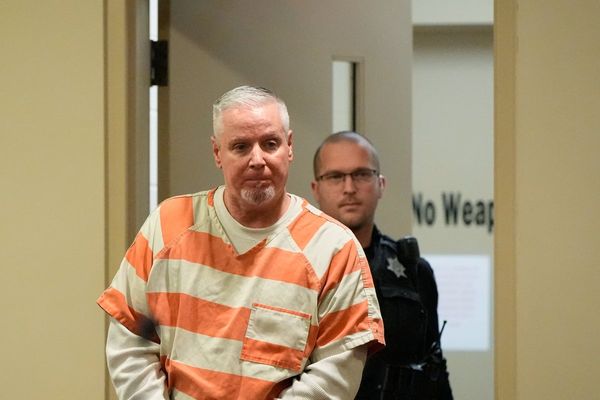
Eugene de Kock, commander of apartheid South Africa's secret death squads in the 1980s, is a nasty piece of work. When a young security guard would not reveal the whereabouts of his brother, an ANC soldier, De Kock picked up a spade and bashed the young man's head in. To get rid of Tiso Leballo's body, De Kock blew it up to pieces with explosives.
He was a killing machine who terrorised the anti-apartheid movement in the 1980s. He sent letter bombs that maimed and killed across southern Africa, he tortured activists into becoming his agents or until they died; he murdered opponents by the dozens. And he did it with a cruelty and a dedication that arose from the knowledge that his instructions came from the highest political offices in the land.
He caused huge amounts of harm and pain; tearing families apart and callously removing mothers and fathers from their children. Hundreds of people were "disappeared". The families of his victims are in pain and, as many have said, they want him to "rot in jail".
That is why there was much joy on Thursday when South Africa's justice minister announced that De Kock, known as Prime Evil, had been refused parole after 20 years in prison.
And yet De Kock's case is a perfect illustration of South Africa's unfinished apartheid business. For all his evil, De Kock was merely the finger that pulled the trigger. And that is not where evil resides.
True evil, prime evil, lies in the minds of those who invented apartheid, perpetuated it by hiring the likes of De Kock and letting them loose on the country. These men are walking free, walking proud, in the streets of South Africa today, their mouths shut and the truth of their deeds locked up in their scheming minds.
Not one apartheid politician of the 1980s – the zenith of apartheid's war on the innocent – is in jail. Not one has taken direct responsibility for the instructions given to De Kock and others. They lie easy at night.
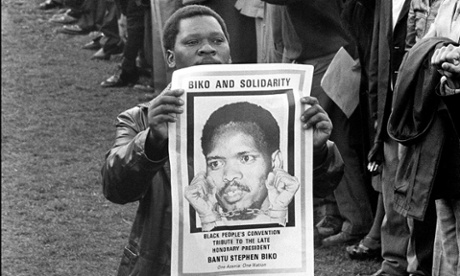
In these circumstances the continued jailing of De Kock has a banality to it. Let him go. Not because he is innocent. His evilness is beyond measure, beyond comprehension. The criminals, though, are the men in suits and white shirts and law degrees who gave the instructions to torture, maim, bomb and kill innocents such as the young ANC lawyer Bheki Mlangeni in 1991.
Mlangeni was sent a letter bomb by De Kock while the Vlakplaas commander's bosses sat opposite Nelson Mandela and Thabo Mbeki talking peace. The ANC suspended the armed struggle on 6 August 1990, exactly a year before Mlangeni's murder.
Mlangeni's family understandably opposes De Kock's release. His killers, though, are the men who gave the instructions to have him "permanently" removed from society. They recruited and schooled De Kock, resourced him and gave him medals for his bloody, wicked work. They have never been held accountable.
Ask any member of the successive National party cabinets from the 1970s to 1994 what they knew of Steve Biko's murder (it left John Vorster "cold") or the notorious Vlakplaas (the farm used by De Kock as his torture chamber and headquarters) or the arming of Inkatha murderers and the answer is the same: we did not know.
Oh, but they knew. They knew when thousands were in detention without trial, when the ANC was bombed in Botswana and when Ruth First was murdered in Mozambique. They knew alright. They were giving the instructions.
So the De Kock matter has nothing to do so with reconciliation or forgiveness. These don't apply. The De Kock matter is about justice and truth, and the truth about South Africa is that apartheid's architects and political masters have got clean away with a system that the UN declared a "crime against humanity". De Kock and others are just tools in this system, extensions of an evil doctrine. Those who perpetuated it have gotten away with it.
If anyone should rot in jail, it is them.