The rules are clear: Canberrans do not need to wear a mask outdoors.
But many do - and give different reasons for doing so.
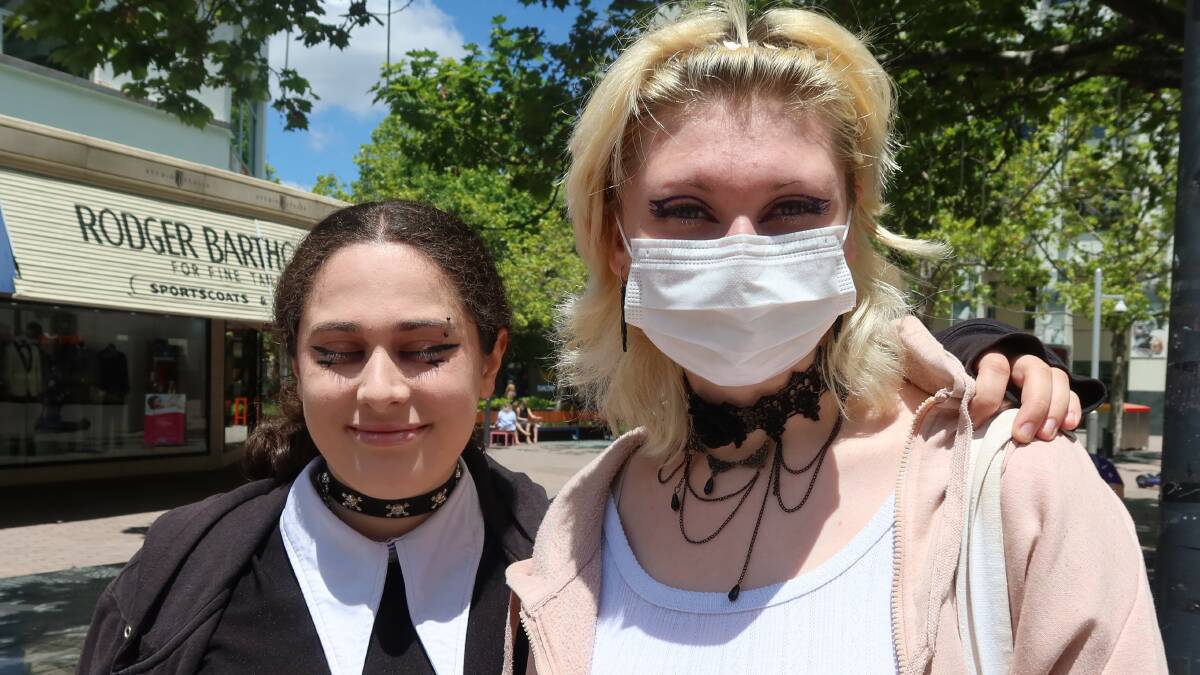
Olivia Lee is bare-faced as she walks through Garema Place alongside her friend Madeline Kroll who is masked up to the eyeballs.
"I'm not wearing one because I'm wearing make-up," the unmasked student says. Masks, it turns out, smudge make-up because they generate moisture. "And it just makes the mask smell really bad."
"I know the rules have changed but I'm still really scared of COVID," her friend, Madeline Kroll, says. "I know the number of cases here is low but I'm still wary."
But, even as she sticks to the mask, she says the unwritten rules - the etiquette of COVID - are changing. Physical contact is back. "I gave someone the high five for the first time in a year," the friend says.
Even as the health authorities say the danger of catching COVID outdoors is much diminished, some are still hyper-cautious.
"I've just come though the Canberra Centre. There's very little social distancing there so I want to keep myself safe," said Kelli Hughes, who is 73 and double-vaxxed.
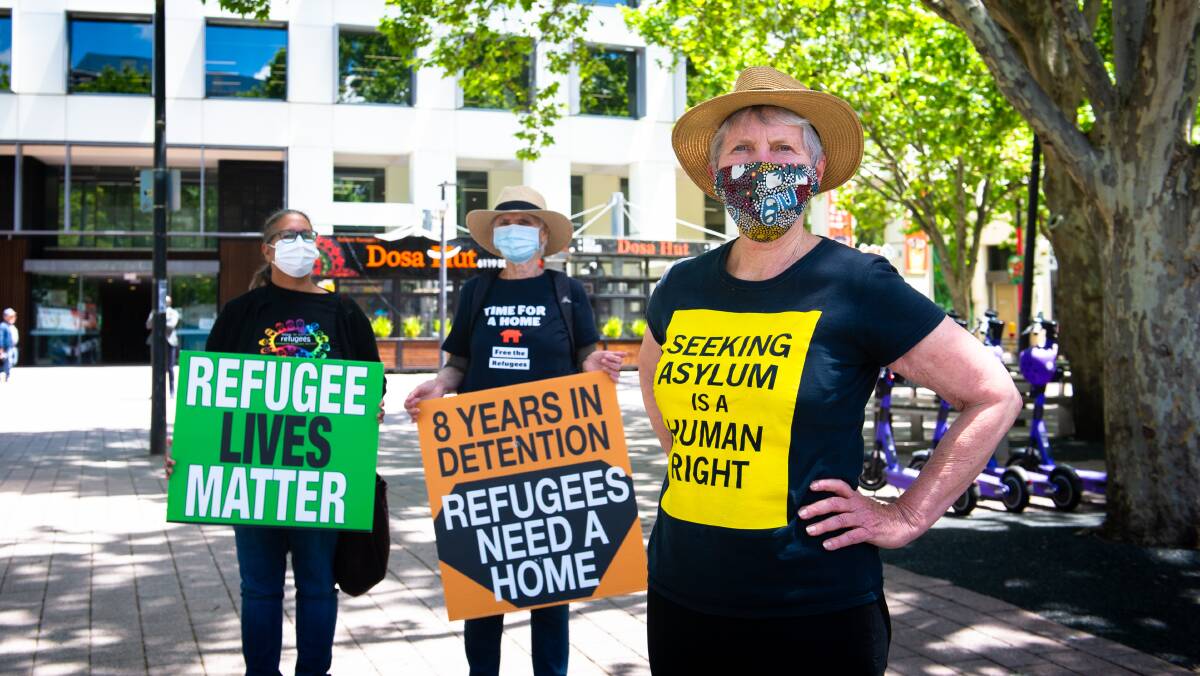
She is a volunteer for the Refugee Action Campaign.
Because she wants people to approach the stall, she also wants to reassure them that they won't catch anything - so she wears a mask.
"I would also like to send a message that it's OK to wear a mask. It's fine. I'm a role model."
She misses the physical contact which the past 18 months or so have deprived people of. "I'm a very huggy person. I will now say 'Is it OK if I give you a hug'," she said.
Her co-workers on the refugee stall, Anne Cawsey and Sophie Singh, are also fully masked up. Ms Cawsey thinks masks have made her change her way of communicating. "I try to show friendship with my eyes. It's going to take a really long time to feel we can be close again, and bump into each other."
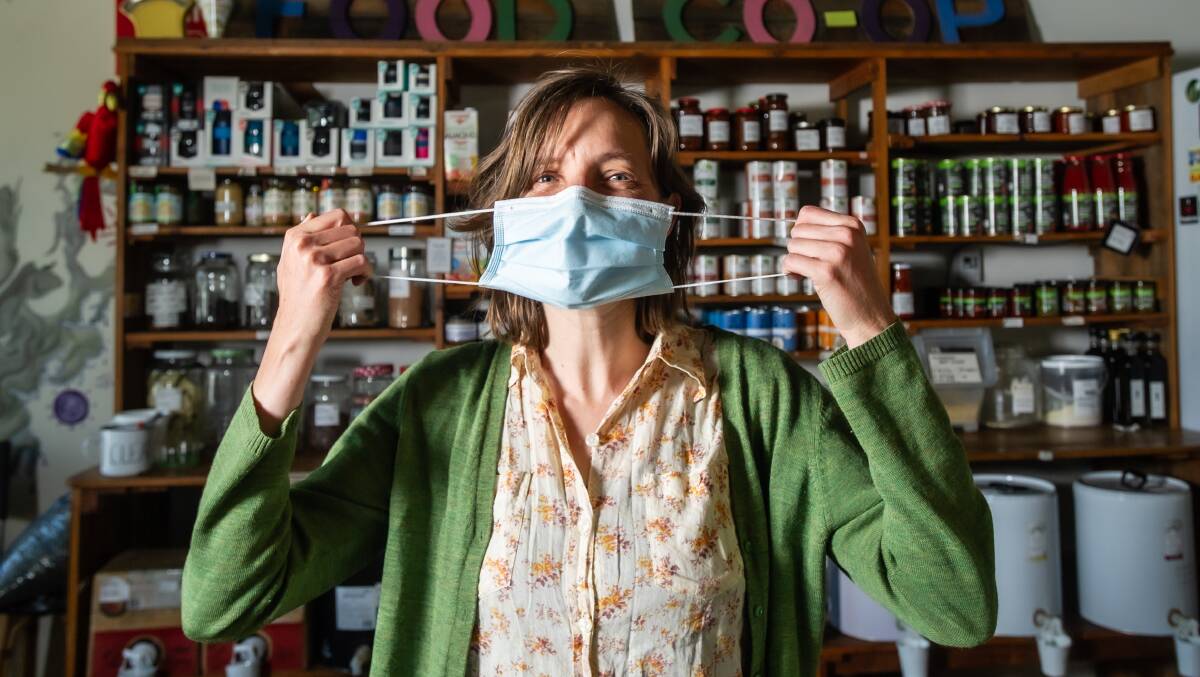
At the Food Co-op, a community-run grocery store in Canberra, there was a mixture of pro-maskers and those breathing sighs more easily.
"The dominating sense from people is that it's a relief not to be wearing them," Amie Illfield, one of the workers at the store, said. Volunteers in the store are required to wear masks but "we are relieved in the office to work and breathe deeply", she said.
One of the great unanswerables is how the restrictions of the pandemic will affect us in the long term.
ANU psychologist Dr Amy Dawel said recently: "Pandemic-induced changes, such as lockdowns and mask wearing, disrupt our routine. There are going to be large individual differences in how people feel and why. The important thing is to pay attention to any feelings of anxiety and acknowledge this is a normal response to stressful and uncertain times."
But it's impossible to predict long-term effects.
After all, there is a theory that we continue to say "bless you" when we sneeze because of the bubonic plague in Rome. Pope Gregory is thought to have suggested the small prayer after the sneezy symptom of plague.
That was 1500 years ago.
The ACT and the lockdown is free for anyone to access. However, we depend on subscription revenue to support our journalism. If you are able, please subscribe here. If you are already a subscriber, thank you for your support. You can also sign up for our newsletters for regular updates.