
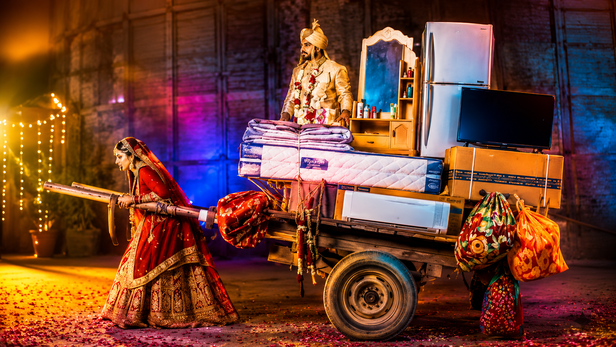
A family demanding dowry before marriage often gets explained away with words like “tradition,” “gifts,” or “social expectation.” But mention alimony after divorce, and suddenly social media explodes with anger, outrage, and debates about fairness. Why does one financial exchange during marriage remain socially tolerated in many places, while another financial responsibility after marriage creates so much resentment? The answer is deeper than money. It is connected to power, gender roles, emotional conditioning, and how society silently defines value inside relationships. The uncomfortable truth is that many people condemn one system loudly while quietly normalising the other every single day.
The Tradition People Rarely Question

Dowry often survives through social pressure hidden behind tradition.
In many households, dowry is no longer openly demanded, but expectations still quietly exist. Expensive weddings, jewellery, cars, furniture, and “gifts” are often treated as normal parts of marriage discussions. Families may deny calling it dowry, yet social pressure makes refusal difficult. What makes this system dangerous is how normalised it has become over generations. People criticise dowry publicly while privately participating in it through custom and status competition. Because it happens before marriage, society often treats it as celebration instead of financial pressure. That silence is exactly why the practice continues even when laws clearly condemn it.
Why Alimony Creates Instant Anger

: Alimony discussions often trigger emotional reactions about fairness and responsibility.
Unlike dowry, alimony enters the conversation after relationships break down emotionally. People immediately attach ideas of blame, betrayal, and financial loss to it. Many see alimony only through extreme viral cases instead of understanding its original legal purpose financial support after separation, especially where one partner sacrificed career opportunities, stability, or unpaid labour within marriage. Social media often amplifies outrage because anger spreads faster than nuance. As a result, balanced discussions disappear. The topic becomes emotional instead of practical. Society questions support after divorce more aggressively than it questions financial expectations before marriage, and that contradiction reveals a deeper discomfort.
The Double Standard Hidden in Marriage
The real issue is not only dowry or alimony individually. It is the double standard connecting both. In many cultures, families still expect women to “bring value” into marriage through wealth, gifts, or social status. But after divorce, financial support suddenly becomes controversial because independence and accountability enter the conversation. One system quietly benefits social tradition, while the other forces society to confront uncomfortable realities about unpaid domestic work, economic dependence, and unequal expectations. That is why reactions become emotional. The debate is not only about money. It challenges long-held beliefs about power, gender, sacrifice, and entitlement inside marriage itself.
The Human Stories Behind the Arguments
Public debates often reduce these issues into slogans, but real lives are far more complicated. Some families suffer under dowry pressure for years, facing debt, humiliation, or emotional abuse. At the same time, some people genuinely fear unfair misuse of alimony laws during bitter divorces. Both realities can exist together. The problem begins when society turns complex human situations into one-sided online battles. Instead of discussing fairness honestly, people choose sides emotionally. That approach solves nothing. Healthy conversations require recognising exploitation wherever it happens before marriage, during marriage, or after relationships end completely.
What Needs to Change First
Laws alone cannot change social thinking unless people challenge the attitudes behind them. Families must stop disguising dowry as “tradition” or “respect.” At the same time, conversations about alimony should become more balanced, informed, and less driven by internet outrage. Marriage should not function like a financial transaction where one side silently carries pressure while the other controls social expectations. Real equality begins when relationships are built on partnership instead of obligation. That change starts with uncomfortable honesty. Society must stop treating financial fairness differently depending on when the money enters the conversation.
Unlock insightful tips and inspiration on personal growth, productivity, and well-being. Stay motivated and updated with the latest at My Life XP.
Frequently Asked Questions (FAQs)
1. What is dowry?Dowry refers to money, gifts, property, or valuables given by the bride’s family during marriage, often due to social pressure or tradition.
2. Is dowry legal in India?
No. Dowry is illegal under the Dowry Prohibition Act, 1961, though social practices connected to it still continue in many places.
3. What is alimony?
Alimony is financial support that one spouse may be legally required to provide to the other after separation or divorce, depending on circumstances and court decisions.
4. Why do people compare dowry and alimony?
People compare them because both involve money within marriage systems, but society often reacts very differently to each issue emotionally and socially.
5. Why is dowry still socially accepted in some families?
In many cases, dowry survives through cultural expectations, status pressure, family traditions, and social conditioning rather than open demands.









.png?w=600)




