The year I won my first science fair competition, I was 12 years old. I’d prepared an experiment comparing the effectiveness of different anti-slip carpet underlays by comparing their co-efficients of static friction. (And no, I don’t understand much of that sentence now!)
In North America, science fair competitions are big business. The prizes are huge: full university scholarships, all-expenses-paid trips, internships at top laboratories.
My prize included an all-expenses-paid trip to the Canadian national science fair competition representing my hometown, Ottawa – the first time a student from my school had ever won a place. It was a controversial win in my classroom. For one, I was one of the few girls competing, meaning several of the boys had to deal with bruised egos. And secondly, I wasn’t that good at science. I certainly never got top grades in physics or chemistry. My dream career was to be an astronaut, but I was far more likely to be found with my nose in a book – reading science fiction, rather than living it.
But that didn’t matter to me. What I loved most about the science fair competitions were that they enabled me to focus on my favourite aspect of science: the hands-on part. I loved coming up with a hypothesis and developing an experiment to test it. Developing a great science fair project involves a lot of creativity and problem-solving. It was always thrilling to me to have the amazing light-bulb moment of discovery over the course of an experiment, often unexpected – never anticipated. I relished taking what I’d learned in the classroom and applying it to real-life problems. It made it feel more real.
For my rug underlay project, I was awarded a silver medal in the physics category. It was one of my proudest moments ever, but I wasn’t happy with silver. It wasn’t until my final year of high school, at 16, that I would go one step better, winning the gold medal at the Canada-Wide science fair in the engineering category. I had a great partner (who has gone on to win awards for his inventions) and together we created a computer mouse that you didn’t have to touch, using infrared sensors and a lot of coding.

But that’s when my science education ended. I felt the pressure to choose between my two loves – arts or science. In the end, I went with the arts, going to university to study English.
My love of science – or more specifically, of experimenting – never really left me, though. Instead of paying attention in my lectures, I began to undertake a different sort of project: writing a novel. Writing feels a lot like an experiment – throwing together different elements, working around inevitable plot knots when they appear, until a book emerges.
They are both forms of exploration, and it was only a matter of time until the many years I spent inventing and innovating in my garage formed a cornerstone of one of my novels.
The result was The Potion Diaries. My main character, Samantha Kemi, descends from a long line of alchemists, and she is naturally talented at experimenting with different ingredients to create magical potions. Sometimes she finds that her experiments are too successful – like a chemist in a lab, she has to be extra careful about walking the line between potion and poison.
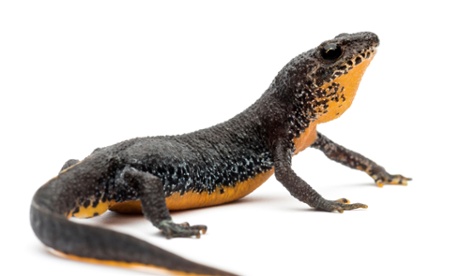
But I also wanted to explore the impact of modern science on a magical society. Could they be at all compatible in fantasy fiction? Or are all magicians destined to be like Arthur Weasley: fascinated by Muggle science, but ultimately baffled by it? I thought that a significantly advanced magical society might figure out a way to make ingredients for potions (like eye of newt and dragon’s blood) out of synthetic materials. I imagined a GlaxoSmithKline or Pfizer of the magical world… and from there, ZoroAster Corp was born, the advanced science rival to Sam’s more traditional apothecary. (Pfizer had been a main sponsor of the Canada Wide Science Fair, and I’d been privileged to get a tour of their labs as a result – so I had a lot of inspiration!)
At one point, my main character, Samantha, feels forced to choose between continuing to study the old way and training in the new. Rather than think of science and magic as being totally incompatible, I tried to think of it more like the e-books vs paper books debate: the benefits of modern technology enhancing, rather than completely overtaking, the more traditional medium.
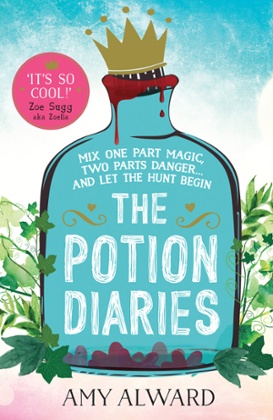
Like any good science fair project, when I started out the novel, I didn’t know if it was going to work. Yet I always felt like The Potion Diaries had a special kind of alchemy from the start. Maybe science and the arts aren’t so different after all.
Amy Alward’s The Potion Diaries is available from the Guardian bookshop. She’s also an editorial director for Penguin Random House Children’s Books, where she is the editor for Zoella! You can follow Amy on Twitter @amy_alward or Instagram @amyalward!