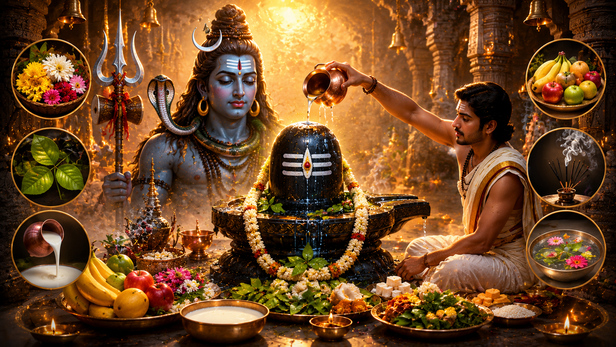
In Hindu culture, Prasad is considered sacred. It is not just food or an offering it carries the blessings of the deity after worship. Devotees happily consume Prasad from temples believing it brings positivity and divine grace into life. But when it comes to Lord Shiva, one ancient belief surprises many people. The offerings placed directly on the Shivling are traditionally not consumed. Milk, Gangajal, honey, flowers, fruits, and sandalwood are poured during Abhishekam, yet they are usually allowed to flow away instead of being distributed.
This mysterious practice has confused devotees for generations. And the spiritual reason behind it is deeply fascinating.
Why Shivling Offerings Are Treated Differently

Offerings made to the Shivling follow unique spiritual traditions.
Unlike many temple rituals where Prasad is distributed among devotees, offerings poured directly on a Shivling are usually not consumed afterward. This tradition surprises many first-time devotees because Prasad is generally considered highly sacred in Hindu worship. But Lord Shiva’s worship follows a unique spiritual path centered around renunciation and surrender rather than material blessings. The Abhishekam itself symbolizes purification of the mind and ego. Once milk, water, honey, or fruits touch the Shivling, they are no longer treated like ordinary offerings. Instead, they become part of a deeply symbolic ritual connected with Shiva’s divine energy.
The Mysterious Story of Chandeshwar

Ancient legends connect Shivling offerings with Chandeshwar.
One of the most popular legends explains this belief through Chandeshwar, a divine attendant of Lord Shiva believed to guard sacred offerings. According to temple traditions, anything that touches the Shivling belongs to Chandeshwar and Shiva’s spiritual realm. Taking it back for personal use is considered inappropriate because it is no longer meant for worldly consumption. This belief created the long-standing custom of allowing the offerings to flow naturally instead of distributing them. The story may sound mysterious, but spiritually it teaches detachment once something is offered to Shiva completely, it should not be reclaimed again.
The Deeper Meaning Hidden Inside Abhishekam
The ritual of pouring milk, Gangajal, or honey over the Shivling is not only devotional it also carries symbolic meaning. Shiva is often associated with destruction of ego, attachment, and negativity. During Abhishekam, devotees symbolically offer their emotions, fears, desires, and burdens to the divine. The flowing liquid represents release and purification. This is why the offerings are allowed to move away instead of being reclaimed. Spiritually, the message is powerful: true surrender means letting go completely. The ritual teaches people that devotion is not about receiving something back every time, but about offering with pure intention.
Why Temple Rituals Still Follow This Tradition
Even today, many Shiva temples continue following this ancient custom exactly as described in traditional beliefs. Priests often allow the Abhishekam offerings to flow through designated channels rather than distributing them as edible Prasad. However, offerings placed separately before Lord Shiva such as packaged sweets or fruits not directly touching the Shivling may still be distributed among devotees. This distinction is important in temple traditions. Over centuries, these practices became part of the spiritual discipline surrounding Shiva worship. The continuity of these rituals reflects how deeply symbolism and faith remain connected in Hindu temple culture.
The Spiritual Lesson Most People Miss
The most powerful lesson behind this belief is not fear or superstition it is surrender. Modern life constantly teaches people to expect returns from every action. But Shiva worship quietly teaches the opposite. Offer fully. Let go fully. Do not keep calculating what comes back. That is why offerings on the Shivling are treated differently. The ritual reminds devotees that some acts of devotion are meant purely for spiritual connection, not personal gain. In many ways, this ancient belief continues to carry emotional meaning because it speaks directly to attachment, ego, and the human desire to hold onto everything.
Unlock insightful tips and inspiration on personal growth, productivity, and well-being. Stay motivated and updated with the latest at My Life XP.
Frequently Asked Questions (FAQs)
1. Why is Prasad offered to the Shivling not eaten?According to ancient Hindu beliefs, anything offered directly on the Shivling belongs to Lord Shiva and Chandeshwar, a divine attendant associated with Shiva. Therefore, these offerings are traditionally not consumed by devotees.
2. What items are usually offered during Shivling Abhishekam?
Common offerings include Gangajal, milk, honey, curd, sandalwood paste, flowers, fruits, and बेलपत्र (Bilva leaves). These are offered as symbols of devotion and purification.
3. Who is Chandeshwar in Shiva worship?
Chandeshwar is believed to be a devoted attendant and guardian associated with Lord Shiva. Temple traditions say that offerings touching the Shivling are dedicated to him and Shiva’s divine realm.
4. Is all Prasad in Shiva temples avoided?
No. Offerings placed separately before Lord Shiva, such as sweets or fruits that do not directly touch the Shivling, are often distributed as Prasad to devotees.