Self-checkout lanes were designed to speed up the process and reduce labor costs for stores. Shoppers liked the convenience of scanning a few items and skipping the line. But behind that efficiency, a new problem is growing fast. Retailers are facing what many now call a self-checkout shoplifting crisis. The mix of automation, anonymity, and human error is turning these machines into silent accomplices in theft. Understanding why it’s happening and what it means for grocery stores matters to anyone who shops, works, or manages a retail floor.
1. The Psychology of Convenience and Temptation
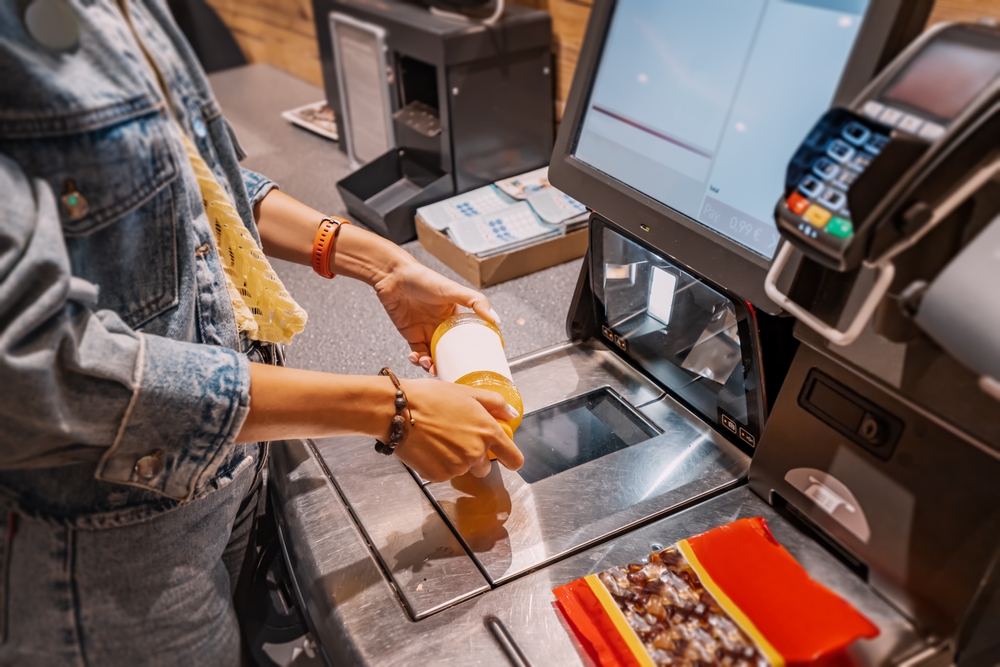
The self-checkout shoplifting crisis starts with something simple: opportunity. When people scan their own groceries, they’re alone with the machine. No cashier, no judgment, and often no cameras close enough to notice small tricks. That privacy changes behavior. Some people who would never consider stealing from a cashier may think of skipping a scan as harmless or “beating the system.” The line between mistake and intent gets blurry fast.
Even honest shoppers make scanning errors. A bag of apples might not register. A barcode might be crumpled. Many customers just move on, assuming the system will catch it or that it’s not worth the trouble to fix. Those small slips add up to major losses for stores. The convenience of self-checkout has made theft both easier and more rationalized.
2. Fewer Staff, More Loopholes
Retailers once stationed a cashier at every lane. Now one employee may monitor six or eight self-checkout stations. That’s efficient on paper but risky in practice. It’s impossible to watch every screen and every shopper at once. People who want to exploit the system know this. They can scan one item, hide another, or swap barcodes while pretending to be confused.
Large chains have invested in cameras and AI-based monitoring systems. Some, such as large retail operators, are testing software that flags suspicious patterns in real-time. But technology can only do so much. A single distracted attendant or a poorly placed camera can undo thousands of dollars’ worth of security upgrades. The self-checkout shoplifting crisis thrives in those blind spots.
3. Honest Mistakes That Still Cost Millions
Not every missing item is stolen on purpose. Many customers genuinely struggle with self-checkout machines. A barcode may not scan, or a scale might misread produce. Some systems require manual entry for loose goods, which slows the line and frustrates shoppers. In that frustration, people might skip a step without realizing it. The result looks the same on paper: inventory shrinkage.
Retail experts often refer to this as “friendly fraud.” It’s not malicious, but it’s still expensive. Every unscanned item cuts into store profits. Grocers already operate on thin margins, so even small losses hurt. Over time, these errors contribute to the larger self-checkout shoplifting crisis, making it increasingly difficult to distinguish between accidental losses and deliberate thefts.
4. The Technology Arms Race
To fight back, retailers are adding more surveillance and smarter software. Some stores use weight sensors that detect when an unscanned item is bagged. Others rely on cameras tied to machine learning systems that can flag suspicious movement. A few even test facial recognition, though that raises privacy concerns. The goal is to make people think twice before trying to cheat the system.
Still, technology creates its own challenges. False alarms frustrate honest shoppers. Privacy advocates question how data is stored and used. And smaller grocers can’t afford the same level of tech as big-box stores. The uneven playing field means the self-checkout shoplifting crisis doesn’t hit every business equally. Independent stores may be left more exposed than corporate chains.
5. When Stores Rethink the Self-Checkout Model
Some retailers are starting to pull back. A few have removed self-checkout stations altogether after realizing that theft outweighed labor savings. Others have added more staff near the machines to deter theft through presence alone. It’s not just about catching shoplifters—it’s about rebuilding trust. When shoppers see attentive employees nearby, they’re less likely to take shortcuts or make careless errors.
Still, removing self-checkout entirely isn’t realistic for most. Shoppers expect it now. The challenge is finding a middle ground: keep the convenience but limit the losses. That might mean better training for attendants, clearer machine prompts, or even loyalty programs that reward accurate scanning. The balance is delicate, but ignoring the self-checkout shoplifting crisis only exacerbates the issue.
A Changing Relationship Between Shoppers and Stores
The rise of self-checkout has altered how people perceive shopping. What used to be a social exchange between a cashier and a customer is now a private transaction with a screen. That shift has consequences. It removes accountability, and for some, it removes guilt. The self-checkout shoplifting crisis illustrates how technology can not only reshape retail operations but also influence human behavior.
Stores can’t turn back the clock, but they can learn from what’s happening. The future of retail might rely less on total automation and more on smarter human oversight. Maybe the real fix isn’t better machines—it’s better connections between people, even in automated spaces. How do you think stores should handle this growing problem?
What to Read Next…
- 5 Controversial Tactics Used By Retailers To Combat Shoplifting
- 10 Reasons Why Self Checkout Machines Are Costing You More
- Whos Working The Register 5 Reasons There Are No Cashiers Available At Your Grocery Store
- 3 Major Retailers Getting Rid Of Self Checkout This Year
- 5 Grocery Stores That Are Scamming You At Self Checkout And Where To Shop Instead
The post Why Self-Checkout Lanes Are Fueling a New Kind of Shoplifting Crisis appeared first on Grocery Coupon Guide.