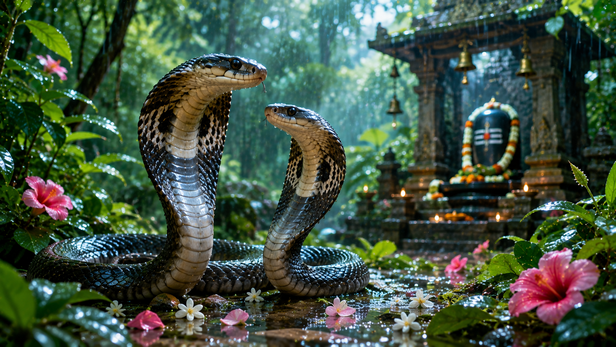
Every Sawan, stories of people witnessing a Nag-Nagin dance spread across villages, towns and social media. For many devotees of Lord Shiva, this rare sight is believed to be a sign of divine blessings and good fortune. Others see it as a fascinating natural event during the monsoon season. But what is the truth? Is seeing a pair of snakes during Sawan really an auspicious sign, or is there another explanation that many people overlook
Why Snakes Are Sacred in Sawan
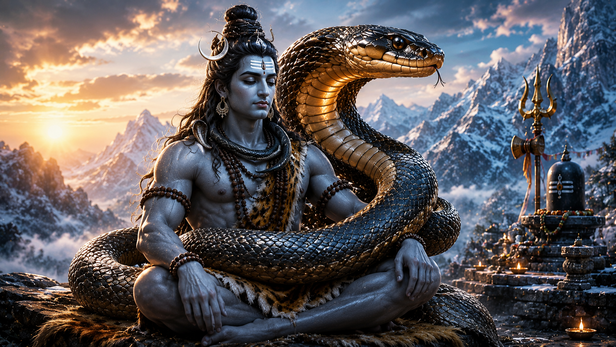
Lord Shiva's association with serpents has made snakes symbols of devotion and protection during
The month of Sawan is dedicated to Lord Shiva, who is traditionally depicted with the serpent Vasuki around his neck. In Hindu belief, snakes symbolise protection, fearlessness and the cycle of life. Because of this sacred connection, many devotees consider seeing a snake during Sawan spiritually significant. Although Hindu traditions honour serpents, there is no universally accepted scripture stating that simply seeing a Nag-Nagin guarantees good luck or future prosperity.
The Dance Has a Natural Explanation
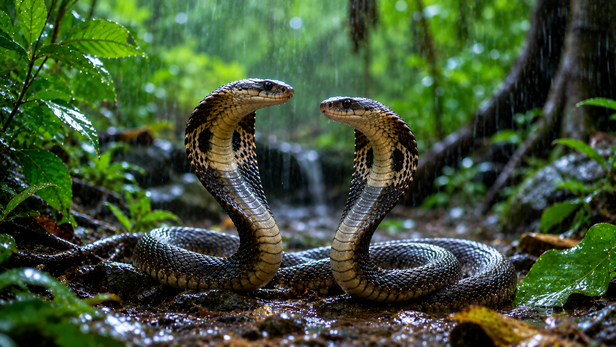
What many call a Nag-Nagin dance is often part of the snakes' natural courtship behaviour.
Wildlife experts explain that what people describe as a Nag-Nagin dance is usually the courtship or mating behaviour of snakes. The monsoon provides ideal conditions for many snake species to become active. Increased humidity and favourable temperatures make this one of their busiest seasons. While the movement may appear mystical, it is generally a natural part of their breeding cycle rather than a supernatural event.
Why Many Devotees See It as a Good Omen
Across many parts of India, local traditions associate the Nag-Nagin dance with positive energy. Some believe it represents harmony between nature and the divine, while others see it as a sign of prosperity, fertility and fresh beginnings. These beliefs have been passed down through generations and continue to inspire faith during Sawan. However, religious scholars generally describe them as regional traditions rather than established scriptural teachings.
Respect Faith and Protect Wildlife
If you ever encounter a pair of snakes during Sawan, the safest response is to admire them from a distance. Wildlife experts strongly advise against touching, disturbing or attempting to separate them, as this can be dangerous for both humans and animals. Snakes play an important role in controlling rodent populations and maintaining ecological balance. Respecting their natural habitat reflects both environmental responsibility and the spirit of compassion valued in Hindu tradition.
The Real Blessing Lies in Awareness
Whether you view the Nag-Nagin dance through the lens of faith or science, it offers a meaningful reminder. For devotees, it reflects Lord Shiva's deep connection with nature. For others, it highlights the remarkable behaviour of wildlife during the monsoon. In both cases, the message is the same: respect all living beings, preserve nature and deepen your understanding of the world around you.
Unlock insightful tips and inspiration on personal growth, productivity, and well-being. Stay motivated and updated with the latest at My Life XP.