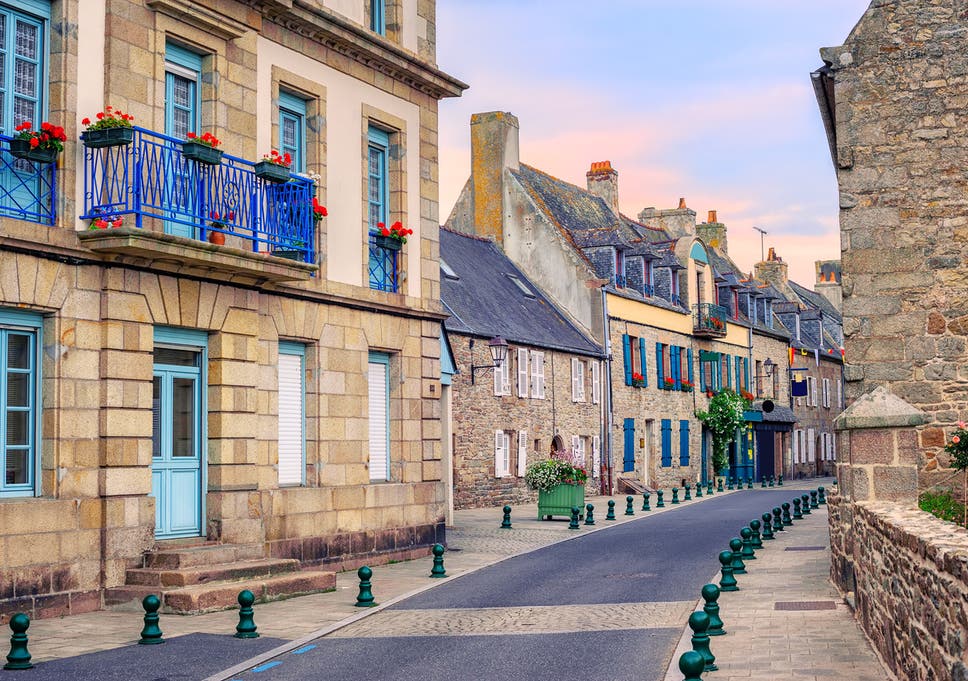
Dusk is falling and the cobbled streets of Roscoff are buzzing with Brits sitting on restaurant terraces, sipping their last glasses of heady Breton cider and hoovering up creamy moules-frites before it’s time to get the boat back to Britain. For most people, this is all they see of this pretty seaside town before heading back to its rather less attractive counterpart, Plymouth.
Usually my family and I would be the same, but having passed through so many times, I’ve always longed to stay on, to gaze a little longer at the blue bay, its rocky islets and bijou white Chapelle Sainte-Barbe that perches on a hill. So this time, we rolled off the boat in time for breakfast and didn’t travel any further.
Roscoff is known these days as an attractive seaside town in Brittany that regularly welcomes British holidaymakers, but it was the Roscovites, who came to Britain in the early 19th century to sell their delicious pink onions, that first put it on the map. The onions’ delicate, almost sweet flavour sets them apart from the usual white onion, and the enterprising young men driven by poverty across the Channel found a willing market for their wares.
Soon their numbers swelled to hundreds, and by the 1920s there were more than 1,000 “Onion Johnnies” – so nicknamed because of the sheer number named some variant of “Jean” – selling door-to-door, from Cornwall to the Orkneys. Their image quickly became representative of the French: a beret, a bicycle and strings of onions galore.
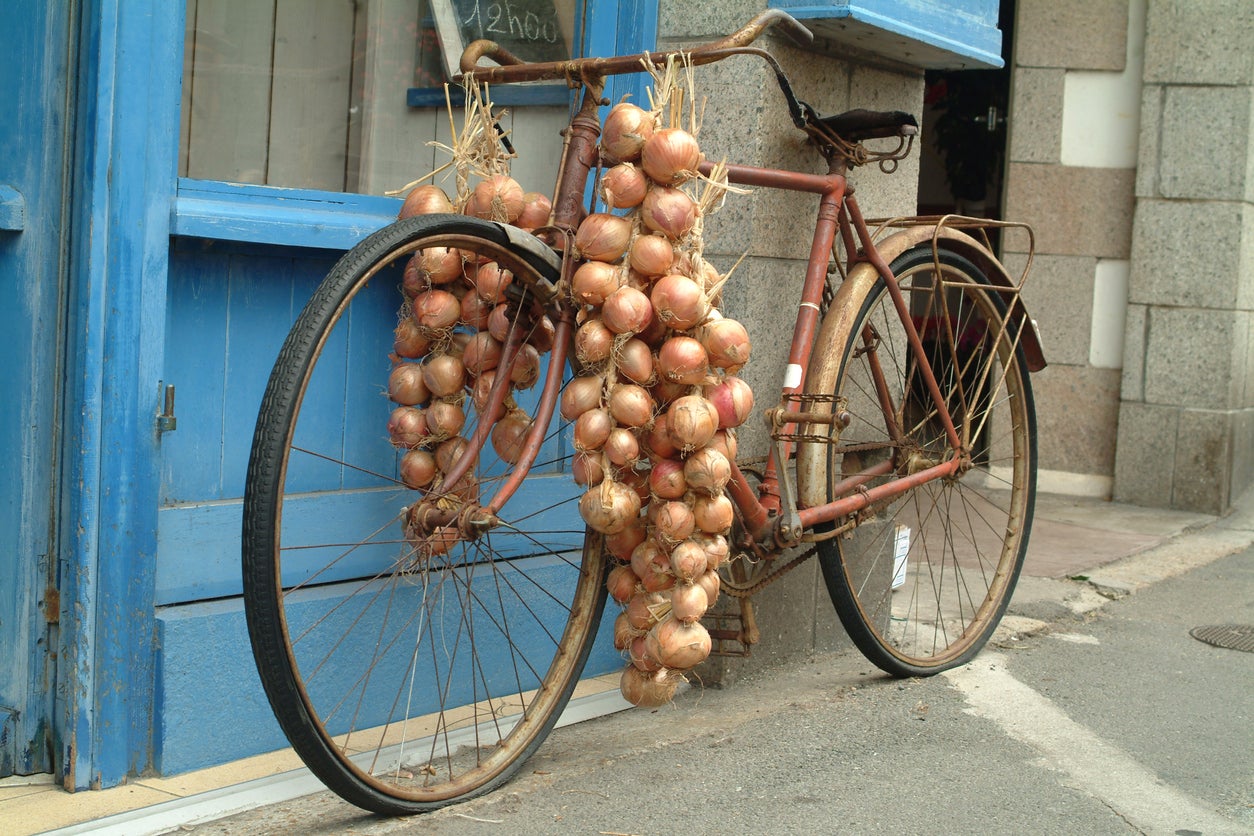
To find out more, we visited the town’s Onion Johnny museum, which tells their extraordinary story in more detail, revealing how the trade rescued many families from poverty. As well as displays about shipwrecks in which many lost their lives, and how the number of Johnnies fell into decline after the Second World War, we got a chance to try out the shoulder poles from which they originally hung their onions. It’s so heavy that it’s no wonder they switched to wheeling them on bicycles – my two children could barely lift it. Admittedly they’re younger than the youngest Onion Johnnies, who started coming to Britain to sell onions at the age of 12 or 13.
The onions and their local history are celebrated each August at the annual onion festival, but there’s more to Roscoff than its alluring alliums. Thanks to the temperate climate afforded by the Gulf Stream, the area is perfect for growing a bounty of hearty vegetables – from alien-looking globe artichokes, to creamy white cauliflower – while the local fishing fleet lands an enticing array of seafood. As such, the local chefs are spoiled for choice.
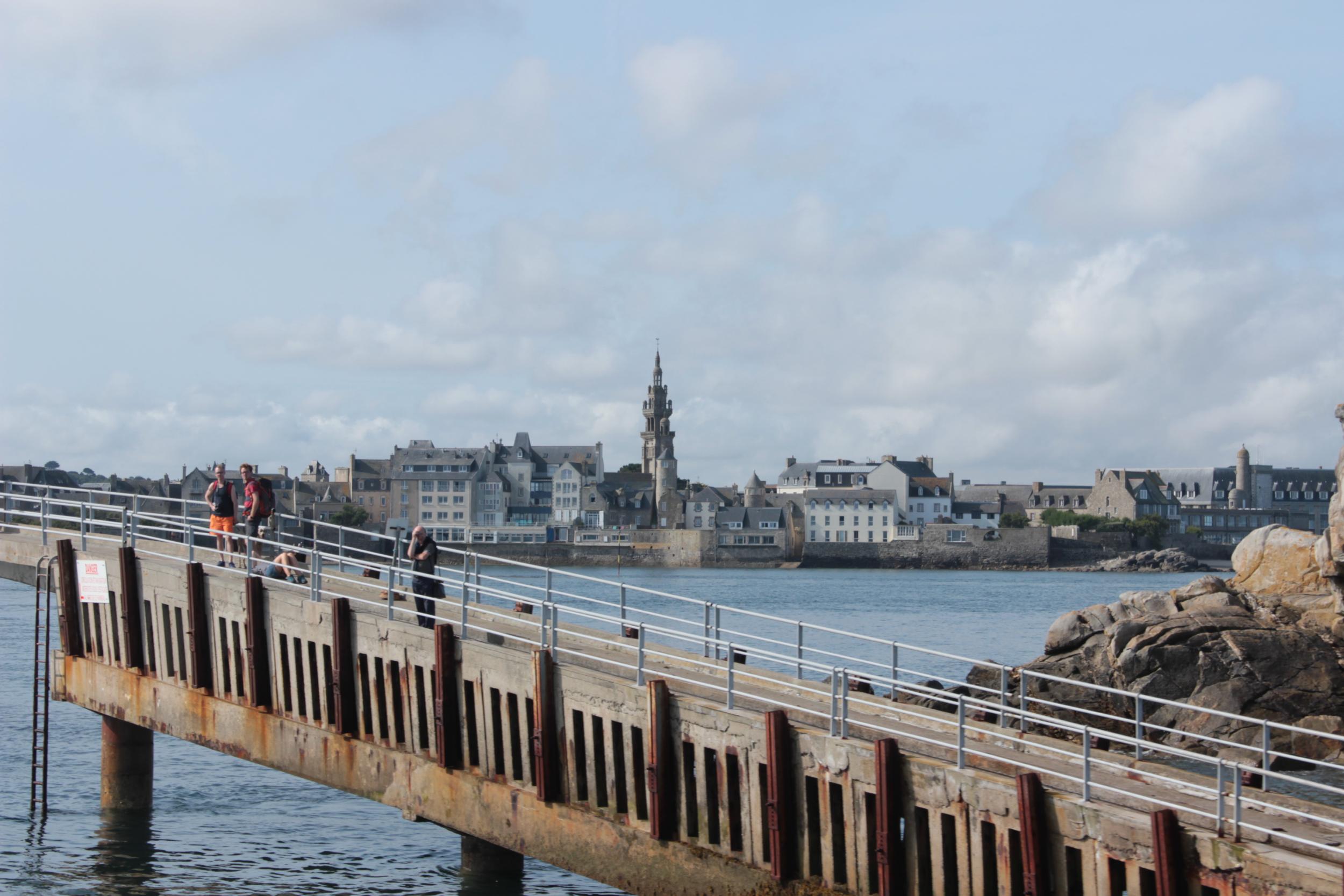
Among them is Michelin-starred Loïc Le Bail who rules the kitchen at the Hotel Brittany, a friendly four-star hotel on the seafront. His exquisite cuisine draws on the local produce, even using edible seaweed in his dishes. As my husband and I tucked into the exquisite tasting menu, the view from the restaurant’s arched stone windows proved the perfect accompaniment. The sun dropped behind the town church’s elaborate belfry, silhouetted against a pink sky, as colourful fishing boats pootled across the bay. Stretching out into the sea is a long jetty from where you can catch the ferry to the Île de Batz, just offshore.
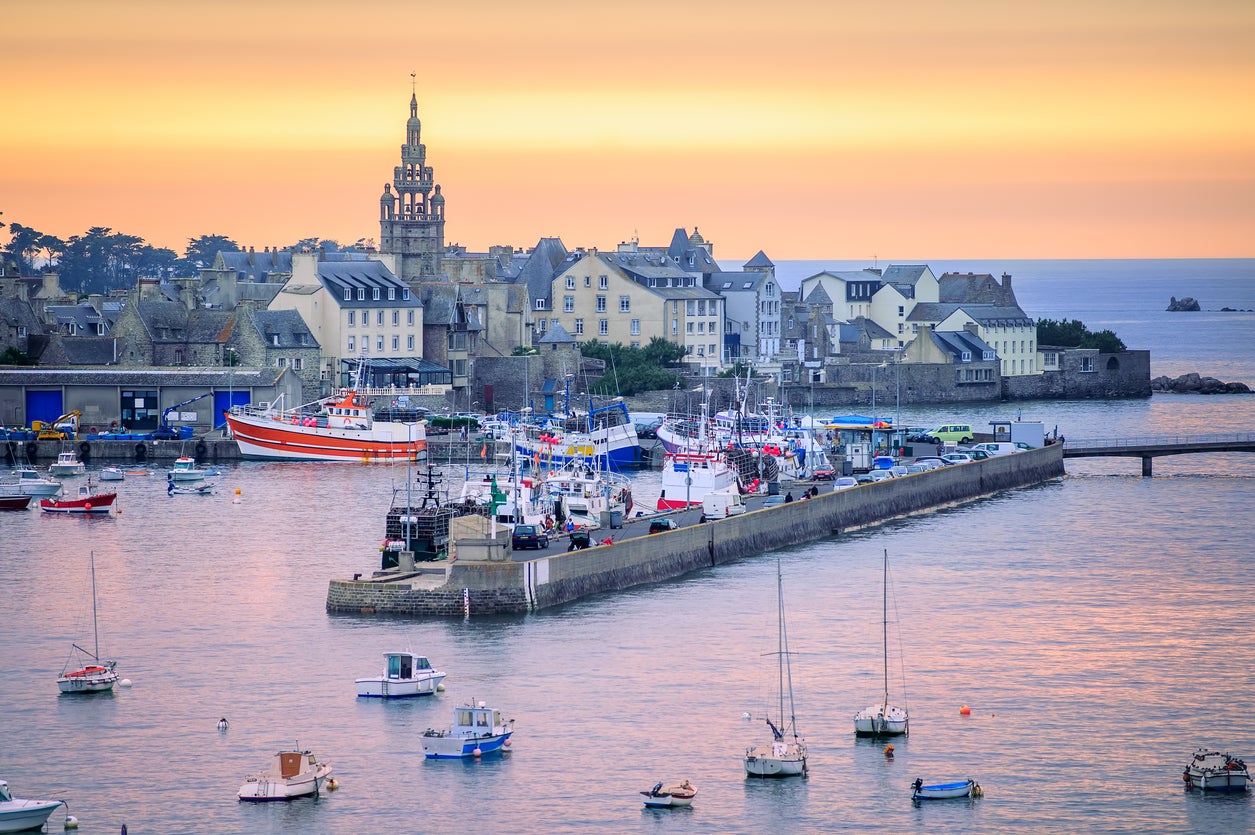
The next day we followed it out to the end to board the dinky boat – 10 minutes later we arrived at the idyllic island, which is just as enchanting as Roscoff. The island has a population of just 500 inhabitants; there are subsequently few cars zipping around the narrow lanes, making it perfect for exploring on two wheels (beret and onions not required). We hired bikes and trailers from the quayside and pedalled off past blue-shuttered cottages, with palm trees in gardens and proud blue agapanthus standing high over the stone walls.
Our first stop was the superb Grève-Blanche beach: an expanse of heavenly white sand. There were just two other people there enjoying the sun.
After a quick paddle, it was time for lunch. We cycled west on undulating paths towards the lighthouse, past farmers’ fields of fennel and potatoes, to stop at the Crêperie du Phare. We scoffed crispy, golden galettes – pancakes made with buckwheat – stuffed with ham and melted cheese. They proved the perfect fuel alongside the other Breton speciality, heady cider served in traditional porcelain cups.
At the lighthouse, we climbed the 198 steps to the top; it’s tough on the legs after all that cycling. The view was worth it though. And as we gazed beyond the patchwork of fields below towards the rocky coast and the mainland, I wondered why it had taken us so long to make Roscoff our destination, instead of just our drop-off point.
Travel essentials
Getting there
On Brittany Ferries’ Plymouth to Roscoff route, fares start from £273 return for a car plus two, including an en-suite cabin on the outward overnight sailing.
Where to stay
The Hotel Brittany on the seafront has its own indoor pool, spa, and Michelin-starred restaurant. Doubles from €120, room only.
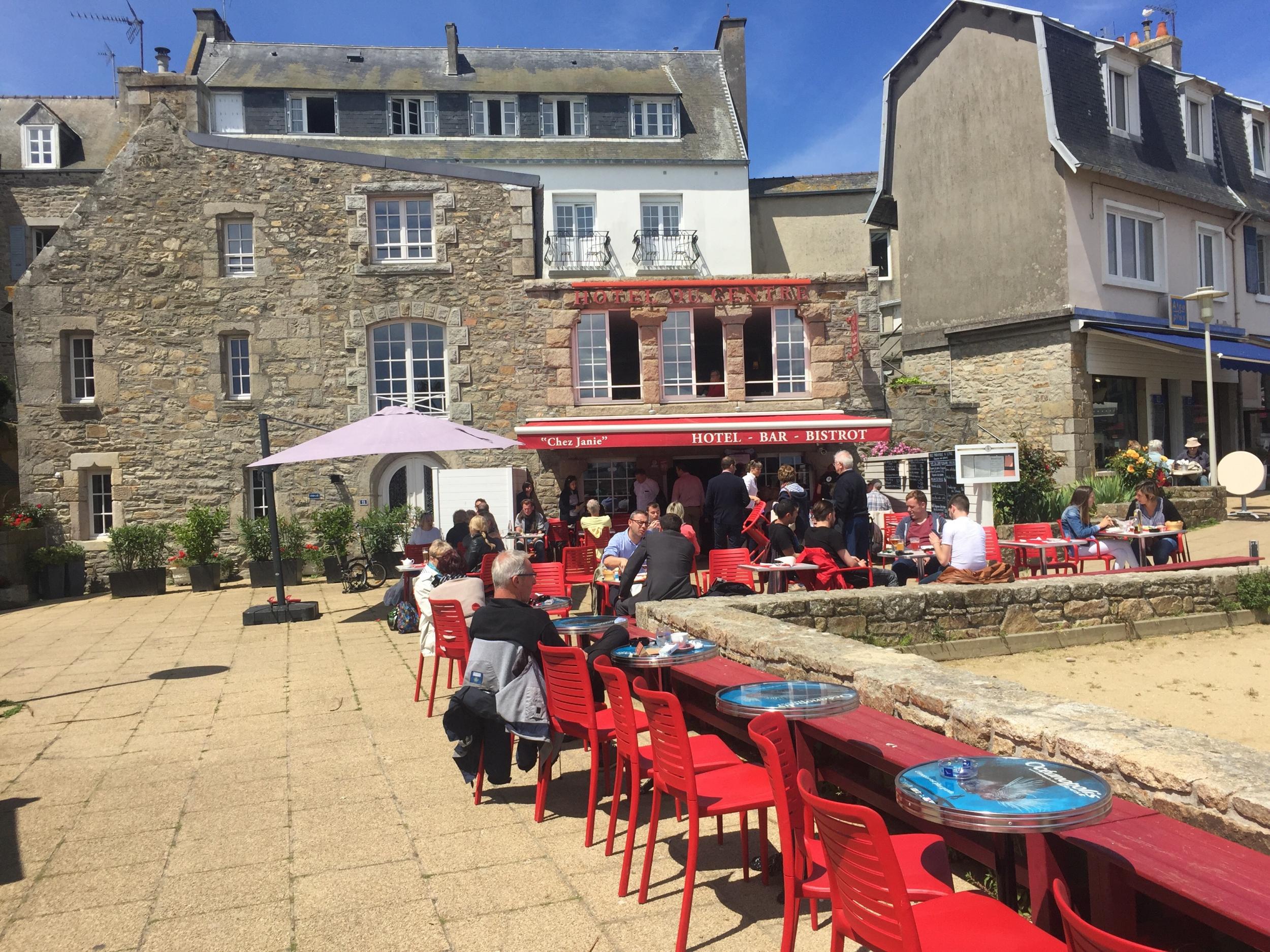
For a budget option, Chez Janie opposite the harbour has doubles from €69, B&B, plus a good seafood restaurant and bar.