The government shutdown is set to end this week after eight Democrats joined all but one Republican senator to end the government shutdown.
This comes despite the final agreement not including an extension of enhanced Covid-era tax credits to help people buy insurance through the Affordable Care Act’s marketplace. Instead it has a promise to hold a vote on the Obamacare credits in December.
Even more gutting for Democrats, that deal came on the heels of an unequivocal blue wave election in Virginia just a week ago, which made the decision by Sen. Tim Kaine (D-Va.) to support the initiative even more surprising.
“We're going to have a debate in full view of everyone, without the background noise of all the shutdown consequences kind of taking people's attention away from it,” he told The Independent this week.
But so far, it does not look like Republicans are that interested in renewing the tax credits. For one, Republicans failed at every attempt to find an alternative to Obamacare, as the ACA is more widely known.
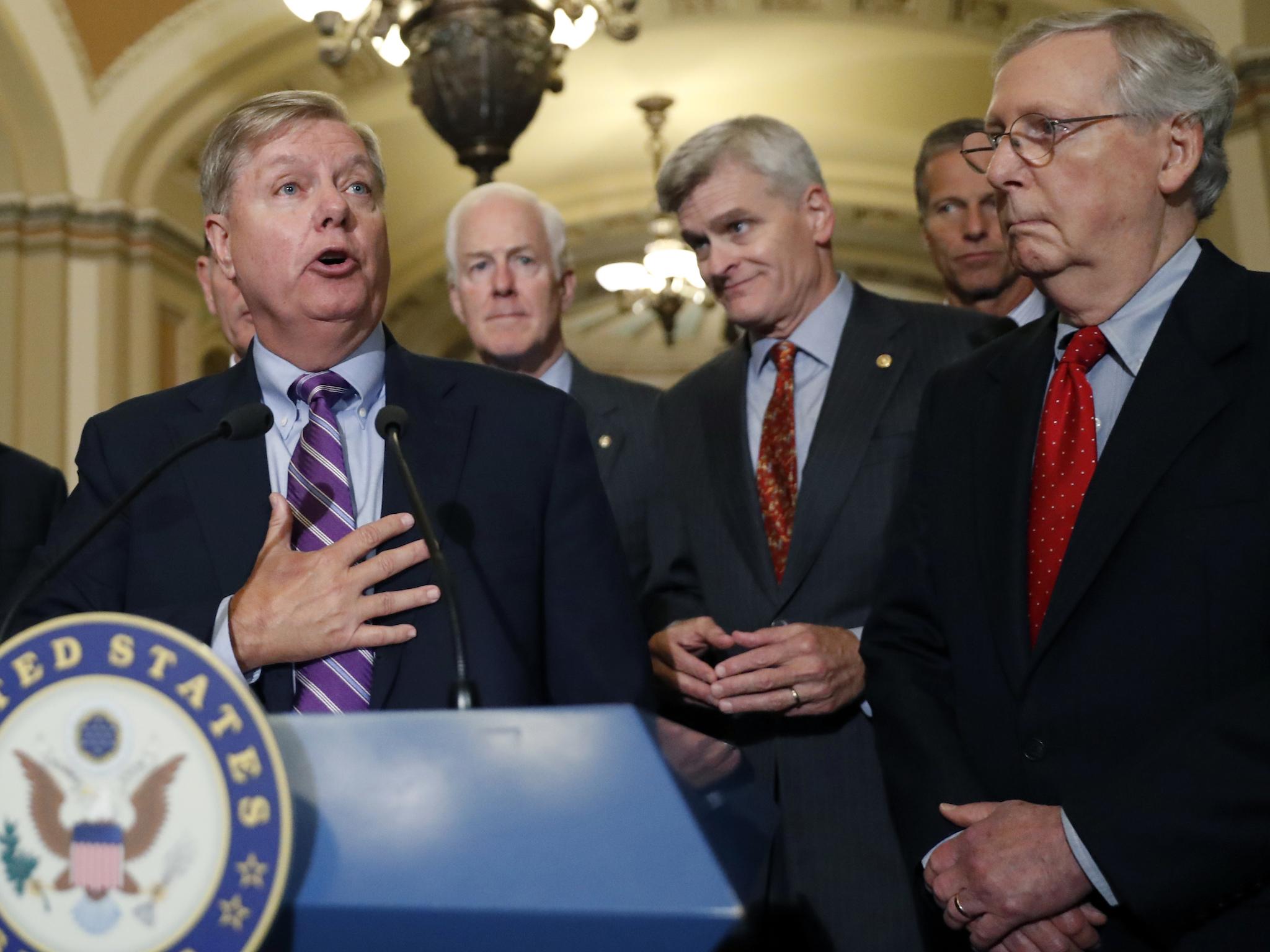
Sen. Lindsey Graham (R-S.C.), who once called Trump a “jackass” but now makes himself servile to the president, said that in the coming months, Republicans would craft an alternative to the subsidies.
“My belief is we should have block-granted the thing back a long time ago — the outcomes on Obamacare are horrible,” Graham told The Independent.
After his late friend John McCain delivered the thumbs-down vote that killed the Obamacare repeal in 2017, Graham and Sen. Bill Cassidy (R-La.), tried to craft an alternative, which McCain would also kill.
Now Cassidy has discussed transforming the health subsidies into federal flexible spending account. Cassidy is largely doing this to stave off a primary challenge and earn Trump’s favor after Cassidy voted to convict Trump for the January 6 riot.
But the proposal seems to have legs with Senate Republicans, including moderate Sen. Lisa Murkowski.
“Think about what that health savings account is all about,” she told The Independent. “It's not saying that the subsidies go away. It's just it's delivered in a different way. It's delivered to you instead of the insurance company.”
The fact that Murkowski, who had voted against repealing Obamacare and voted to convict Trump, seemed open to savings accounts rather than extending the subsidies shows how much Republicans have an allergy to simply extending them.
And this is to say nothing of the fact that House Speaker Mike Johnson could choose not to take up the legislation. But if Republicans choose to not take up the subsidies or even significantly pare them down, they risk a biblical Blue wave.
According to a poll from KFF, a health care nonprofit, three quarters of Americans and about the same amount of independents say Congress should extend the subisides.
And a look at the election results last week shows endangered Republicans have an extra incentive to support extending them. According to VoteHub, Gov.-elect Abigail Spanberger won Virginia’s 2nd district, held by Republican Rep. Jen Kiggans, and it 1st district, held by Republican Rob Wittman.

This might be why Kaine felt confident that Johnson might have no choice.
“If we do something that gets bipartisan support here, he will not be able to stiff arm it, because he's got both all the all the Democrats and many Republicans saying we got to fix this ACA tax credit thing,” Kaine told The Independent. “And if it comes out of here bipartisan, he cannot not take it up without having November 2026 make November 2025 look like a picnic.”
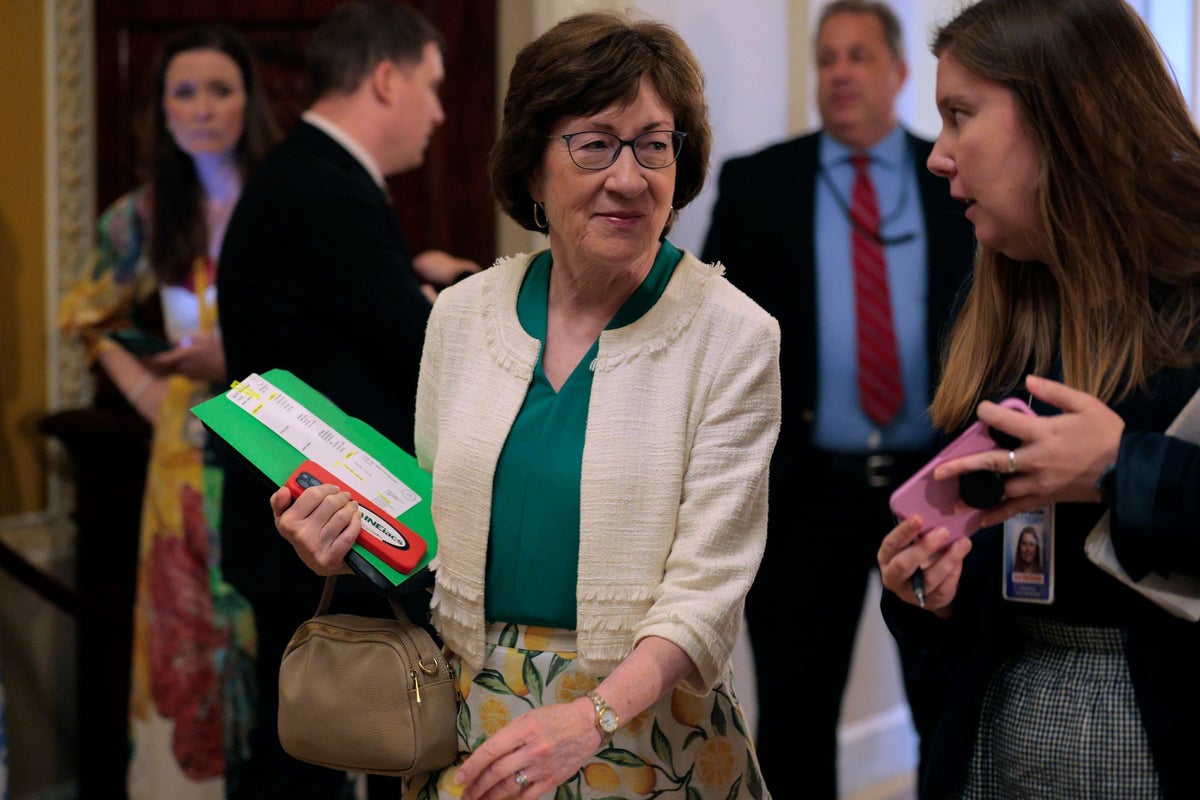
That likely explains why Sen. Susan Collins of Maine, perhaps the most endangered Republican incumbent, seemed the most open to voting to extend the subsidies.
Collins also voted against the One Big, Beautiful Bill, which included sweeping changes to Medicaid, including work requirements and limiting the taxes that states use to collect revenue for Medicaid to receive matching funds from the federal government.
“I certainly anticipate and hope that there'll be a bipartisan effort to come up with a bill that can pass,” she told The Independent. Collins said she would like there to be an income cap to make sure “self employed individuals, a lot of individuals working for small businesses will not face the prospect of unaffordable health insurance.”
Collins hails from a state that voted for Kamala Harris in 2024 and she pulled off a miracle win in 2020. If she does not vote for legislation to extend the subsidies, she could be uniquely vulnerable.
This might be why she said while she is not leading negotiations, she is happy to bring out her old “talking stick” for bipartisan negotiations to make sure everyone is heard.