It's a disconcerting feeling: carving down the mountain, poised to execute a perfect turn, only to encounter an icy patch that renders your skis unresponsive. Or perhaps a persistent sluggishness plagues your run, leaving you feeling as though you're navigating through molasses. While appropriate ski gear is essential, a simple, frequently overlooked adjustment can dramatically improve your experience: applying the correct ski wax.
Ski wax isn't just for the professionals, contrary to popular belief. It's an essential element that significantly affects your performance, control, and overall enjoyment on the slopes. A suitable wax application translates to a superior experience, while inadequate wax can lead to a frustrating day, potentially leaving you wishing you'd stayed in the lodge. This article delves into the significance of ski wax for skiers of all skill levels, from beginners navigating the bunny hill to seasoned athletes aspiring for competitive success.
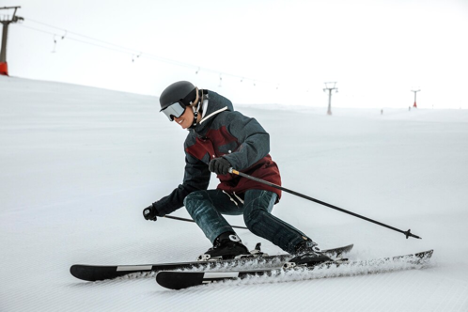
The Science of Glide: How Wax Works
Let's delve into the science behind ski wax, presented in a straightforward manner. Friction is the primary obstacle to smooth gliding. As your skis interact with the snow, friction constantly impedes your movement. Ski wax mitigates this friction, facilitating smoother and more efficient gliding. Imagine attempting to slide a hockey puck across sandpaper versus ice; the difference is significant.
Snow exhibits diverse characteristics, including powder, ice, slush, wet snow, and hardpack, each presenting unique challenges. Powder necessitates a wax that promotes flotation, preventing sinking. Wet snow demands a wax that effectively repels water, eliminating the sensation of suction. Ice requires a wax that minimizes friction on its dense surface.
Ski wax, at its essence, embodies applied chemistry. The two primary categories are hydrocarbon and fluorocarbon waxes. Hydrocarbon waxes represent the standard, reliable options, serving as the workhorses. Fluorocarbon waxes represent high-performance solutions engineered for extreme conditions, catering to situations where maximizing speed is paramount. Temperature also plays a vital role. Temperature-specific waxes are formulated to excel within defined ranges. Selecting an unsuitable wax is akin to wearing a wool sweater during summer—uncomfortable and counterproductive.
Wax and the Competitive Edge
In competitive skiing, ski wax transcends mere importance, verging on obsession. The pursuit of marginal gains dictates meticulous attention to detail, as fractions of a second can determine victory or defeat. Wax significantly impacts speed, glide, and overall race times, transforming its application into a science and, at times, an art form. Professional ski teams employ dedicated ski technicians whose sole responsibility is to develop optimal waxing strategies. These technicians meticulously analyze weather forecasts, snow conditions, and even the specific intricacies of the course to achieve the ideal wax blend.
Consider that an Olympic downhill skier may adjust their wax multiple times during a single race day to adapt to changing conditions. Numerous skiers attribute their victories to precise waxing strategies. One anecdote recounts a racer at the 2010 Vancouver Olympics who made a last-minute wax change, transforming a probable defeat into a triumphant victory. The contrast between hand-applied and industrial ski waxing also contributes to performance disparities. Industrial techniques utilize specialized equipment to ensure uniform and consistent wax application, thereby maximizing its effectiveness. Technicians then refine the application by hand, striving for that crucial advantage.
Wax for the Rest of Us: Why Recreational Skiers Should Care
A common misconception persists that waxing benefits only competitive skiers. This notion is inaccurate. Recreational skiers derive significant advantages from improved control, easier turning, and reduced fatigue, all facilitated by properly waxed skis. Imagine gliding effortlessly across the snow, executing smooth, controlled turns without encountering resistance. This is the benefit wax can provide.
Beyond performance enhancements, ski wax extends the lifespan of your skis. It acts as a protective barrier, shielding the bases from harsh elements and preventing drying and cracking. A general guideline suggests waxing every three to four ski days or whenever your skis begin to feel sluggish or underperform. This simple, cost-effective practice maintains your gear in optimal condition.
Busting Wax Myths and Avoiding Rookie Mistakes
Let's debunk some prevailing myths. First, the notion that waxing matters only when racing is false. Wax enhances your skiing experience regardless of whether you're navigating a challenging double black diamond or cautiously descending a green run. Second, believing that a single wax application per season suffices is inadequate. Snow conditions fluctuate constantly, necessitating corresponding adjustments to your wax. Finally, the assumption that all waxes are created equal is erroneous. Different waxes are formulated for specific temperatures, snow types, and skiing styles.
A prevalent mistake involves using the incorrect wax. Another is neglecting maintenance entirely. Some skiers disregard their skis, assuming they'll perform adequately without attention. This is comparable to neglecting oil changes on your car, eventually leading to problems.
Picking the Right Wax: A Simple Guide
Selecting the appropriate ski wax depends on your skiing style, the prevailing conditions, and your budget. Consider the distinction between all-temperature and specialized waxes. All-temperature waxes provide a suitable starting point, especially for beginners. Their versatility enables them to perform reasonably well in diverse conditions. Specialized waxes are designed for specific temperatures and snow types, optimizing performance.
Furthermore, differentiate between hot waxing and rub-on wax. Hot waxing entails using an iron to melt the wax onto your skis, facilitating deep penetration into the base. Rub-on wax offers a convenient alternative for those seeking a quicker application method. For beginners, a basic all-temperature rub-on wax is recommended. Advanced skiers may opt to invest in a collection of waxes to accommodate varying conditions.

Final Carve: Wax On, Worry Less
In summary, ski wax enhances performance, improves safety, and extends the lifespan of your gear. Its benefits extend beyond competitive skiing, benefiting both seasoned racers and weekend enthusiasts alike. The proactive approach of waxing your skis is a small investment that yields significant improvements to your overall skiing experience.
Attend to your ski maintenance diligently. Monitor snow conditions, select the appropriate wax accordingly, and wax your skis regularly. This practice will enhance your speed, turning ease, and overall enjoyment on the slopes. Ultimately, the aim is to fully embrace and relish your time on the mountain.