
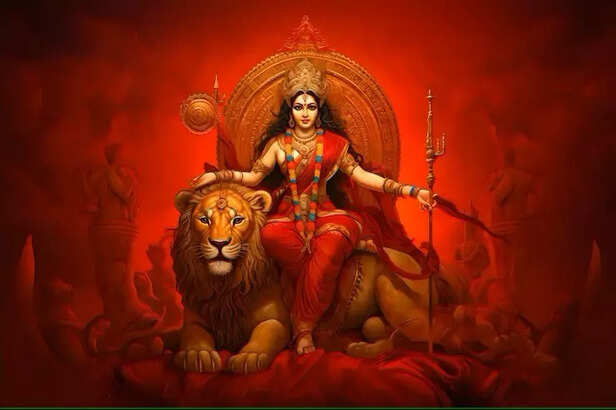
“या देवी सर्वभूतेषु शक्तिरूपेण संस्थिता। नमस्तस्यै नमस्तस्यै नमस्तस्यै नमो नमः॥”
Step into any temple during Navratri. Look at the idol. The Goddess is glowing in red. A red chunari drapes her shoulders. Red flowers surround her. Red kumkum rests at her feet.
It is not coincidence. It is continuity.
Across centuries, across regions, across different forms of Devi, red cloth has remained central to Goddess worship. But this association is not just ritual habit. It is emotional, symbolic, philosophical, and deeply human.
1. Red as the Living Symbol of Shakti
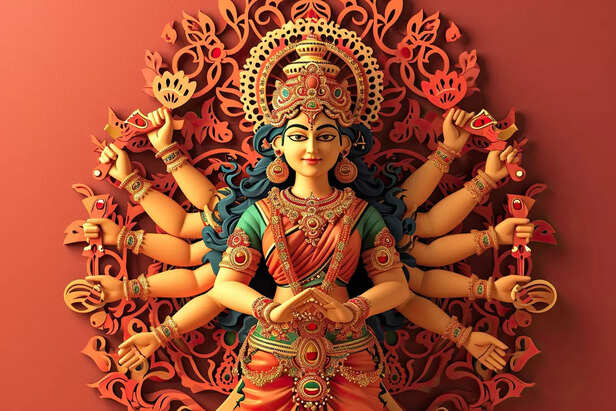
In Hindu thought, the Goddess is Shakti, the primal energy that moves the universe. She is not stillness. She is movement. She is not silence. She is vibration.
In the Devi Mahatmya, the Goddess emerges radiant and fierce to restore cosmic balance. Her energy is described as blazing and unstoppable. Red visually captures that fire.
When devotees offer red cloth, they are not simply decorating the idol. They are symbolically inviting strength, courage, and active protection into their lives. Red becomes a reminder that divine power is dynamic, not distant.
2. The Color of Creation and Motherhood
Red is the color of blood, birth, and life itself. It represents the pulse that keeps us alive.
The Goddess in her nurturing forms such as Parvati and Lakshmi embodies motherhood, prosperity, and continuity. In her warrior form as Durga, she protects that creation.
In Indian culture, brides wear red because it symbolizes fertility and auspicious beginnings. The Divine Mother, as the eternal source of life, is naturally adorned in the same color. Red cloth in worship becomes a quiet acknowledgment that all life flows from her.
3. Red and the Energy of Action
Ancient philosophy speaks of three qualities that govern existence: sattva, rajas, and tamas. Rajas is the force of action, ambition, passion, and change.
The Goddess represents that activating energy. She pushes life forward. She destroys stagnation.
Red is traditionally linked to rajas. That is why during festivals like Navratri, devotees offer red garments and flowers. It is a symbolic alignment with movement and transformation. It is a prayer not just for peace, but for progress.
4. Rooted in Temple Traditions
The association between red cloth and Devi is not modern styling. It is ancient practice.
At the Kamakhya Temple, dedicated to Kamakhya, red cloth carries deep symbolic meaning connected to fertility and feminine power. Devotees receive sacred red fabric as blessing.
Similarly, at the Vaishno Devi Temple, pilgrims offer red chunari to Vaishno Devi as an act of devotion and surrender.
Across regions, the ritual language remains the same. Red is not regional. It is universal in Devi worship.
5. A Symbol of Protection and Courage
The Goddess is not only gentle. She is fierce when needed.
As Kali, she destroys evil without hesitation. As Durga, she rides into battle against injustice. Red here is not just life. It is also strength and sacrifice.
Historically, red has been associated with warriors and victory flags. In temples, red cloth carries that same protective symbolism. Devotees wrap the Goddess in red as if acknowledging her role as their shield in unseen battles.
6. The Psychological Power of Red
There is also a deeply human reason behind this tradition.
Red is a color that commands attention. It stirs emotion. It awakens alertness. It energizes the senses.
Walk into a shrine glowing in crimson hues and you feel something shift inside. The atmosphere feels charged, intense, alive. This psychological impact enhances devotion. Goddess worship often involves rhythmic chanting, drums, and passionate prayer. Red amplifies that energy.
It transforms a quiet ritual into a living experience.
7. The Bridge Between Sacred and Social Life
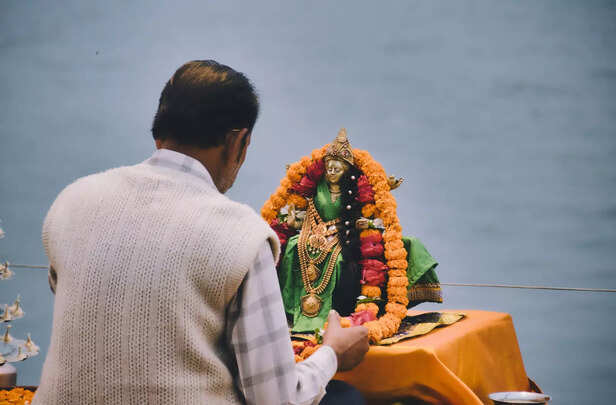
In Indian homes, red marks celebration. Weddings, festivals, new beginnings, sacred vows all involve red in some form.
The Goddess is not separate from daily life. She is woven into it.
When a woman applies sindoor, ties a red thread, or drapes a red saree during puja, she mirrors the Divine Mother. The color becomes a bridge between the cosmic and the personal.
Red cloth in worship reminds us that spirituality is not abstract. It is lived, worn, celebrated, and felt.