“ॐ चतुर्मुखाय विद्महे हंसवाहनाय धीमहि।
तन्नो ब्रह्मा प्रचोदयात्॥”
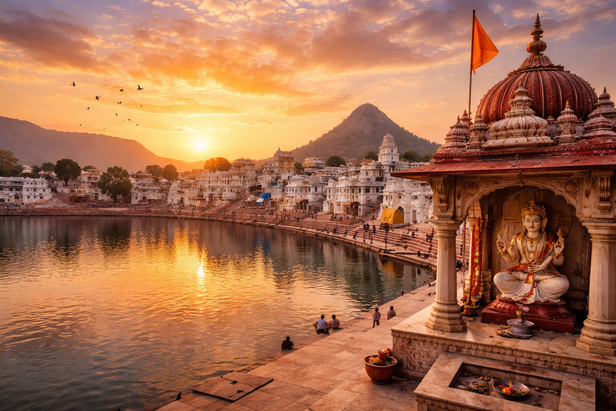
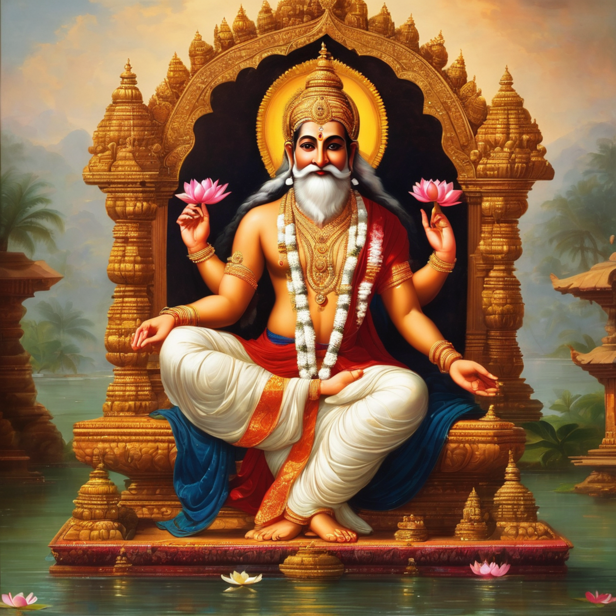
Pushkar is one of those places that makes people pause. Not because it is loud or grand, but because it carries a strange spiritual certainty. In a country where temples exist at every turn, Pushkar quietly holds something rare. It is the one place where Brahma, the creator of the universe, is still worshipped with legitimacy and reverence.
This feels unusual to many people. After all, if Brahma created everything, why is his worship limited to one town. The answer lies in how Hindu philosophy understands creation, duty, and completion. Pushkar is not just a town. It is a reminder of where everything begins.
1. A place believed to be created, not chosen
Pushkar is not described as a holy town that later became important. Ancient texts describe it as a land that came into existence because Brahma needed a sacred space to perform a yajna. When Brahma released a lotus from the heavens, the place where it fell became Pushkar.
This idea makes Pushkar feel different from other pilgrimage centres. It is not sacred because people worship there. People worship there because it was sacred from the moment it appeared. That belief still shapes how devotees see the town today. Many come here not to ask for things, but to reconnect with purpose and beginnings.
2. A lake that represents the origin of life
At the centre of Pushkar lies
Pushkar Lake, and everything in the town seems to revolve around it. In Hindu belief, water symbolises creation, continuity, and renewal. The lake is believed to have formed when the lotus petal touched the earth.
For pilgrims, bathing in the lake is not about ritual alone. It feels like stepping back to the source. People come carrying confusion, fatigue, or unanswered questions, and the act of bathing becomes symbolic of resetting intentions rather than seeking miracles.
3. The yajna that fixed Pushkar’s destiny
Pushkar’s importance is sealed by the yajna Brahma performed here to stabilise cosmic order. The ritual had to be completed at an exact astrological moment. When Saraswati did not arrive in time, Brahma married Gayatri to complete the yajna.
This moment is crucial. It established Pushkar as the one place where Brahma fulfilled his cosmic duty fully. In Hindu tradition, a yajna done correctly creates permanent sanctity. That is why Pushkar’s status did not fade with time.
4. Why Brahma is rarely worshipped elsewhere
Many people wonder why Brahma has so few temples across India. Tradition explains this through a curse linked to the yajna episode, but the deeper meaning is philosophical.
Brahma represents creation, and creation is a one time act. Hindu worship gradually shifted toward forces that preserve and transform life. Pushkar remained the exception because it had already been sanctified by Brahma himself. This is why Brahma worship feels complete here and unnecessary elsewhere.
5. A town that honours beginnings, not outcomes
Pushkar does not promise instant answers or dramatic transformations. It speaks to people at the start of something new. New phases, new responsibilities, new understanding.
This is why Pushkar resonates deeply with seekers who are at crossroads in life. Brahma’s energy is not about solving problems but about understanding why things begin the way they do. Pushkar reflects this mindset through its calm pace and inward focused spirituality.
6. Scriptures repeatedly point to Pushkar

Pushkar’s importance is not just based on local belief. Texts like the Padma Purana and Skanda Purana clearly describe Pushkar as Brahma Kshetra, the sacred land of Brahma.
This repeated mention ensured Pushkar’s survival as a centre of Brahma worship even when devotional trends changed. When practices faded elsewhere, Pushkar remained protected by scripture and tradition.
7. Ritual life that mirrors Brahma’s nature
Life in Pushkar follows a disciplined spiritual rhythm. Rituals focus on mantras, yajna, and Vedic practices rather than emotional devotion. The town’s rules around food and conduct reflect this seriousness.
This matches Brahma’s role as the lord of knowledge and sacred law. Pushkar does not encourage excess or spectacle. It encourages awareness, restraint, and clarity.