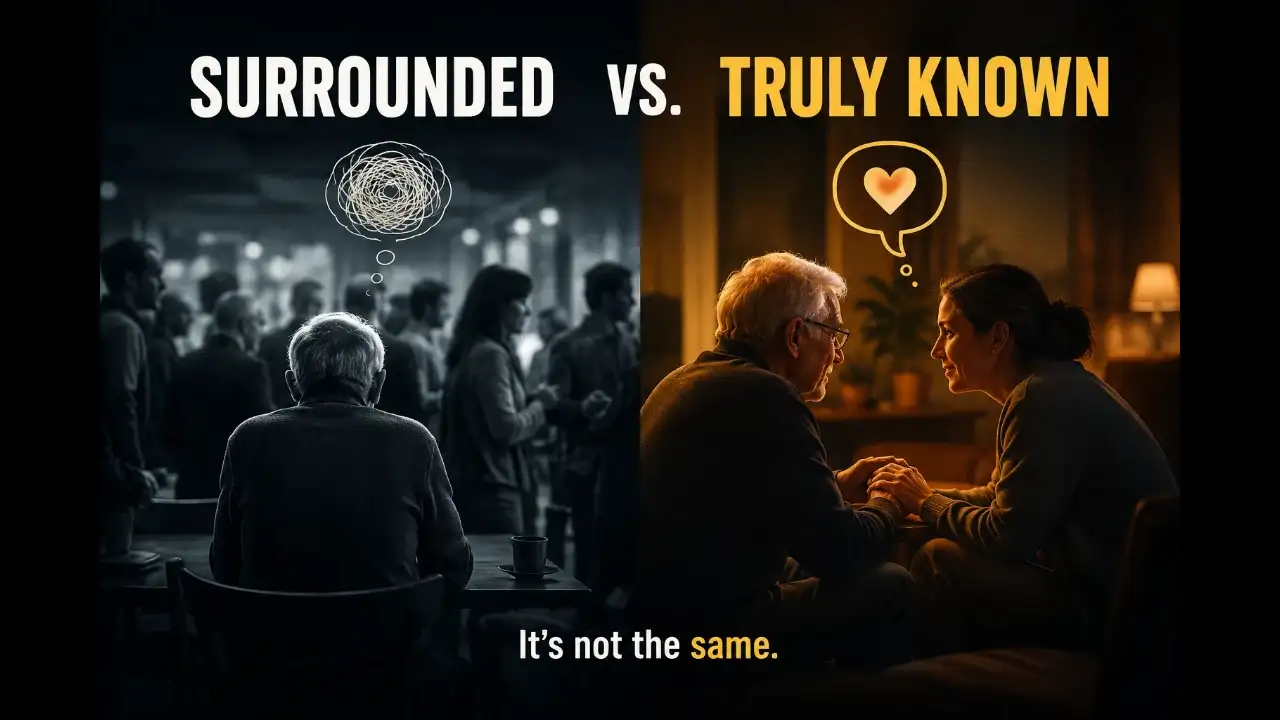
Getting older does not always mean having fewer people in your life. Sometimes the harder part is having people around you but feeling less understood by them. That difference is becoming easier to see in new U.S. research on loneliness, social connection and aging. The issue is not simply whether someone has family, friends or a busy social calendar. It is whether those relationships create a real sense of belonging, support and being known.
The distinction matters because loneliness and social isolation are not the same thing. A person can live alone and feel deeply connected to other people. Another person can live with a spouse, have children nearby and regularly attend social events, yet still feel emotionally alone. As Americans live longer and move through retirement, widowhood, relocation and changing family roles, the quality of relationships can matter as much as the number of people around them.
Why can you feel lonely when you are surrounded by people?
The simplest answer is that loneliness is about the gap between the relationships a person has and the relationships they want. The Centers for Disease Control and Prevention distinguishes loneliness from social isolation. Social isolation involves having limited relationships or contact with other people. Loneliness is the subjective feeling of being disconnected or lacking the meaningful relationships a person wants. That is why a crowded family gathering does not automatically make someone feel connected.