Construction is a $2.1 trillion sector in the US alone, but it’s not without potential pitfalls. For instance, building on raw dirt is a recipe for structural disaster. Without proper site preparation, even the most expensive architectural designs will eventually succumb to shifting soil and moisture damage.
The stability of your entire project rests on what happens before the first brick is laid. Professional site prep involves stripping organic matter, balancing the water table, and ensuring the ground can actually support the weight you intend to place on it. If you skip the dirt work, you aren't just saving time; you are scheduling a future date with foundation failure.
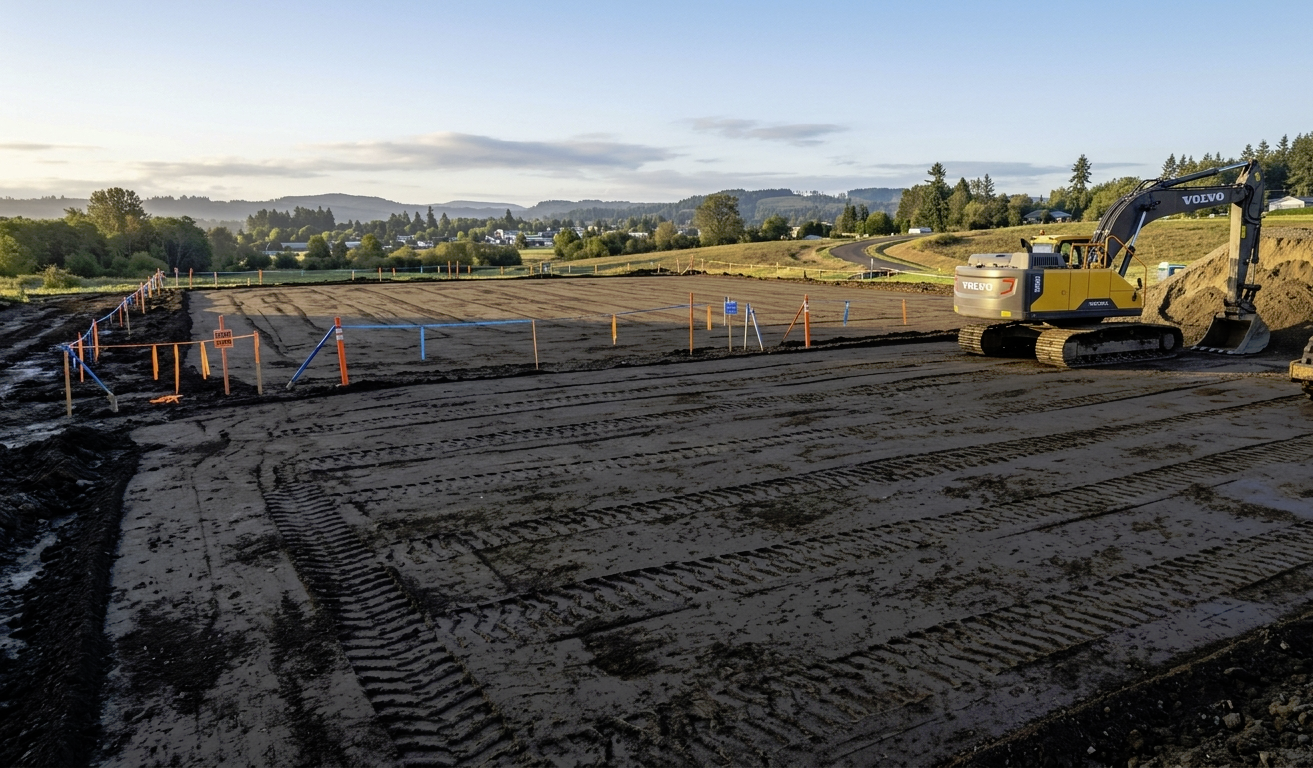
Image Source: Google Gemini
The Foundation Of Structural Integrity
Construction site inspections can reveal significant soil density issues. These failures often stem from a misunderstanding of how soil behaves under pressure. When soil is loose or saturated with water, it lacks the shear strength needed to support a heavy slab or footing.
A building doesn't just sit on the ground; it interacts with it. Achieving 95% of maximum dry density is the industry standard required to keep a structure from sinking or tilting over time. This level of compaction forces air out of the soil and locks particles together, creating a rigid platform.
Soil that hasn't been properly tested or compacted will eventually settle. This movement is rarely uniform, leading to differential settlement, with one side of the building dropping faster than the other. This is the primary cause of those jagged diagonal cracks you see in masonry or drywall.
Why Compaction and Drainage Rule the Site
Water is the enemy of any permanent structure. If the site is not graded correctly, water will pool against the foundation, eventually seeping into the concrete or washing away the supporting soil entirely. This creates voids that can lead to catastrophic collapses or chronic basement flooding.
Proper excavation and grading ensure that every drop of rain moves away from the building envelope. Many modern projects are now looking for comprehensive hardscaping services here to integrate drainage systems directly into the initial earthwork. Doing this early prevents the soil from becoming a lubricant that allows the foundation to slide.
Stable ground conditions require a specific balance of moisture during the preparation phase.
- Excavators must remove "soft spots" or pockets of organic material, like roots and decaying leaves
- Grading should create a slope of at least six inches of fall within the first ten feet from the building
- Sub-base materials need to be layered and compacted in thin lifts to ensure uniform strength
When these steps are followed, the building remains static. The early-stage site surveys and risk assessments performed by seasoned crews are what separate a twenty-year building from a hundred-year building.
Soil Mechanics and Load Distribution
Every type of soil has a different bearing capacity. Clay expands when wet and shrinks when dry, while sandy soils can wash away if not contained. If your site prep crew doesn't understand the specific geology of your lot, they cannot prepare the ground to handle the load.
Engineers look for "stiffness" in the soil. This isn't just about being hard; it is about the soil's ability to return to its original shape after being compressed. Using heavy machinery to vibrate and press the soil increases the friction between particles. This friction actually carries the building's load.
If the soil is too wet, the water acts as a lubricant, preventing it from reaching the necessary density. Conversely, soil that is too dry won't bind. Knowledgeable teams monitor the moisture content throughout the excavation process to ensure the ground is at its "optimum moisture" for maximum stability.
Avoiding The Cost Of Remedial Repair
Fixing a foundation after the building is finished is exponentially more expensive than doing the site prep right the first time. Helical piers, slab jacking, and underpinning are all incredibly invasive and costly solutions to a problem that shouldn't have existed in the first place.
Foundation cracks and sticking doors are the most common early warning signs that the ground beneath was never truly ready to support the weight. By the time these symptoms appear, the damage to the frame and finishes is already done.
Invest in the ground before you invest in the walls. A well-prepared site is the only way to guarantee that your investment stays level and dry for the long haul. Even if you’re using the best software to manage project costs, doing what you can to avoid expensive issues like this is a must.
Creating A Resilient Build Site
Quality excavation is more than just moving dirt from one spot to another. It is a technical process of re-engineering the environment to suit human habitation. When you prioritize the sub-grade, you build a legacy that won't shift with the seasons.
Check out our other articles on a cavalcade of topics, including construction, health and beauty, entertainment, and more, to fill your free time with informative content.