As I crossed Parliament Square last Friday lunchtime, I heard a chorus of police sirens behind me. Turning round, I saw two small blue police vans of a type I had never noticed before, followed at speed by a small convoy of unmarked police cars. Who, I wondered, was in the vans? And why?
It did not take me long to find out. Within a few hours, the Guardian, the BBC and other news outlets carried extensive reports.
It turned out that four young men were appearing in court that afternoon charged with preparing for acts of terrorism, an offence punishable with life imprisonment under section 5 of the Terrorism Act 2006. A fifth faces charges under the Firearms Act 1968. But what was so striking about the news reports was the level of detail they included.
Reports of a defendant’s first appearance at a magistrates court are restricted by legislation designed to avoid prejudicing the jury at a forthcoming trial. Indeed, the attorney general, Jeremy Wright, had published advice on contempt of court laws after the four defendants were arrested earlier this month. Advice notices used to be sent only to news organisations, but are now addressed to all social media users and posted online.
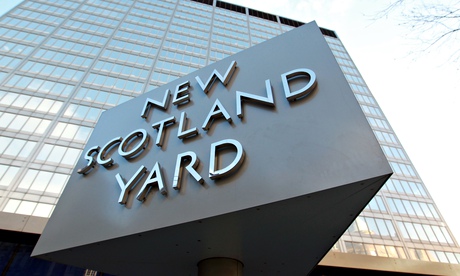
Despite the detailed coverage of the mens’ appearance in court, there has been no suggestion that the Guardian’s report last week breached the Contempt of Court Act. And little wonder. The formal charges against the four defendants are unusually detailed. They contain no fewer than 25 distinct allegations. Those charges were released to reporters by Scotland Yard with the clear intention that they should be reported to the public.
What’s more, it was only a few hours since Britain’s most senior counter-terrorism officer had issued what was described by the Guardian’s Vikram Dodd as one of the most comprehensive statements so far about the scale of the threat posed to Britain by the rise of Islamist extremism in Syria and Iraq. Assistant commissioner Mark Rowley said the police had already disrupted several plots this year “directed by or inspired by terrorism overseas” to murder people on Britain’s streets.
All this openness is very much to be welcomed. Nobody should speculate about the guilt or innocence of those charged last week, or of any other defendants awaiting trial. But it is absurd to suppose that factual reporting of the charges against individual defendants could prejudice a trial some months later, even if some of those charges are modified or dropped before the case comes before a jury.
We also rely on the police to protect us – or, failing that, to warn us – when were are at risk. They must brief the public fully about the scale of the threat we face from terrorism, withholding information only if it would be of direct use to terrorists and their supporters.
Why, though, have the police adopted this refreshingly open approach? Here, we enter the realms of speculation. We know that police officers themselves are now alleged to be terrorist targets. A specific police station is named in the charges against the four men arrested this month. But we must assume that the decision to release detailed allegations was approved by the Crown Prosecution Service — and perhaps by the attorney general, who supervises its work.
More plausibly, perhaps the police now understand that newspapers abhor a vacuum and that facts tend to drive out speculation. It is difficult to argue that police and prosecutors have no grounds to charge a defendant when you can see the detailed allegations against that individual.
But there is a deeper issue here and it is one of trust. In matters of security, the authorities cannot be entirely open with the public. They have to show that they are acting in good faith. And greater openness is the best way of winning public confidence.
There are some encouraging signs elsewhere. The investigatory powers tribunal, criticised for being a secret court, now sometimes sits in public (if you know where to find it). It has a reasonable website. The tribunal’s chairman, Mr Justice Burton, was interviewed on Law in Action last year. There is even a link to my interview with him on the tribunal’s website.
The Interception of Communications Commissioner’s Office also has a decent website and a lively Twitter feed. When news broke last month that Scotland Yard was using the Regulation of Investigatory Powers Act 2000 (Ripa) to obtain journalists’ call records without their consent, the commissioner issued a detailed note reminding the police that they must act proportionately.
That followed revelations in the Operation Alice report into the Plebgate affair. When a second case emerged – involving the former MP Chris Huhne and the former barrister Constance Briscoe — the commissioner launched an inquiry. Sir Paul Kennedy, standing in for his successor Sir Anthony May while the latter recovers from a serious road accident, ordered chief constables to provide him with details of all investigations that had used Ripa powers to identify journalistic sources. Kennedy promised to publish a report.
Other watchdogs are also beginning to bark more loudly. Although there is still much more they could do, perhaps the authorities are beginning to understand that if they want to win our trust they must trust us with more information about what they do on our behalf.