An Oxford philosopher this week described their drug experiences in a survey by online student newspaper the Tab. "Having dinner with parents while seeing the world in monochrome and feeling supremely dizzy! I think my speech was barely coherent."
Yawn. Other drug experiences recounted to the Tab are more entertaining. The Nottingham classicist who ran 4km home in 3D glasses while off their nut on illicit pharmaceuticals. The Oxford maths student who took MDMA, ketamine and laughing gas: "I thought I was Godzilla."
The Tab's survey of more than 5,000 students at 21 British universities reveals that 87% of philosophers polled had taken drugs, compared with 57% of medical students. Why this discrepancy? Is it because philosophy is easier than medicine and thus offers more recreational downtime? Really? Is grasping the Kantian noumenon less demanding than dissecting corpses?
The Tab's editors, sensibly, say the survey should be taken with a pinch of salt since respondents are self-selecting. But if so, why would philosophy students be more likely to self-select than others? Is it – and this is just a theory – that relative employment prospects drive philosophers to seek solace in drugs? If so, why would a higher proportion of business administration students than lawyers claim to be drug users?
Another theory is that philosophy – more than any other intellectual discipline (with the possible exception of a level three plumbing NVQ) – requires one to recalibrate the portals of one's consciousness in order to get one's intellectual freak on. In Thomas Nagel's superb essay What is it Like to be a Bat?, for instance, the great philosopher wrote: "I want to know what it is like for a bat to be a bat. Yet if I try to imagine this, I am restricted to the resources of my own mind, and those resources are inadequate to the task."
Nagel didn't think to take drugs to expand those resources, but other philosophers have done. William James took nitrous oxide and found, as he reported in The Varieties of Religious Experience, that it served to "stimulate the mystical consciousness to an extraordinary degree". It was only then he understood Hegelian philosophy's notion of god: "[T]o me the living sense of its reality only comes in the artificial mystic states of mind."
Perhaps James's drug experimenting is inspiring today's philosophers: 45% of students polled claimed to have taken laughing gas. Or perhaps not – 68% had taken cannabis. Until a cross-referencing of which types of students favour what kind of drugs, we are lost in a world of diverting speculation.
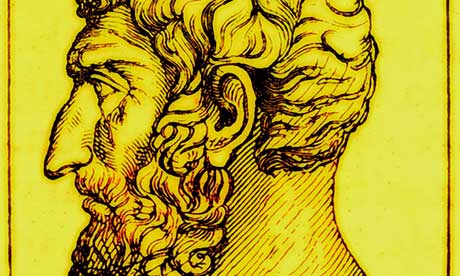
In ancient Greece and Rome, there was a drug called the tetrapharmakos, consisting of wax, pork fat, pitch and pine resin. Yummy. Hadrian considered it a delicacy and, possibly, commissioned a wall while under its influence. I mention it because Hellenistic philosopher Epicurus used tetrapharmakos to designate the four-part means of leading the happiest possible life. Clearly, too few of today's philosophers read Epicurus. Forget druggie hedonism, he counselled, the cure for what ails you is intellectual, not mystical: don't fear God, don't worry about death, what is good is easy to get, what is terrible is easy to endure.
With this cure, Epicurus recommended, one might achieve ataraxia – freedom from worry and distress. Good point. But if you want to understand Hegel or know what it's like to be a bat or Godzilla, try laughing gas.