There’s a moment many people experience: you open your credit card statement, see the minimum payment, and think it’s not so bad. It feels like a tiny financial victory—like the bank is giving you a break.
But behind that deceptively small number is a trap that quietly drains your wallet month after month. Paying only the minimum on a $5,000 balance can lead to over $4,200 in interest, turning a manageable debt into a long‑term financial burden.
Most people don’t realize how this happens until they’ve already paid far more than they borrowed. Let’s break down why minimum payments are so sneaky, how interest piles up, and what you can do to escape the cycle.
Minimum Payments Are Designed to Keep You in Debt Longer
Credit card minimum payments are usually calculated as a small percentage of your total balance—often around 1% to 3% plus interest. That means the payment barely dents the principal. When you pay only the minimum, most of your money goes toward interest, not the actual debt. This is why balances shrink painfully slowly.
Credit card companies aren’t being generous by offering low minimums; they’re ensuring the debt sticks around long enough to generate significant interest. This structure turns a $5,000 balance into a long‑term commitment, even if you never make another purchase. The math works quietly in the background, and unless you’re watching closely, it’s easy to underestimate how much interest is accumulating.
How Interest Snowballs Even When You’re Paying Every Month
Credit card interest is typically calculated using a daily rate based on the card’s annual percentage rate (APR). If your APR is, for example, 20%, that interest compounds every single day. When you only pay the minimum, the principal barely moves, so the next month’s interest is calculated on almost the same balance. This creates a snowball effect where interest keeps building on top of interest.
Even though you’re making payments, the balance doesn’t fall quickly enough to reduce the interest meaningfully. This is how a $5,000 balance can generate more than $4,200 in interest over time. It’s not because you’re doing anything wrong—it’s because the system is designed to stretch out repayment as long as possible.
Why a $5,000 Balance Can Take Years to Pay Off
If you stick to minimum payments, it can take many years to pay off a $5,000 balance. The exact timeline depends on your APR and the minimum payment formula, but it’s common for repayment to stretch well beyond a decade. During that time, interest keeps accumulating, and the total amount you pay ends up being far higher than the original balance.
This is why credit card statements now include a “minimum payment warning” showing how long repayment will take if you only pay the minimum. It’s meant to help consumers understand the long‑term cost of carrying a balance. The numbers can be shocking, but they’re accurate—and they highlight how expensive minimum payments can be.
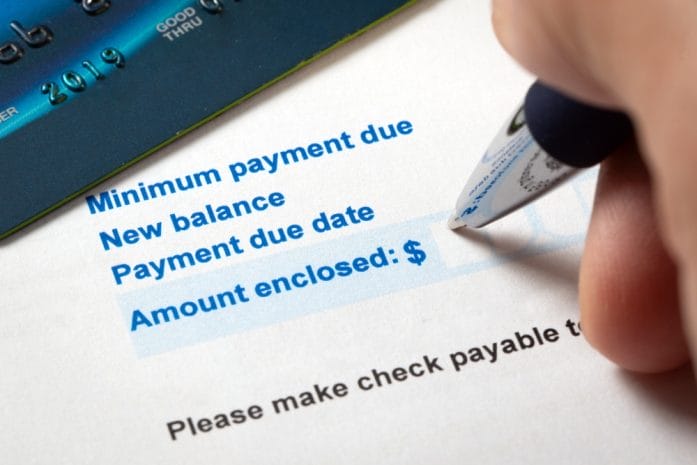
The $4,200 Interest Example: What’s Actually Happening
When a $5,000 balance generates more than $4,200 in interest, it’s because the minimum payment barely reduces the principal each month. For example, if your minimum payment is around $100, a large portion of that goes toward interest. Only a small amount—sometimes just a few dollars—reduces the actual balance.
As a result, the principal decreases slowly, and interest continues to accumulate on a high balance for a long time. Over the full repayment period, the total interest paid can exceed 80% of the original balance. This isn’t a rare scenario; it’s a common outcome for anyone who relies on minimum payments as their primary repayment strategy.
Why Minimum Payments Feel Manageable—But Cost More in the Long Run
Minimum payments are intentionally low to make debt feel manageable. They’re designed to fit easily into a monthly budget, which is why so many people rely on them. But the trade‑off is that low payments extend the life of the debt and increase the total interest paid. It’s a psychological trap: the payment feels small, so the debt feels small, even though the long‑term cost is huge.
This is why financial educators emphasize paying more than the minimum whenever possible. Even small increases—like an extra $20 or $30 a month—can significantly reduce interest and shorten repayment time.
Simple Strategies to Reduce Interest Without Overhauling Your Budget
You don’t need a massive financial overhaul to avoid paying thousands in interest. Small, consistent changes can make a big difference. One strategy is to round up your payment—if the minimum is $100, pay $150 or $200 instead. Another option is to set up automatic payments that exceed the minimum, ensuring you stay on track.
You can also target one card at a time using a focused repayment method, such as paying extra toward the highest‑interest balance. These strategies reduce the principal faster, which lowers the amount of interest charged each month. Over time, the savings add up significantly.
The Power of Paying a Little More Each Month
Paying more than the minimum doesn’t just reduce interest—it gives you control over your financial future. When you chip away at the principal, you shorten the repayment timeline and reduce the total cost of the debt. Even modest increases can save hundreds or thousands of dollars in interest.
It’s not about paying off the entire balance at once; it’s about making steady progress. The key is consistency. Once you get into the habit of paying more than the minimum, the balance starts to fall faster, and the interest becomes less overwhelming. It’s a small shift that leads to big results.
Breaking Free From the Minimum Payment Cycle
Minimum payments may seem convenient, but they come with a hidden price tag. By understanding how interest accumulates and why minimum payments keep you in debt longer, you can make smarter choices that save money over time.
What’s the biggest challenge you’ve faced when trying to pay down credit card debt? Share your experience and story in the comments.
You May Also Like…
Retail Store Credit Cards Now Charging 30% APR on Average
5 Invisible Service Charges Eating Into Your Bank Balance
The Hidden Costs of Balance Transfers You Should Know
Why “Work-Life Balance” Is a Lie for Most People
The Single Late Payment That Raises APR to 29.99% Permanently at Discover
The post Why Paying Only the Minimum Creates $4,200 in Interest on a $5,000 Balance appeared first on The Free Financial Advisor.