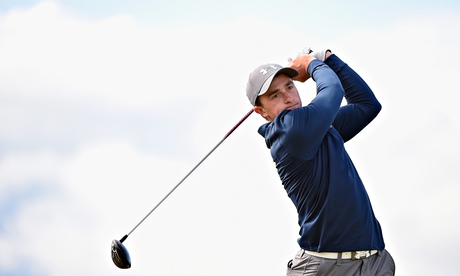
An Open Championship victory for Paul Dunne would unquestionably change his life and make an immediate move from amateur to professional status an obvious one. For the remaining 75 professionals in the St Andrews field, there would also be a financial spin-off. They would share more than £1m.
As an amateur, the 22-year-old Dunne is not eligible to claim the £1,150,000 first prize or any cash reward from whatever tournament he enters. Instead, the leading non-professional who makes the cut at this event wins a medal. Dunne would, at least, also be allowed to take the Claret Jug home to Ireland.
With no provision within the Open’s rules and regulations for such a scenario, on Monday the R&A’s championship committee held a meeting to determine what to do with the winner’s share of the prize fund in the event of a Dunne victory. The outcome was a change to what had been regarded as common practice; when Shane Lowry, then an amateur, won the Irish Open in 2009 Robert Rock, the runner-up, took the top cash prize.
“This decision is specific to the 144th Open and does not bind future committees,” said the R&A in a statement.
“The Open is a standalone championship and the championship committee does not believe that first-place prize money should be paid to a second-place finisher.
“Should an amateur win the 144th Open, first-place prize money will be distributed proportionately among the professional players who make the cut.”
Dunne, who shared the lead heading into the final round, plans to turn professional later this year after competing for Great Britain and Ireland in the Walker Cup. However, an Open triumph – the first for an amateur since 1930 – would instantly open up a host of exemptions, including for five years on the PGA Tour, and lucrative sponsorship deals.