“मनोजवं मारुततुल्यवेगं जितेन्द्रियं बुद्धिमतां वरिष्ठम्।
वातात्मजं वानरयूथमुख्यं श्रीरामदूतं शरणं प्रपद्ये॥”
Many people place Panchmukhi Hanuman near the main door of their home, but few know the exact reason behind this tradition. In Hindu belief and Vastu Shastra, the entrance of the house is considered the point from where both positive and negative energy enters. That is why many families place sacred symbols at the entrance to protect the house.
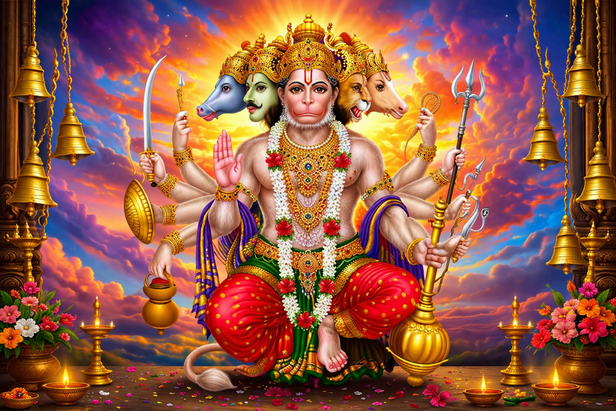
Panchmukhi Hanuman, or the five-faced form of Hanuman, is considered especially powerful for guarding the home from evil eye, negativity, fear, and disturbances.
1. Panchmukhi Hanuman Is Considered A Protector Of The Home
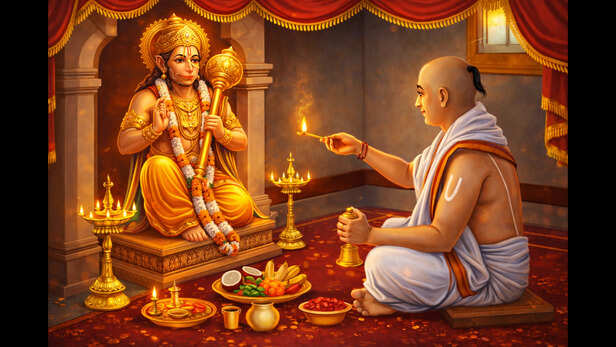
The main reason people place Panchmukhi Hanuman near the entrance is protection. In Vastu, the main door is believed to be the gateway of energy. If negative energy enters from there, it can affect the peace, mood, and harmony of the family.
Panchmukhi Hanuman is believed to block harmful energies, jealousy, and bad intentions before they enter the house. That is why many people place the image facing outward near the entrance.
2. The Five Faces Have Different Meanings
Panchmukhi Hanuman has five faces, and each one is believed to offer a different kind of blessing:
- Hanuman face gives courage, strength, and protection
- Narasimha face removes fear and protects from evil
- Garuda face is believed to guard against black magic and hidden dangers
- Varaha face is linked to health, wealth, and stability
- Hayagriva face represents wisdom and peace of mind
Because of these five forms together, Panchmukhi Hanuman is believed to protect every important part of life.
3. It Is Believed To Protect Against Nazar
Many people keep Panchmukhi Hanuman near the main door to protect the house from nazar or evil eye. In Indian homes, it is believed that jealousy, too much praise, or negative attention can affect the family.
Panchmukhi Hanuman is seen as a strong symbol of spiritual protection, which is why some people prefer it over traditional nazar battu or black thread remedies.
4. It Is Often Recommended For South Facing Homes
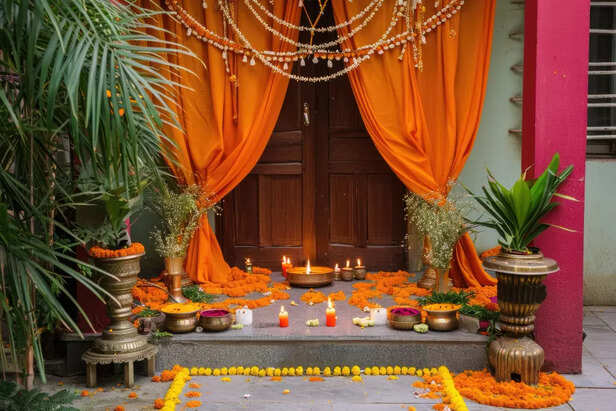
According to Vastu beliefs, south-facing entrances can sometimes create energy imbalance if not managed properly.
Because one of Panchmukhi Hanuman’s faces is linked with the south direction, many people place his image near south-facing doors to reduce negative effects and create balance in the home.
5. The Main Door Is Seen As The Most Important Part Of The House
In Vastu, the entrance is believed to decide what kind of energy enters the home. A clean, positive entrance is said to attract peace, prosperity, and happiness.
That is why Panchmukhi Hanuman is often placed near the main door rather than inside a room. It is believed that his presence near the entrance helps maintain positive vibrations in the entire house.
6. There Are Certain Placement Rules
People usually follow a few simple rules while placing Panchmukhi Hanuman near the entrance:
- The image should face outside
- It is often placed above the main door
- The place around it should be clean
- It should not be placed near shoes, dustbins, or toilets
- Many people avoid placing it inside bedrooms
These placement rules are followed to maintain the sacredness of the image.
Panchmukhi Hanuman near the main door is not only a Vastu remedy. For many families, it is also a symbol of safety, courage, and faith. It gives people the feeling that their home is protected and watched over at all times.