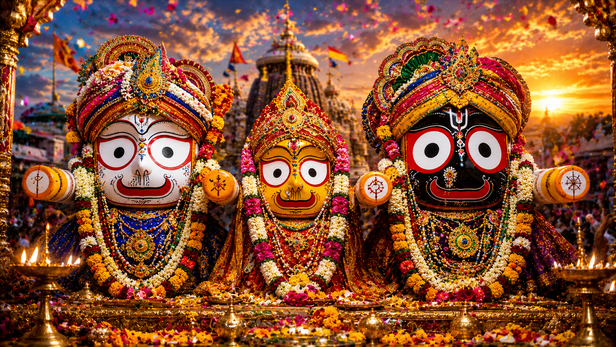
Every year, millions of devotees gather in Puri to witness the magnificent Rath Yatra of Lord Jagannath. Amid the grandeur of towering chariots and devotional chants, one question continues to fascinate pilgrims and historians alike why does Lord Jagannath's idol remain unfinished? Unlike most Hindu deities, the idols of Jagannath, Balabhadra, and Subhadra have no fully formed hands or feet. Is this an unfinished masterpiece, or does it carry a divine message? The answer lies in two extraordinary legends that have been passed down for centuries.
The Divine Form That Left Narada Amazed
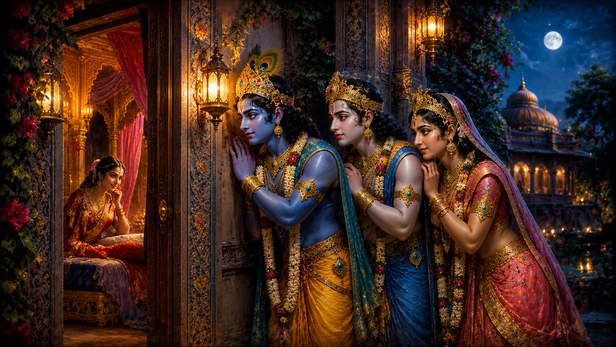
According to legend, the divine form of Jagannath first appeared during Krishna's remembrance of Radha.
One popular legend says that Mother Rohini was narrating the divine love of Radha and Krishna while Subhadra guarded the entrance. Krishna and Balabhadra quietly arrived and listened from outside. As they became completely absorbed in the story, their bodies transformed into an extraordinary form with large eyes and merged limbs. Sage Narada witnessed this divine sight and requested Krishna to remain on Earth in this unique form so devotees could experience his divine presence forever.
King Indradyumna's Sacred Dream
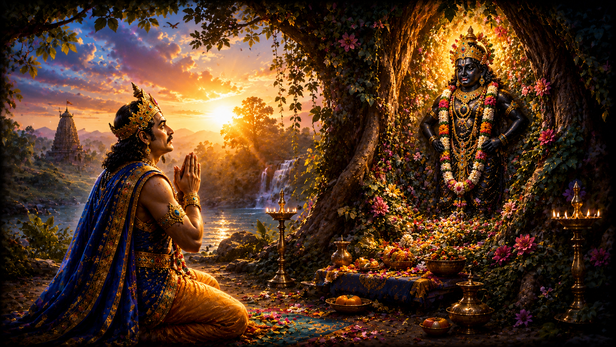
The king's devotion inspired the creation of one of Hinduism's most sacred idols.
According to the Skanda Purana, King Indradyumna longed to establish the divine form of Lord Neelamadhava on Earth. Hearing his sincere prayers, Lord Vishwakarma appeared disguised as an elderly carpenter. He agreed to carve the sacred idols of Jagannath, Balabhadra, and Subhadra, but imposed one strict condition the work had to remain completely undisturbed for twenty-one days behind closed doors. The king accepted, believing patience would lead to perfection.
One Broken Promise Changed History Forever
As days passed, the sounds of carving suddenly stopped. Fearful that something had happened to the elderly craftsman, King Indradyumna could no longer control his curiosity. Ignoring his promise, he ordered the chamber to be opened before the twenty-one days were complete. The moment the doors opened, Vishwakarma disappeared, leaving behind the unfinished wooden idols. Though incomplete, they radiated divine energy, and the king understood they were meant to remain exactly as they were.
Why Devotees Worship the Unfinished Form
The unfinished idols teach a profound spiritual lesson. In Hindu philosophy, God is not limited by physical perfection or external appearance. Lord Jagannath's form reminds devotees that true divinity lies beyond the body. The missing hands and feet symbolise that the Lord reaches every devotee without physical movement and embraces the entire universe without visible arms. For millions, these idols represent limitless compassion rather than incompleteness.
Nabakalebara Celebrates the Cycle of Life
Approximately every twelve years, during the sacred Nabakalebara festival, new wooden idols are carved from specially selected neem trees. The divine essence is ceremonially transferred from the old idols to the new ones through ancient rituals known only to temple priests. This remarkable tradition symbolises that while the physical body changes with time, the soul remains eternal—a timeless teaching found throughout Hindu philosophy.
A Mystery That Inspires Millions Every Year
The mystery of Lord Jagannath's unfinished idol continues to draw millions of pilgrims to Puri every year. Whether viewed through mythology, devotion, or symbolism, the sacred form reminds people that faith often begins where logic ends. The annual Rath Yatra celebrates not only the Lord's journey through the streets but also humanity's journey toward humility, patience, and unconditional devotion.
Unlock insightful tips and inspiration on personal growth, productivity, and well-being. Stay motivated and updated with the latest at My Life XP.
Frequently Asked Questions (FAQs)
1. Why is Lord Jagannath's idol incomplete?According to Hindu tradition, there are two popular legends. One says the idol represents the divine form Lord Krishna assumed while listening to the glories of Radha. Another, found in the Skanda Purana, says Lord Vishwakarma left the idols unfinished after King Indradyumna opened the workshop before the agreed time.
2. Why does Lord Jagannath's idol have no fully formed hands and feet?
The unfinished limbs are considered deeply symbolic. Many devotees believe they represent the idea that God is beyond physical form and reaches everyone through divine grace rather than physical actions.
3. Who carved the idols of Lord Jagannath, Balabhadra, and Subhadra?
According to the Skanda Purana, the celestial architect Lord Vishwakarma carved the idols while disguised as an elderly artisan. He agreed to complete the work only if he could remain undisturbed for 21 days.
4. Why did King Indradyumna open the door before the work was finished?
The king became worried after the sounds of carving suddenly stopped. Fearing that something had happened to the elderly craftsman, he opened the door before the 21-day period ended, unintentionally breaking his promise.
5. What is the significance of the Nabakalebara festival?
Nabakalebara is a sacred ritual held approximately every 12 years, during which the wooden idols of Lord Jagannath, Balabhadra, and Subhadra are replaced with newly carved neem wood idols. The ceremony symbolises the eternal cycle of death, rebirth, and the immortality of the soul.