Why is bad American art so much more interesting than bad British art? I couldn't help wondering at the exhibition The Wyeth Family at the Dulwich Picture Gallery. Some may dispute the term "bad" for this lineage of realist painters whose most famous member, Andrew Wyeth, died in 2009. Undoubtedly he possessed real talent and imagination – at least in contrast to the other Wyeths, judging from the show.
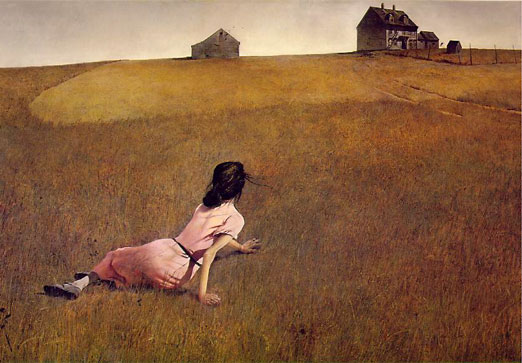
Andrew Wyeth painted Christina's World, which belongs to the Museum of Modern Art (MoMA), a lonely vista of middle-American melancholy accepted at the centre of the New York art world among the Rothkos and Pollocks. I don't think for one minute that Wyeth is in the same class as the abstract American painters of the 20th century or for that matter earlier American realists such as Thomas Eakins or Grant Wood. He is, however, the Clint Eastwood of American painters – Eastwood as film director, I mean: all middlebrow seriousness. I can easily imagine Eastwood finding inspiration in Wyeth.
As a whole, however, the Wyeth family tradition of art is populist hokum that appeals to boardroom philistines – the entire collection on view at Dulwich is owned by the Bank of America. But I have to confess I enjoyed the show. I love Americana, and have never really seen an American work of art I didn't like. I've even enjoyed looking at scrimshaw carvings in New England whaling museums and old dioramas in the American Museum of Natural History. It is all fascinating.
What it comes down to is, I like America. It amazes me, and its visual culture is endlessly creative. In fact it's not merely that bad American art is more fun than bad British art; it is also better than a lot of "good" British art. There's a drabness to a lot of respectable British culture that American artists just are not capable of. Their landscape, natural and synthetic, is too extraordinary ever to disappoint.