

It is difficult to delve too deeply into the biggest losers after the first Formula 1 race of the season in Melbourne (Aston Martin and its Honda power unit woes aside), but if you had to choose one team from among the top squad, it would probably be McLaren.
A year ago, it was celebrating beat Mercedes and all of its rivals despite having a customer engine. Within a few months, however, the scenario has changed - and not just because of the power unit.
Norris crossed the finish line 51.741s behind winner George Russell and the magnitude of the gap left many confused about what created it. However, there is no single cause, but rather a combination of several factors, because 12 months ago, McLaren’s MCL39 was the best aerodynamics package and at ground clearance management, but today the scenario is different.
McLaren has made no secret of its surprise not only at the final gap, but above all at the way Mercedes has interpreted the management of the hybrid system, which has greater influence on performance this year and in a completely different way. This is, after all, one of the advantages of being a manufacturer and developing your own power unit independently – the primary reason behind Red Bull’s decision to bring its engine division in-house, while Aston Martin tied itself to Honda as a works outfit.
Mercedes has a wealth of knowledge
Having worked on these units for years, Mercedes has also developed the software and usage models, testing them in relation to the different characteristics of the tracks. It is therefore natural that additional knowledge has been accumulated, especially at the beginning of a new technical cycle, which Mercedes is not required to share in full with its customers.
It is a dynamic similar to that seen in Formula E: the manufacturer provides the basic software and tools, but it is then up to the customer teams to figure out how to optimise and make the most of them, both in relation to the characteristics of its own car and each track. The same was already the case in the previous technical cycle, but today optimising the power unit’s performance is both more important and more complex.
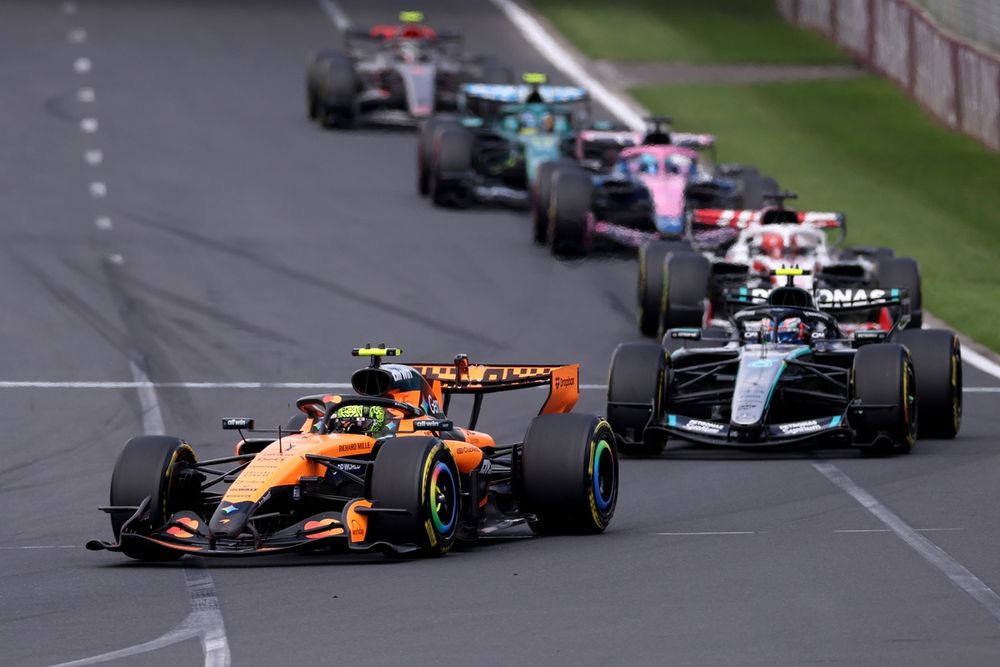
With a battery that charges and discharges cyclically, it is no longer just peak power that makes the difference, but also where and how it is used, as well as the points at which it may be more convenient to recharge with super clipping and lift and coast. Getting these parameters wrong can cost several tenths of a second per lap, and it is no coincidence that Williams boss James Vowles said, "what Mercedes is doing with the Power Unit has taken us a bit by surprise".
This sentiment is shared by McLaren team principal Andrea Stella, who would probably have preferred more extensive data sharing, but remains aware of the current deficit: "We were a little surprised by the difference we see in the data between the speed of our car and that of others using the same power unit. It is clear that we need to do a better job of understanding how to exploit the power unit, considering the complexities introduced by the 2026 regulations."
Throughout the Australian weekend, McLaren was decidedly less effective on the straights, to the point that in qualifying there were differences of up to 10kph in the run to Turn 9. This is a significant gap, which, in that section alone, is consistently worth four tenths of a second. Perhaps the most critical aspect, however, is that even on all the other straights, the MCL40 was unable to compete with the W17.
Before Australia, Mercedes customers had hinted that they were not on the latest specification, but from Melbourne onwards, hardware and software must be identical, as required by the regulations, ensuring that customer teams can use the same tools as the manufacturer, provided there are no reliability issues. Beyond this, there are parameters that teams can work on independently. Starting from the base provided, it is in fact the teams that develop their own models for the power unit through dedicated software.
McLaren interprets some elements differently
It is not just a matter of unlocking mappings, because McLaren use a different hybrid management system to Mercedes, and this is not the only difference between the two teams. The Woking-based team, for example, uses significantly shorter gear ratios than Mercedes, a choice that influences the functioning of the power unit.
In Melbourne, for example, McLaren shifted into eighth gear very early, even in sections where its rivals remained in seventh throughout. More generally, beyond the shorter ratios that bring forward the moment of gear change, this led the MCL40 to cover some sections in a higher gear and at a lower engine speed than its rivals. As a result, the way the power unit is used also changes.
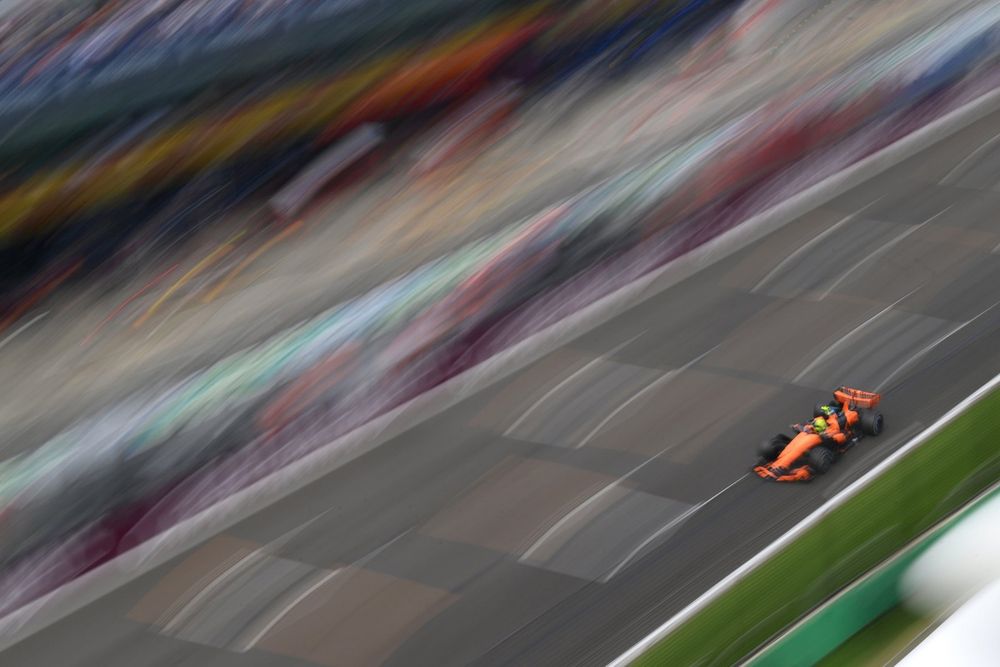
It is therefore not surprising that Andrea Stella pointed out that this is the first real occasion on which McLaren, as a customer team, feels clearly behind the manufacturer in terms of the power unit. This feeling also stems from the fact that creating a usage strategy is much more complex today than in the past, when energy utilisation was much less important.
The MCL40 also lacks downforce and has a weight issue
It is also true that Mercedes' advantage does not come solely from the engine, but also from other elements, starting with downforce. Although this aspect has been somewhat overshadowed, the W17 has a good chassis, which allows it to tackle corners at good speed and enhances its hybrid usage strategy.
"The performance gap comes from two main areas: one is the exploitation of the power unit and the other is having more grip in corners - we lack downforce,” Stella said. “So, there is definitely work to be done. At the same time, when we analyse the GPS overlays, we see that Mercedes is faster in some corners.”
This means everything works in a cascade: improving in some areas allows you to be more efficient in others. But there are also two related issues here, namely that the MCL40 is currently still overweight – which the team is working on, as Stella himself hinted and stated as one of the priorities – and, at the same time, there is a lack of downforce. These two elements work together and reduce grip for the drivers, to the extent that McLaren suffered from very pronounced graining during the race.
All these elements combined suggest that there is still a lot of room for improvement, but the question is: how long will it take?