If you believed what the news said five years ago, mainframes should have died out by now. But in 2026, these systems are still the backbone of global trade, handling transactions that keep banks, airlines, insurance companies, and governments running. It's not a question of whether mainframes are still important; it's a question of why it's more important than ever to modernize them.
The answer is a perfect storm of problems: an aging workforce, rising security threats, the need to integrate with the cloud, and the constant pressure to provide digital experiences that meet customer expectations. Companies can't afford to think "if it ain't broke, don't fix it" anymore if they want to stay competitive.
The Business Case Has Fundamentally Shifted
Five years ago, the main topic of conversation about modernizing mainframes was how much it would cost. Today, it's a strategic must because the market punishes people who move slowly.
Digital transformation initiatives fail at a rate of 70% and people often say that legacy system constraints are a major cause. Your mainframe isn't just handling transactions; it's also often the reason you can't launch new products, enter new markets, or respond to threats from competitors.
Think about the financial services industry. Because they use modern, API-first architectures, fintech startups can launch new banking products in just a few weeks. It takes traditional banks with mainframe cores months or years to make similar changes. The average time-to-market for new financial products at legacy institutions is 12-24 months compared to 2-4 weeks for digital-native competitors.
That gap isn't just annoying; it's a matter of life and death. When customers can switch providers with just a few taps on their smartphones, flexibility becomes a weapon in the fight for customers.
The Skills Crisis Reaches Critical Mass
Here's the uncomfortable truth most CIOs avoid discussing publicly: the mainframe skills shortage isn't coming—it's already here, and it's accelerating.
Nearly 60% of mainframe professionals are over 50 years old. Every year, retirement waves hit businesses harder and harder. It's not just losing people; it's also losing institutional knowledge that only the developers who have been maintaining these systems for decades have.
In the 1990s, colleges stopped teaching COBOL. There isn't a steady flow of new mainframe talent. Some companies do offer crash courses and bootcamps, but teaching someone to keep a complicated mainframe application running is not the same as teaching them JavaScript. It requires 30 to 40 years of experience with business logic.
Many businesses have turned to managed mainframe services as a practical way to deal with this talent shortage. Instead of rushing to hire rare COBOL developers, companies are working with specialized providers who keep pools of experienced mainframe professionals. These services give you access to experts when you need them, which means you don't have to rely on specific employees as much and can keep things running smoothly as teams change.
This makes things worse and worse. When experienced developers leave, maintenance costs go up because the rest of the team has trouble with code they don't know. When there are gaps in knowledge, debugging takes longer, there are more incidents in production, and the risk goes up. In the end, the system is a black box that no one wants to touch.
Modernization isn't optional when your alternative is losing the ability to maintain critical systems altogether.
Security Threats Have Evolved Faster Than Legacy Defenses
Mainframes are known for being secure, and in the past, that was true. But the threats that exist in 2026 are very different from the ones that existed when these systems were made.
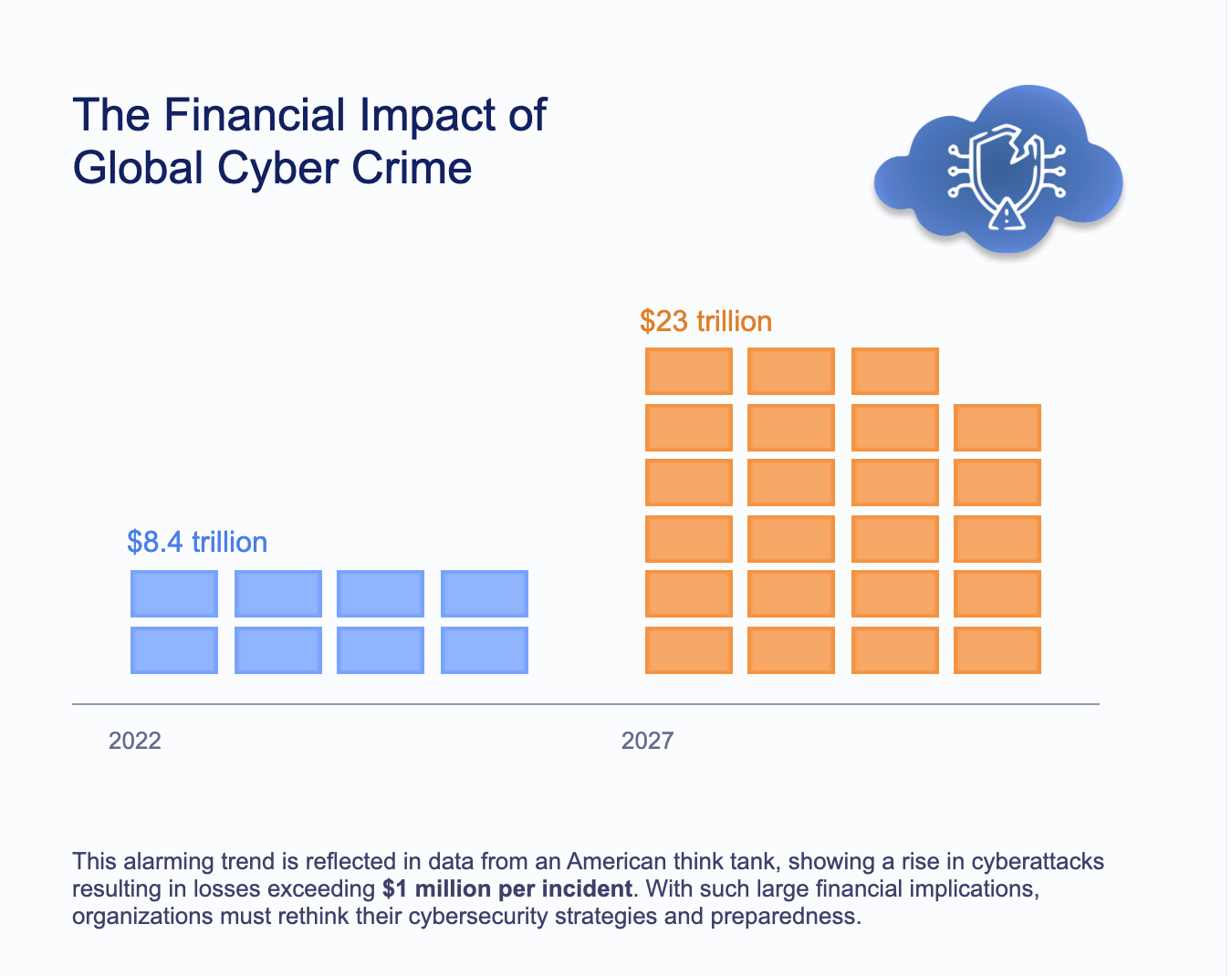
Cybercrime damages are projected to reach 23.82$ trillion by 2027 according to Salesforce and attackers are more and more likely to go after the places where old systems and new infrastructure connect.
Your mainframe may be safe, but what about the middleware that connects it to your mobile app? The API gateway that lets third-party developers use mainframe services? The protocols for moving files between systems?
Today's security model, which doesn't have any boundaries, wasn't made for legacy systems. They thought that the network was safe and that internal users could be trusted. These ideas don't work anymore because of remote work, cloud integration, and advanced supply chain attacks.
Zero-trust architecture, continuous authentication, and real-time threat detection are examples of modern security practices that older systems often don't have the ability to support. To modernize your mainframe's security, you don't have to get rid of it; you just have to make it stronger to deal with new threats.
Cloud Integration Is Non-Negotiable
The cloud versus mainframe debate is over, and the answer is "both." 92% of enterprises now have a multi-cloud strategy and mainframes must participate in that ecosystem or become isolated islands that bottleneck innovation.
Customers don't care that your mainframe runs your core banking system. They care that your website crashes during busy times, your mobile app is slow, and you can't offer features that your competitors do. A lot of the time, these problems that customers see are caused by problems with integrating old and new systems.
Modernization lets mainframes work as high-performance transaction engines in larger hybrid architectures. Through API enablement, containerization support, and cloud connectivity frameworks, mainframes become participants in modern DevOps workflows rather than exceptions requiring special handling.
Regulatory Compliance Demands Increase
Regulatory requirements haven't gotten easier; they've gotten a lot harder. GDPR, CCPA, PSD2, and rules that are specific to certain industries all require features like real-time audit trails, controls over where data is stored, and the ability to quickly respond to requests from data subjects.
Older systems that were built before these rules came into effect often don't have the tools or flexibility to follow them easily. Manual compliance processes cost a lot of money, are prone to mistakes, and don't work for large groups. Modernization can make compliance a part of the system architecture instead of adding it on later.
The Cost Equation Has Reversed
For years, the mainframe modernization argument was cost, moving to a new system is expensive and risky. But that calculation changes when you add in the costs of missed opportunities.
Companies that successfully modernize legacy systems see 30% reduction in operational costs and 4 times faster time-to-market for new capabilities. More importantly, they can actually compete in digital-first markets where agility determines winners and losers.
The real question isn't if you can afford to modernize; it's if you can afford not to. Every quarter you wait, your competitors get stronger, your technical debt grows, and your modernization challenge gets harder.
Strategic Modernization: What Success Looks Like
There are a few patterns that lead to successful modernization in 2026. Organizations don't start with technology preferences; they start with business outcomes. Instead of trying risky big-bang migrations, they modernize little by little. They create hybrid architectures that use the best parts of mainframes and add cloud features.
Most importantly, they see modernization as an ongoing process rather than a one-time project. Changes happen in technology all the time. Business needs are always changing. Companies that built the ability to modernize into their business model are the ones that are doing well today.
The Bottom Line
In 2026, modernizing mainframes is still a top priority because the only other option—staying the same while your competitors come up with new ideas—is no longer possible. The skills crisis, the state of security, what customers want, and how competition works have all made it so that modernization is no longer just about what technology people like. It's about the survival of the organization.
The businesses that will do best in the next ten years aren't the ones that got rid of their mainframes the fastest or held on to them the longest. They are the ones who made smart changes to their systems, keeping them reliable while making them more flexible. That is what enterprise IT leaders are up against today: a challenge and an opportunity.