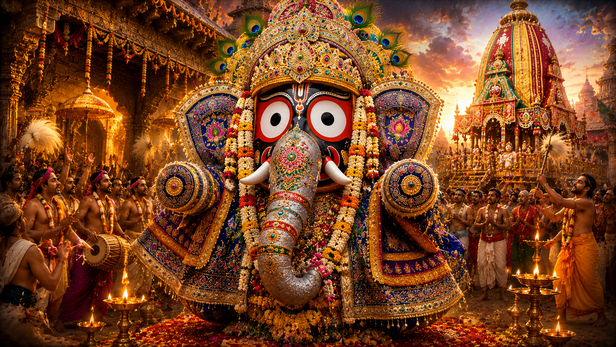
Every year, millions of devotees eagerly wait for one extraordinary moment at the Jagannath Temple in Puri. On Snana Purnima, Lord Jagannath appears in a magnificent elephant form known as Gaja Vesh. For many first-time visitors, this unique appearance raises an intriguing question why would the Lord of the Universe take the form of an elephant? The answer is not just a fascinating legend but a timeless lesson about devotion, compassion, and the limitless ways in which God responds to sincere faith.
The Sacred Day That Changes Everything
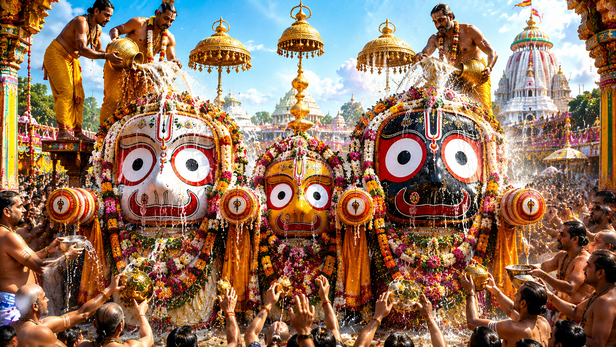
Snana Purnima marks the only day when Lord Jagannath appears in the rare Gaja Vesh.
Every year on Snana Purnima, Lord Jagannath, Lord Balabhadra, and Goddess Subhadra are brought to the Snana Mandap, where they receive a ceremonial bath with 108 sacred kalashs of holy water. After this grand ritual, the deities are adorned in extraordinary forms. Lord Jagannath and Lord Balabhadra appear with majestic elephant features, while Goddess Subhadra is decorated as a beautiful lotus. This breathtaking transformation is known as Gaja Vesh, attracting thousands of devotees seeking this rare and sacred darshan.
A Devotee's Faith Changed History
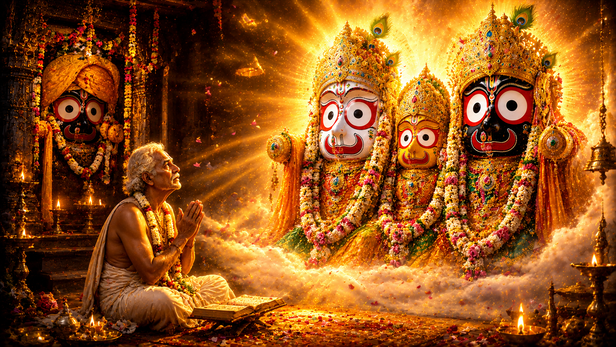
Lord Jagannath fulfilled the heartfelt wish of His devoted worshipper.
According to temple tradition, a learned scholar named Ganapati Bhatt, an ardent devotee of Lord Ganesha, once visited Puri. During Snana Yatra, he felt disappointed because he could not see his beloved Ganesha in Lord Jagannath. With a heavy heart, he decided to leave. Understanding his sincere devotion, Lord Jagannath appeared before him in a divine elephant-faced form, while Lord Balabhadra assumed a white elephant form and Goddess Subhadra appeared as a lotus. This miraculous vision became the origin of the sacred Gaja Vesh tradition.
The Deeper Meaning Behind Gaja Vesh
Gaja Vesh is much more than a decorative ritual. It teaches that the Supreme Lord is beyond any single form or appearance. Whether devotees worship Krishna, Vishnu, Jagannath, or Ganesha with pure devotion, the Divine responds with equal compassion. This beautiful tradition reflects the inclusive philosophy of Sanatan Dharma that there is one Supreme Reality, lovingly worshipped through many sacred forms.
Why the Elephant Form Matters
In Hindu tradition, the elephant represents intelligence, stability, wisdom, and auspiciousness. By appearing in this majestic form, Lord Jagannath conveys that divine grace is not limited by physical appearance. Instead, it is guided by love and devotion. The elephant form also honours Lord Ganesha, reminding devotees that all divine manifestations ultimately lead to the same Supreme Truth.
A Tradition That Still Inspires Millions
Centuries have passed since this remarkable tradition began, yet Gaja Vesh continues to inspire millions. Every Snana Purnima, devotees gather at the Jagannath Temple in Puri to witness this rare form, believing that its darshan brings immense spiritual blessings. The atmosphere is filled with devotion, prayers, and celebration as people from different backgrounds unite before the Lord, proving that faith knows no boundaries.
The Eternal Lesson of Gaja Vesh
The story of Gaja Vesh reminds us that God looks beyond rituals, language, and outward identity. What truly reaches the Divine is a heart filled with faith and surrender. Lord Jagannath's elephant form continues to teach that sincere devotion is always recognised and rewarded. It is a timeless message of compassion, acceptance, and divine love that remains as relevant today as it was centuries ago.
Unlock insightful tips and inspiration on personal growth, productivity, and well-being. Stay motivated and updated with the latest at My Life XP.
Frequently Asked Questions (FAQs)
1. What is Gaja Vesh of Lord Jagannath?Gaja Vesh, also known as Gajanan Vesha or Hathi Vesh, is a special form in which Lord Jagannath and Lord Balabhadra are adorned like elephants on Snana Purnima. On the same day, Goddess Subhadra is decorated in the form of a lotus. This unique tradition is one of the most revered rituals at the Jagannath Temple in Puri.
2. Why does Lord Jagannath take the elephant form?
According to a popular temple tradition, Lord Jagannath appeared in an elephant-faced form to bless Ganapati Bhatt, a devoted worshipper of Lord Ganesha. Through this divine appearance, the Lord showed that He accepts every sincere form of devotion and can manifest in any form for His devotees.
3. When is Gaja Vesh performed?
Gaja Vesh is performed every year on Snana Purnima (Dev Snan Purnima), just after the ceremonial bathing of the deities with 108 sacred kalashs (urns) of holy water at the Snana Mandap inside the Jagannath Temple in Puri.
4. Why is Snana Purnima important in the Jagannath tradition?
Snana Purnima marks the ceremonial public bathing of Lord Jagannath, Lord Balabhadra, and Goddess Subhadra before the annual Rath Yatra. It is one of the most significant rituals in the Jagannath tradition and is believed to purify and prepare the deities for the upcoming festival.
5. What is the spiritual message of Gaja Vesh?
Gaja Vesh symbolises the inclusive philosophy of Sanatan Dharma. It teaches that the Supreme Divine is one and responds to pure faith regardless of the form in which devotees worship. The tradition highlights Lord Jagannath's compassion, humility, and unconditional love for His devotees.