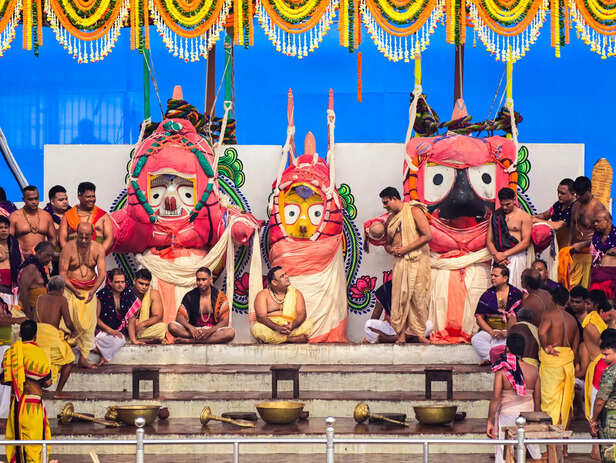
Before millions gather to pull the majestic chariots during Rath Yatra, a sacred ritual quietly prepares Lord Jagannath for this grand journey. It is called Snana Purnima, one of the most spiritually significant festivals in the Jagannath tradition. On this special day, Lord Jagannath, Lord Balabhadra, and Goddess Subhadra receive a ceremonial bath with 108 pots of sanctified water. But why exactly 108? Why is this ritual performed only once every year? And why do the deities disappear from public view immediately after the ceremony? The answers reveal a fascinating blend of devotion, symbolism, and ancient tradition.
The Sacred Bath That Begins a Divine Journey
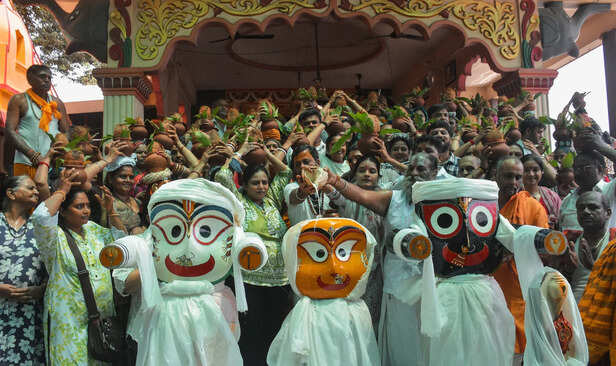
Surat, Jun 29 (ANI): People perform rituals during the Snana Yatra of Lord Jagannath and his siblings Lord Balabhadra and Goddess Subhadra on the occasion of Deva Snana Purnima, in Surat on Monday. (ANI Photo)
Snana Purnima is one of the few occasions when Lord Jagannath, Lord Balabhadra, and Goddess Subhadra come out of the sanctum for public darshan before Rath Yatra. The deities are carried in the traditional Pahandi procession to the Snana Mandap, where thousands of devotees gather to witness the sacred ceremony. This annual ritual marks the official beginning of the Rath Yatra season and fills the atmosphere with devotional chants, music, and deep spiritual excitement.
Why Exactly 108 Sacred Pots Are Used
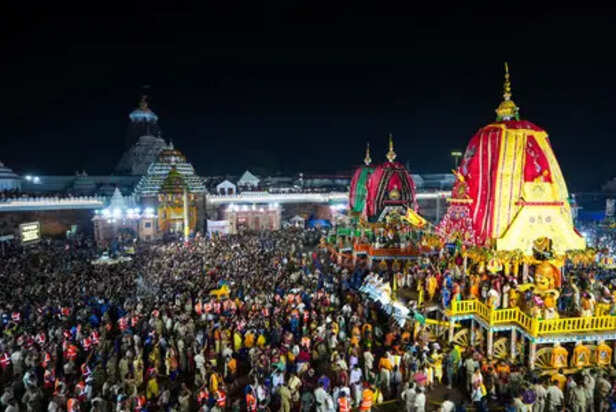
The holy coastal town of Puri is all set for the annual Snana Yatra (Bathing Festival) of Lord Jagannath, Lord Balabhadra and Devi Subhadra on Monday, with the district administration and police making elaborate security and crowd-management arrangements for the smooth conduct of the festival at the 12th-century Jagannath Temple.
The most remarkable part of Snana Purnima is the ceremonial bath using 108 sacred Kalashas filled with purified water. In Hinduism, the number 108 symbolizes spiritual completeness and divine harmony. The water is collected only from the Suna Kua (Golden Well) inside the temple complex, which is opened exclusively for this ritual each year. Mixed with sandalwood, fragrant flowers, and sacred herbs, the water transforms the bathing ceremony into an act of purification and devotion.
The Rare Darshan That Comes Only Once a Year
Unlike regular temple rituals, Snana Purnima allows devotees to witness the bathing ceremony of the deities in public. The atmosphere is filled with devotion as priests perform Vedic rituals before the sacred bath begins. For many pilgrims, this is one of the most blessed moments of the year because it offers a rare opportunity to see Lord Jagannath outside the sanctum before the period of seclusion begins.
The Mystery Behind the Beautiful Hati Besha
After the ceremonial bath, Lord Jagannath and Lord Balabhadra are dressed in the magnificent Hati Besha, also known as Gaja Besha. Their elephant-like appearance is believed to honor Lord Ganesha, the remover of obstacles and the deity associated with auspicious beginnings. Since this unique form is seen only once every year, devotees consider its darshan especially sacred and spiritually rewarding.
Why the Deities Suddenly Disappear
Following the elaborate bathing ceremony, tradition says the deities develop a symbolic fever due to the sacred bath. They are then taken into Anasara, a period during which they remain away from public view. During this time, temple servitors perform special rituals and prepare the deities for their next public appearance. This unique tradition reflects the deeply human and compassionate aspect of Lord Jagannath worship.
The Beautiful Return Before Rath Yatra
After the Anasara period, the deities reappear during Netrotsava or Nava Yauvana Darshan, when their eyes are ceremonially repainted and they are presented in a youthful, refreshed form. This emotional moment builds excitement among devotees, as it signals that Lord Jagannath is now ready for the grand Rath Yatra through the streets of Puri.
More Than a Ritual, A Celebration of Divine Love
Snana Purnima is far more than a ceremonial bath. It reminds devotees that Lord Jagannath lovingly participates in human emotions and experiences. The sacred bath, symbolic illness, recovery, and eventual Rath Yatra create a beautiful spiritual journey that strengthens the bond between the Lord and His devotees. Every ritual carries a deeper message of compassion, renewal, and divine love that continues to inspire millions every year.
Unlock insightful tips and inspiration on personal growth, productivity, and well-being. Stay motivated and updated with the latest at My Life XP.
Frequently Asked Questions (FAQs)
1. What is Snana Purnima and why is it celebrated?Snana Purnima, also known as Snana Yatra or Deva Snana Purnima, is an annual festival celebrated at the Jagannath Temple in Puri, Odisha. On this day, Lord Jagannath, Lord Balabhadra, and Goddess Subhadra are ceremonially bathed with 108 pots of sanctified water, marking the beginning of the Rath Yatra festivities.
2. Why are 108 pots of holy water used during Snana Purnima?
The number 108 is considered highly sacred in Hinduism and symbolizes spiritual completeness and divine harmony. The holy water, drawn from the Suna Kua (Golden Well) inside the temple, is used to perform the ceremonial bath as an act of purification and devotion.
3. What is the significance of Hati Besha?
After the sacred bath, Lord Jagannath and Lord Balabhadra are adorned in Hati Besha (Gaja Besha), an elephant-like attire believed to honor Lord Ganesha, the remover of obstacles. This rare form is seen only once a year and is considered highly auspicious by devotees.
4. Why do the deities remain hidden after Snana Purnima?
According to temple tradition, the deities symbolically fall ill after the ceremonial bath and enter a period known as Anasara. During this time, they remain away from public view while special rituals are performed before their reappearance during Netrotsava or Nava Yauvana Darshan.
5. How is Snana Purnima connected to Rath Yatra?
Snana Purnima officially begins the countdown to the Jagannath Rath Yatra. After completing the Anasara period and appearing during Netrotsava, Lord Jagannath, Lord Balabhadra, and Goddess Subhadra embark on their grand chariot procession through the streets of Puri.