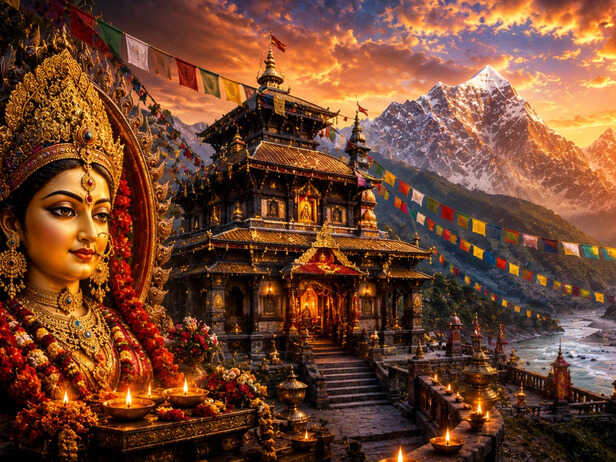
What if one of the most fascinating Shakti Peeth traditions takes you far beyond the borders of modern India?
Near the sacred Mansarovar region, close to Mount Kailash, Hindu tradition identifies a Shakti Peeth known as Manas Shakti Peeth. The story connects this sacred place with Goddess Sati and one of the most powerful traditions of Shakti worship.
According to the traditional account, Sati's right hand is believed to have fallen here. The Goddess is worshipped as Dakshayani, while Bhairava is known as Amar.
But there is an even deeper question.
Why is this distant Himalayan location considered sacred, and what does its connection with Sati reveal about the idea of Shakti?
The Story Begins With Sati
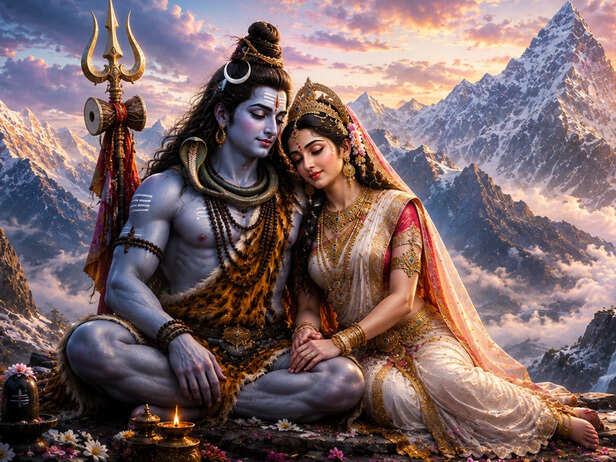
According to Hindu tradition, Goddess Sati was the daughter of King Daksha and the wife of Lord Shiva. Daksha did not accept Shiva and once held a great yajna without inviting him. Sati went there despite Shiva's warning and was deeply hurt by the insult toward her husband. She gave up her body in the sacrificial fire. Shiva was overcome with grief and carried Sati's body. The divine events that followed are traditionally connected with the origin of the Shakti Peeths, sacred places where devotees worship the presence of the Goddess.
How the Shakti Peeths Came to Be
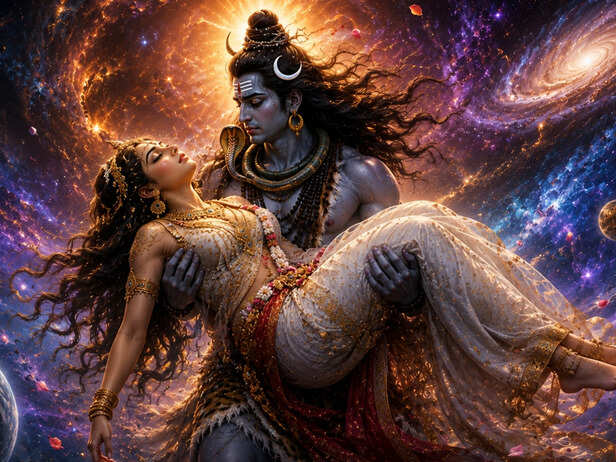
The traditional story says that Shiva wandered with Sati's body, and the universe was disturbed by his immense grief. To restore balance, Lord Vishnu used his Sudarshan Chakra. As Sati's body was separated, different places became sacred according to the tradition. These locations later became known as Shakti Peeths, powerful centres of Goddess worship. Different texts and traditions give varying lists and details about these sacred sites. That is why the number and identification of Shakti Peeths can differ across sources. Yet the central idea remains the same: these places represent the sacred presence of Shakti.
The Sacred Manas Connection
Manas Shakti Peeth is traditionally associated with the Mansarovar region in Tibet, near the sacred Mount Kailash. In traditional accounts, the Goddess here is called Dakshayani, a name connected with Sati's identity as the daughter of Daksha. The associated Bhairava is known as Amar. The site is therefore remembered not simply as a beautiful Himalayan location, but as a place connected with the divine feminine. Its location adds another layer of mystery to the story because the sacred geography of Kailash and Mansarovar has deep importance in Hindu tradition.
Why Dakshayani Matters
The name Dakshayani carries a powerful meaning. It refers to Sati, the daughter of Daksha. This makes the name especially significant in the story of Manas Shakti Peeth. The Goddess is not seen as a distant figure in this tradition. She represents the same Shakti who was united with Shiva and whose story became part of sacred Hindu mythology. The presence of Bhairava alongside the Goddess also reflects a common feature of Shakti Peeth traditions, where Shakti and Bhairava are worshipped together. It creates a powerful image of divine energy and consciousness existing side by side.
Kailash Makes the Story Deeper
The connection with Mount Kailash makes this story even more fascinating. Kailash is traditionally revered as the abode of Lord Shiva and is considered one of the most sacred mountains in Hinduism. Nearby Mansarovar also holds deep religious importance. For devotees, the region is therefore much more than a geographical location. It forms part of a sacred landscape connected with Shiva, Shakti, and spiritual pilgrimage. This is why stories connected with Manas Shakti Peeth continue to attract attention. The mountains, lake, legends, and ancient traditions come together to create a place filled with spiritual meaning.
A Sacred Site Beyond Borders
One reason this story surprises many people is its location. Manas Shakti Peeth is traditionally associated with the Mansarovar area in present-day Tibet, which is administered by China. This reminds us that ancient sacred geography does not always follow modern political borders. Religious traditions developed long before today's national boundaries existed. For devotees, the importance of a sacred site comes from its spiritual and traditional connection, not from a modern map. This is also why the story of the Shakti Peeths remains fascinating today. Ancient beliefs often connect places across regions that are now separated by modern borders.
Why Manas Shakti Peeth Still Fascinates
The story of Manas Shakti Peeth is powerful because it brings together several layers of Hindu tradition: Sati, Dakshayani, Shiva, Shakti, Bhairava, Mansarovar, and Mount Kailash. Whether someone approaches the story through faith, mythology, sacred geography, or cultural history, it offers a fascinating glimpse into India's ancient spiritual imagination. The deeper message is that sacredness is often connected with memory, belief, and tradition. A mountain, lake, or pilgrimage route can become meaningful because generations have connected it with the divine. That is what makes the story of this distant Shakti Peeth continue to capture people's curiosity.
The Mystery That Remains
Manas Shakti Peeth is more than a name on a list of sacred places.
It is part of a much larger story about Sati and Shiva, about grief becoming sacred memory, and about Shakti being honoured across a vast spiritual landscape.
The most fascinating part is perhaps this:
Ancient sacred traditions were never limited by the borders we know today.
Near the waters of Mansarovar and in the shadow of sacred Kailash, the tradition remembers Dakshayani and Bhairava.
For devotees, this is not simply a story from the past.
It is a reminder that Shakti can be remembered wherever faith, tradition, and sacred memory come together.
And perhaps that is why the story of Manas Shakti Peeth still feels so mysterious, powerful, and unforgettable.
Unlock insightful tips and inspiration on personal growth, productivity, and well-being. Stay motivated and updated with the latest at My Life XP