The annual State of the Union address is one of those times when even people who would rather hear about the next season of Game of Thrones or Jennifer Aniston’s secret wedding pay attention to politics. And that’s not only true because the speech takes over the airwaves. It’s a night that brings everyone together with lots of pageantry and shared concern for the country. It’s full of drama and conflict. You would think that it would be all over movies and television. You would be wrong.
The 1948 film State of the Union, where Spencer Tracy plays an airline tycoon who tries to become president, doesn’t actually include a State of the Union address. The American President, a 1995 movie about the president falling in love with a woman written by West Wing creator Aaron Sorkin, features the lead up to the State of the Union, climaxes with a big speech in the press briefing room and ends with the president’s triumphant entry into Congress before the address but skips the speech itself.
Even the presidential movies we think might have a State of the Union have presidents addressing joint sessions of Congress. The 1993 comedy Dave, where Kevin Kline plays a presidential doppelganger who steps in when the real president has a stroke, uses such a speech. So does The Contender, the 2000 drama where Joan Allen plays a woman trying to get appointed vice-president. It ends with President Jeff Bridges telling Congress how sexist they are. And let’s not forget Morgan Freeman addressing the whole country at the end of Deep Impact. It would be an address before Congress if the US Capitol hadn’t been blown to bits by a comet hitting Earth. He’s standing in front of it, so isn’t that, technically, a speech before Congress?
Part of the reason we don’t see more States of the Union in movies is because so many presidential films have to do with running for the office, like Primary Colors, Swing Vote, Head of State, Ides of March or Man of the Year. It’s easy to put a race into a three-act structure and make it dramatic over two hours. It’s the struggle that’s dynamic, it’s the governing that’s boring. Ending with a candidate winning (or losing) is the political movie equivalent of ending a fairy tale with “and they lived happily ever after”. No one wants to hear about Cinderella and Prince Charming discussing the royal deficit.
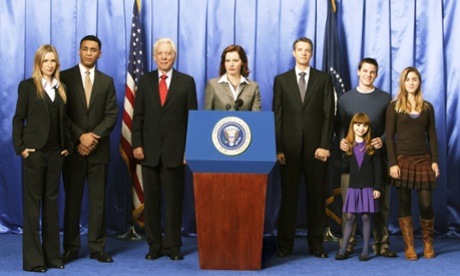
That’s why television is usually about presidents that actually govern, so you might expect to see more States of the Union. But not really. The West Wing, the definitive TV show about the presidency, features five episodes about the State of the Union (according to the show’s wiki) but they all concern the days proceeding or immediately following the big address. Commander in Chief, the 2005 ABC show about Geena Davis as the first female president, features an episode about the State of the Union, but we see the president researching past footage of the speech but never delivering one of her own. Scandal recently showed Fitz giving a State of the Union address, but the real drama was his wife Mellie, who recently lost a child, holding it together through the speech but then collapsing in tears in the hall outside. Oh, Mellie. Always a mess.
Why is this one of the few sacred cows in Hollywood? Possibly because it’s nearly impossibly to film in the Capitol and trying to replicate the set would be expensive. Even if a team of set designers tried, could they pull it off? xXx: State of the Union, an action movie starring Ice Cube, features a scene where president Willem Defoe is abducted during the State of the Union and the legislative chamber where he is speaking looks laughably bad.
Maybe the reason we don’t see the commander-in-chief addressing the electorate is that it’s such an indelible experience, one that many of us have watched every year, that it’s almost impossible to replicate. We’ve seen so many real presidents do it so many times that if even the slightest thing is off, it will read as faulty or somehow profane. There is still something about the president walking into that hallowed chamber that is awe-inspiring. That’s as prestigious and patriotic a thing as we witness on a regular basis. Sure, movie stars can captivate us as well, but this is the actual president of the United States, the man with his finger on the trigger. That’s very hard to replicate and have it retain the same impact.
There will never be a shortage of political thrillers or shows about the internal workings of Washington (there are currently three shows on network television that feature a president as a regular character), but the State of the Union, our annual moment to look at the working and future of our government, continues to be mostly off limits. Either it’s a lot more sacred than we think it is – or a whole lot less dramatic than we make it out to be.