There was a time when going online felt like stepping into an infinite universe. Every search led somewhere unexpected. Every click opened a door to a new community, a personal blog, or a website built by someone passionate about a niche interest. Today, despite having more websites, more users, and more content than ever before, many people feel the opposite. The internet somehow feels smaller. You open social media and see familiar faces. Search results often point to the same major websites. Recommendations begin to look repetitive. Even when millions of new pieces of content are uploaded daily, it can feel as though everyone is sharing and consuming the same things. So what happened? Why does an expanding internet feel increasingly confined?
Algorithms Show Us What We Already Like
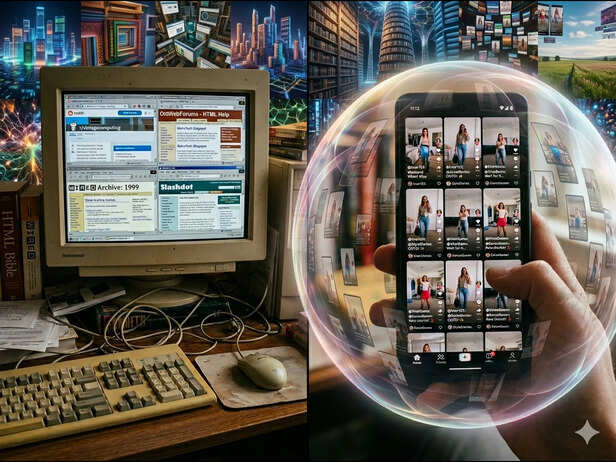
One of the biggest reasons is the rise of recommendation algorithms. Modern platforms are designed to keep users engaged for as long as possible. To do that, they study our behavior and continuously show us content that resembles what we have already interacted with. At first, this feels convenient. You see posts, videos, and articles that match your interests. Over time, however, this personalization can become limiting. Instead of wandering through the internet, we stay inside carefully curated bubbles. The content becomes familiar, predictable, and repetitive. Discovery is replaced by optimization. The result is an online world that feels increasingly narrow, even though it is technically larger than ever.
A Few Platforms Now Dominate Attention
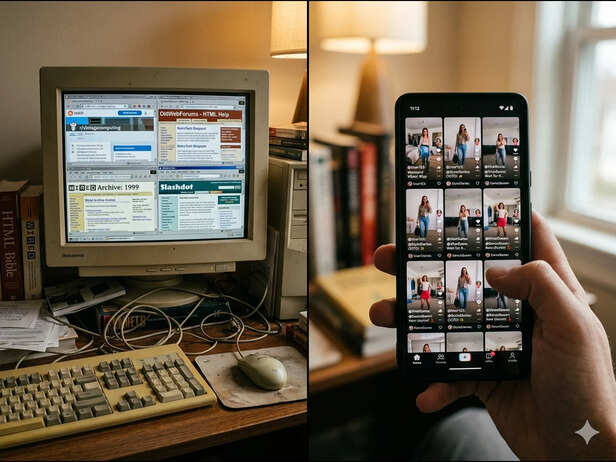
Years ago, internet traffic was spread across countless websites, forums, blogs, and independent communities. Today, a significant portion of online activity happens on a handful of major platforms. Social media networks, video-sharing sites, and large search engines have become the primary gateways to information. When billions of people gather in the same digital spaces, attention naturally concentrates around similar trends and creators. Instead of exploring thousands of unique corners of the web, many users spend most of their online time within a few apps. The internet becomes less like a vast city and more like a giant shopping mall where everyone visits the same stores.
Search Engines Are Becoming More Predictable
Search engines once felt like treasure maps. A random search could uncover fascinating personal websites, niche forums, and obscure resources. Today, search results often prioritize authority, popularity, and user trust. While this improves reliability, it can also reduce diversity. Large publishers frequently dominate the top positions. Smaller websites struggle to gain visibility. Independent voices become harder to find. This creates a strange paradox. Information is more accessible than ever, yet discovering something genuinely unexpected often requires much more effort. Many users miss the feeling of stumbling across hidden gems that made the early internet feel adventurous.
Viral Culture Makes Everything Look the Same
The internet moves faster than ever. A viral trend can spread across continents within hours. A popular video format can appear on thousands of accounts by the end of the day. Memes, opinions, challenges, and news stories circulate at extraordinary speed. While this creates shared cultural moments, it also contributes to a sense of sameness. Millions of people are exposed to identical content simultaneously. As creators compete for visibility, many adopt similar formats that have already proven successful. Over time, originality can take a back seat to familiarity. The internet begins to resemble an endless loop of recycled ideas rather than a collection of unique voices.
We Have Less Time to Explore
The feeling of a smaller internet is not entirely caused by technology. Many of us use the internet differently than we did years ago. As children or teenagers, we often had the freedom to spend hours exploring random websites, joining forums, and following curiosity wherever it led. There was no specific goal. Discovery itself was the reward. Today, online activity is often more purposeful. We check messages, watch recommended videos, scroll through feeds, and move on. The internet may not have become smaller. Our way of experiencing it has changed. We spend less time wandering and more time consuming. That shift can make the digital world feel less expansive than it once did.
The Internet Is Still Vast, But We Experience It Differently
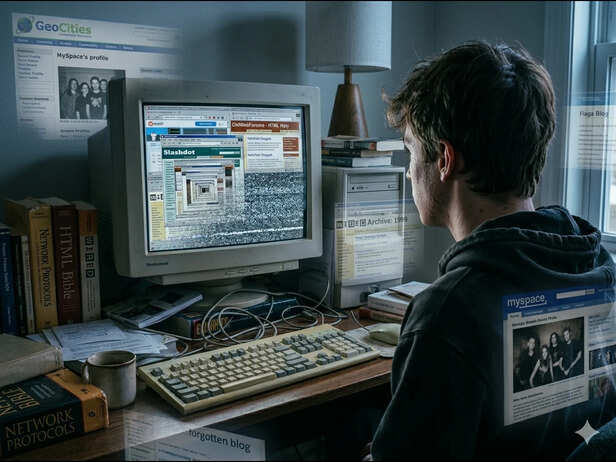
The internet has never been bigger. Every day, millions of new websites, videos, articles, and communities appear online. Yet many people feel as though the digital world has shrunk. Algorithms guide our attention. Major platforms concentrate activity. Search engines prioritize familiar sources. Viral culture amplifies the same ideas. And our own habits leave less room for exploration. Together, these changes create the impression of a smaller internet. But the hidden corners still exist. Independent creators are still building fascinating projects. Niche communities continue to thrive. Unexpected discoveries are still waiting beyond the algorithms. Perhaps the internet has not lost its vastness. Perhaps we have simply forgotten how to wander through it.
Unlock insightful tips and inspiration on personal growth, productivity, and well-being. Stay motivated and updated with the latest at My Life XP.