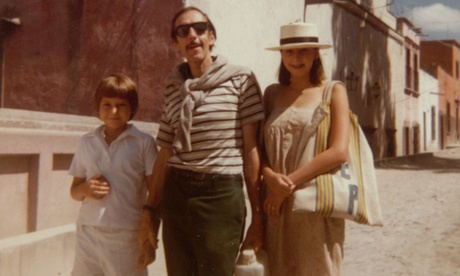
It was one of those summer holiday talks, in which, freed from the confines of workaday worries, the conversation meanders to places rarely visited. Warmed by sun and lunch, my two daughters and I sat on a terrace restaurant in France, scraping our spoons across our plates in search of any final wisps of Chantilly cream and talking about the grandfather they never met.
The conversation had been light when it began. I told them funny stories of a father who wore bright green tennis shoes, loved piano jazz and oriental rugs and, when not teaching law for a living in St Louis, dragged his family around the world on what he called his “chewing gum and baling wire” budget. But as it was a late-summer conversation, and the afternoon stretched out without any of us having anywhere to go on, we soon found ourselves in a darker place. For years, when the girls asked how their grandfather died, my husband and I would answer using a carefully constructed formula, telling the truth, but not the whole of it: “His heart stopped, darling.” My 13-year-old had asked more searching questions last year, and I’d given her a fuller version, calculating how much of the story I’d give her, like a chemist in a lab, titrating acids into bases. Now, at last, my youngest knew too: my father’s heart stopped because he had been murdered.
He had been killed in Mexico, in the house he and my mother had owned in the hill-town of San Miguel de Allende. That September, I was 26. He had gone down from Missouri to work on the place for a week, sprucing it up for new renters. One afternoon, during the town’s annual celebration of St Michael the Archangel, when crowds clogged the streets, and music and confusion would have drowned out my father’s cries, three men rang the doorbell. When Maria Elena, the maid, answered it, they forced their way in. They tied her and my father up, took them to the cellar, and then proceeded to hit my father while interrogating him. Where was the money, they kept asking.

My father offered them his wallet, which one took, rifled through, then laughed. The sum inside wasn’t the kind of money they were after. They wanted big money – the money that was owed them. My father said they must be mistaken. He owed them no money. “The money,” they kept saying, ripping a bit of Afghan embroidery off the wall and stuffing it in his mouth to gag him. Then they beat him some more. When the men left, my father and Maria Elena managed to get out of their ropes. He had thought he was just bruised, but by the next day, we would know he wasn’t. When a neighbour found him lying on the floor a day later, too weak to get up, he was rushed to hospital. My mother flew down from St Louis to be with him, even then thinking it was just a matter of a traumatic experience, and a small operation to stitch up a rip in his liver. It wasn’t: one of the men’s blows had dislodged a clot of blood. Over the next week, it would travel to my father’s heart and stop it.
On hearing a shortened, less distressing version of the story, my youngest frowned into her dessert bowl. Then, with an 11-year-old’s certainty that bad guys get it in the end, she asked: “So how did the police get the guys who did it?”
“They didn’t,” I said.
She looked startled. “Never?”
“Never.”
In fact, we never even learned who they were. “They wore good shoes,” Maria Elena told the Mexican police, when asked to describe the men. The shoes were all she had managed to see. Distressed and doubtless too embarrassed to watch her boss being beaten up, she had kept her eyes down during the attack. The soft leather of the murderers’ shoes was all she managed to see. But it meant, the police theorised, that the break-in was not a random robbery by local thieves, but a professional call by men from Mexico City who had done well, most likely in the drug trade. The other clue: the men had referred to my father as el abogado, the lawyer. My father had taught law – close enough, we supposed, for the local gossip networks to spread the word that an American lawyer was in town. A lawyer from New England had rented our house the year before. The killers, the police conjectured, had come looking for him. It had been a case of mistaken identity: the wrong American, the wrong abogado. Case closed.
Not for my daughter, with her child’s keen sense of tidy endings. Stories, proper ones, end with justice served – or at the very least, with justice sought.
“Did you try to find the people who did it?” she persisted.
I paused. Even 23 years on, I still couldn’t decide whether the question was a sore point or not. “No, sweetie, I didn’t.” I said. “When my dad died, I was over in London. When Grandma called me to tell me what had happened, she said, ‘The important thing for you is to have a good life. It’s what he would have wanted.’”
“And that,” I said, smiling at the girls with slightly overbright finality, “is just what I did. You’re the proof of it!”
But in truth, the question of why we never looked for “the guys that did it” niggled at me for years. Why hadn’t my mother, brother and I concerned ourselves more with pursuing justice? I could face the loss of my beloved father with grief, but did I have some mettle missing, by not feeling the need to try to right a wrong?
Ever since the Romans, the revenge plot has been a sturdy narrative strategy. Be it Hamlet or a Liam Neeson franchise, seeking vengeance for a wronged family member has been something protagonists do. But I can’t remember, in the tumult of grief that followed my father’s death, that we talked much about the perpetrators. What mattered was that my father was gone, and nothing would change it. Assuming that the police’s theory was correct, he was one of thousands of innocents killed in the Mexican drug wars of the last generation. The notion of trying to track the movements of foreign criminal gangs did not seem feasible. “Don’t count on the police doing anything,” an American expat friend in Mexico counselled my mother.
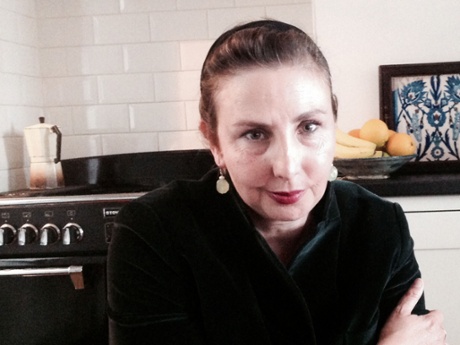
In the sadness of the months that followed, I found myself resorting to an uncharacteristic bout of xenophobia, mentally flattening my father’s killers to the stupidest of caricatures: cartoon Mexicans with flaccid, drooping moustaches, and sombreros with tassels that jiggled as they kicked my father. Their foreignness – and my prejudice against it – protected them from any real wrath: I’d recast them as forces of nature rather than humans. I’m not proud of this, as it turns on reducing the Mexicans to uncivilised natives, but any anger I had was reserved for someone I could imagine, whose world I knew, more or less, though I had never met him: our tenant, the American lawyer. I fantasised about tracking him down to confront him with what his stupidity had wrought.
But these were wild 2am thoughts, not a plan. My family and I never talked about trying to find the tenant, to ask him whether the police’s theory was true. After my father’s death, I desperately needed to gather every scrap of story about his life. I’d pressed friends for any memories, interrogated his colleagues, and even his psychiatrist, who broke patient confidentiality to tell me about the crevices of my father’s depression. But I didn’t pursue details of his death. The closest we came to revisiting the case was to travel to San Miguel a year later, and to stay in our house. My mother wept as she sewed up the bit of Afghan embroidery, ripped and stained with my father’s blood. I avoided going in to the cellar, where the beatings had taken place. But we avoided, too, the police station in the main square.
Was our indifference to seeking justice realistic or an abrogation of responsibility? From her first phone call after my father’s death, my mom had been intent that her two twentysomething children continue with their lives as much as possible. In this, she took the same line as the 17th-century philosopher Francis Bacon, when he wrote that seeking revenge was a foolish exercise in self-destruction: “That which is past is gone, and irrevocable; and wise men have enough to do, with things present and to come; therefore they do but trifle with themselves, that labor in past matters.”
It took a discussion about the Islamic notion of justice, 20 years after my father’s death, to deepen my understanding of why the three of us might have been so uninterested in righting wrongs. I’d been studying the Qur’an with a Muslim scholar, writing a book about where my own secular humanist beliefs converged and diverged from his religious ones. On the phone to my friend and teacher, Sheikh Mohammad Akram Nadwi, I asked him about justice – an idea that I’d always been taught was the cornerstone virtue of Islam, occupying much the same position that love does in Christianity. “It’s the basic tenet of Islam, right?” I asked, pointing to how the Qur’an and hadith speak of justice, and how the quest for it – from tyrants, from foreign powers, from crooked regimes – was the rallying cry of many Islamist groups around the world.
In Islamic circles, said the sheikh, rather too much has been made of justice. Rather than wearing oneself down pursuing it, a weakened people should pause, and build themselves up. Only peace, he said, would bring peace – and strength.
It was comforting to be reminded of something that all those Hollywood movies, with their strong-jawed heroes sweating in their pursuit of justice never did: that to seek justice, one needed to be strong and calm. In the months after my father’s death, my family was neither. My mother had a massive heart-attack, which she barely survived. My brother and I were grieving, caring for her, and confused about our lives. Now, most days, I’m convinced of the wisdom of my mother’s counsel on greeting my father’s murder “by having a good life”. Serving justice is for movies and fairytales; real life requires, instead, that you find a path to your own private peace. Someday, my daughters would understand, but that was a conversation for another summer lunch.
• Carla Power is the author of If the Oceans Were Ink: An Unlikely Friendship and a Journey to the Heart of the Quran, published by Henry Holt, £12.99.