The great novels, by and large, end in disillusion and ashes – which is why Great Expectations is Dickens's greatest work.
He moderated the ending at the insistence of publishers and friends, giving enough hope to stop the Victorian public throwing themselves in front of 40-mile-an-hour steam trains or into toxic polluted ponds. But the overwhelming emotion of Great Expectations is one of bleak truth. "Great Expectations" – the title is ironic. Pip discovers everything he thought about the people around him to be wrong. He has trusted those who care nothing for him and despised those who love him. There is a terrible justice to his discovery of the true identity of the mysterious benefactor whose wealth raises him from a humble rustic life to a genteel existence in London.
Because this is not just a great novel but a great English novel, the delusions of poor Pip are about class as well as money. So why do we feel for him so deeply? He is not heroic like Nicholas Nickleby, he is not an innocent like Oliver Twist. The book is the story of his moral corruption.
We love Pip, nevertheless, for his honesty in telling his story. The first person narration is the heart of Great Expectations. Pip is not an unreliable narrator. He is a very reliable one who scrupulously chronicles his own follies and mistakes.
An 18th-century antecedent of Great Expectations might be Hogarth's Rake's Progress – Dickens was a Hogarth fan. A modern equivalent is The Great Gatsby for moral shock.
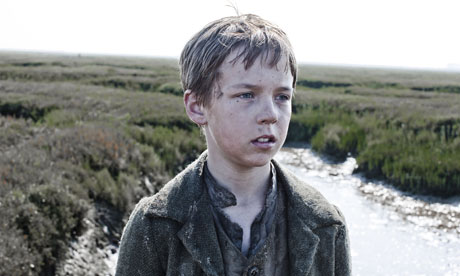
It's going to be a Christmas drama from the BBC, but apparently the ending may surprise. A new film also tampers with the ending. We'll see. You cannot claim to have adapted this novel well if you destroy its grand moral arc. It is the hardest Dickens novel to dramatise because it is the most precisely structured. It cannot be treated as a gorgeous rambling pantomime or soap opera. It really is very accurately primed, like a clock ticking to catastrophe. An adaptation needs to be true to the first person narration by Pip, and to the gradual build-up and destruction of his expectations.
This has been done well before. David Lean's black and white film of Great Expectations manages to compress the power of the book into less than two hours. So the BBC version can work. If it is done right, it will really wreck everyone's Christmas. If it leaves you with a warm festive glow, they have betrayed the book.