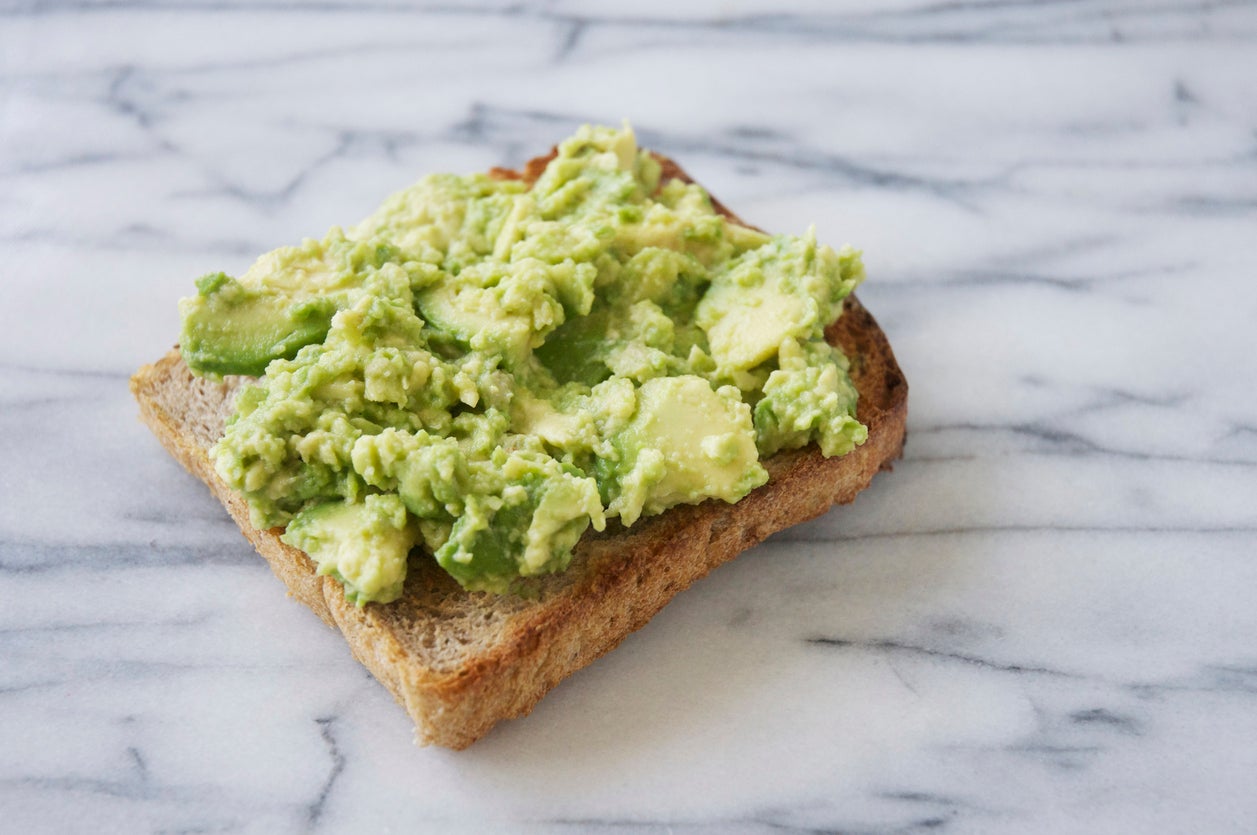
Millennials may be relentlessly mocked for our avocado on toast addiction, but a new study has found there’s actually a scientific explanation for why the brunch staple is so well-loved.
According to research by Yale University, when fat and carbohydrates are combined, a meal or food is more rewarding than if it only contained one or the other.
The reward centre in the brain values foods containing both fats and carbs so highly because we have adapted to think these foods are energy dense.
“The biological process that regulates the association of foods with their nutritional value evolved to carefully define the value of a food so that organisms can make adaptive decisions,” says senior author Dana Small, director of Yale University’s Modern Diet and Physiology Research Centre.
“For example, a mouse should not risk running into the open and exposing itself to a predator if a food provides little energy.
“Surprisingly, foods containing fats and carbohydrates appear to signal their potential caloric loads to the brain via distinct mechanisms. Our participants were very accurate at estimating calories from fat and very poor at estimating calories from carbohydrate.
“Our study shows that when both nutrients are combined, the brain seems to overestimate the energetic value of the food.”
Working with colleagues in Germany, Switzerland and Canada, Small assessed test subjects’ neural responses to food cues.
Participants underwent brain scans while being shown photographs of familiar snacks containing mostly fat, mostly sugar, and a combination of fat and carbs.
The researchers found that subjects were willing to pay more for foods that combined fat and carbohydrates, and these foods also lit up neural circuits in the reward center of the brain more than even a subject’s favourite food, a potentially sweeter or more energy-dense food, or a larger portion size.
Foods containing fats and carbs don’t generally exist naturally - they’re mainly processed foods like doughnuts and pizza - apart from in breast-milk, which Small believes makes sense, as babies have to learn to suckle to survive.
Newer processed foods combining fats and carbs have only been around for about 150 years which isn’t long enough for humans to have developed a new brain response to them.
The research also helps explain why the majority of people crave fatty, carby foods and find it very easy to overeat them - human physiology hasn’t yet evolved to be able to handle the simultaneous activation of fat and carb signaling pathways.
“In the modern food environment that is rife with processed foods high in fat and carbohydrate like doughnuts, French fries, chocolate bars and potato chips, this reward potentiation may backfire to promote overeating and obesity,” Small said.