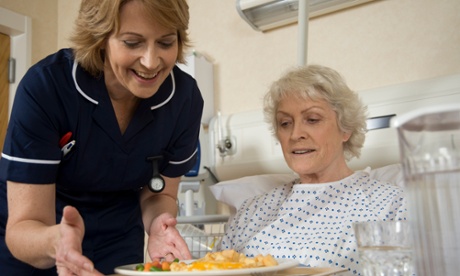
“The full horror of hospital food” screams one headline. “Hospital food is a recipe for disaster” wails another.
Hospital food often makes the news – and almost always for the wrong reasons. The past few years have seen several celebrity chefs announce their intention of improving the quality of hospital food – but the headlines don’t go away.
Some hospitals still struggle to meet patients’ nutritional needs. In recognition of this, the government commissioned the Hospital Food Standards Panel, an independent body of experts, to look into ways of improving the quality of food on offer. As a result of the report’s recommendations, new standards came into force in April that mean hospitals in England have to meet certain minimum requirements, such as providing seasonal produce and making sure patients have access to tap water (dehydration can be a big problem in hospitals). The standards will be enforced through legally-binding NHS contracts.
But the reality of hospital catering is much more complicated than its portrayal in the media. Everyone agrees that it is hugely important for hospital patients to be well-nourished. Marie-Clare Oliver, a head and neck oncology specialist dietitian, says: “There is a huge amount of evidence that malnourished patients will do worse. They’re at increased risk of dying, their immune systems can’t work so well and they’re more at risk of pressure ulcers, blood clots and wound complications.”
But providing nutritionally balanced meals for hospital patients is a different order of challenge from, say, providing good quality school dinners, while restaurants offer a set menu and customers actively choose to go there to eat; chefs don’t have to meet all the different dietary requirements, preferences and ethnic and religious considerations that a hospital would.
A hospital has to cater for several hundred patients, providing meals for them three times a day, 365 days a year. Those patients will vary in age from the very young to the very old, and will come from different cultural and ethnic backgrounds, with differing expectations of what constitutes good food. More crucially, they will have different nutritional needs, depending on their illness.
One in four people admitted to hospital are malnourished, and the problem is particularly prevalent among elderly patients. Other patients may simply feel too ill to eat. Oliver says: “Sometimes just getting a sick person to eat anything to give their body the energy and protein it needs to heal is really challenging.”
What that means is that the popular view of what constitutes a “healthy” meal may not be appropriate for a hospital patient. As Anne Donelan, a retired dietitian who worked both for the NHS and for Tillery Valley Foods, says: “What people often need in hospital is calories – they don’t need re-education.”
The reason so many celebrity campaigns to improve hospital food have failed is that they haven’t grasped the particular requirements of a hospital, says Donelan: “They don’t understand the critical control points that take place throughout the food chain, which makes sure that when the food gets to the patient it’s safe and secure.”
Andy Jones, former chairman of the Hospital Caterers Association (HCA), agrees, adding that most celebrity chefs (with the exception of James Martin) failed to ask patients what they wanted, and ended up devising menus that were inappropriate for patients’ needs. “It should be the patient and the caterer who put the menus together,” he says. The HCA invites former patients to its annual conference to tell caterers what they’d like from hospital food.
Jones believes the solution can sometimes be quite simple – serving seasonal food such as strawberries in summer, for example, which are both tasty and nutritious. If people eat well in hospital, that creates a virtuous cycle: “You’re reducing waste, patients are getting better quicker so they’re leaving hospital quicker, and if food is good and people are eating it, it aids absorption of the drugs.”
Many hospital meals are now supplied by outside organisations, such as apetito. The organisation follows guidelines relating to nutrition in hospitals, such as the British Dietetic Association’s Nutrition and Hydration Digest and the Department of Health’s salt reduction pledge.
But while it’s important to meet those guidelines, says registered apetito nutritionist Kelly Fortune, the organisation also focuses on offering plenty of variety and making sure meals are appealing to patients – remembering, for example, that food still has to look good once it’s been cooked. Fortune’s job includes writing nutritional specifications for new menus, so that meals contain the appropriate amounts of energy or protein for malnourished patients, or have reduced salt and fat for patients with heart disease.
Two-thirds of people admitted to hospital are over 65, Fortune points out: “Flavours have to be familiar to people, so if you’re developing [dishes with ingredients] like chorizo, that’s great for younger adults, but it might not be familiar to older patients.”
While there is still much to be done, the state of hospital food is not as grim as it’s often portrayed – and the new standards should result in the importance of nutrition being taken seriously throughout the NHS. But the key, says Donelan, is to listen to patients: “We have to meet our patients’ expectations of what’s familiar and comforting to them, not what sounds good to us.”
Content on this page is paid for and produced to a brief agreed by apetito