“Can art save cities? No, is the short answer.”
It’s jarring to hear this coming from Alastair Upton, chief executive of Creative Folkestone, the arts charity responsible for sparking the slow but remarkable regeneration of this down-at-heel port town.
He says it casually over flat whites at Steep Street Coffee House, a hip little joint with walls covered in books, on Folkestone’s artsy Old High Street. Galleries and boutiques abound on this attractive cobbled lane, the creativity reaching such a fever pitch that even the buildings can’t contain themselves – they’re daubed an eclectic array of colours, from jaunty turquoise to soft lavender.
“Art can’t solve poverty, it can’t solve social inequality, it can’t solve Brexit.
“But it can tackle specific issues.”
Which is one thing Folkestone had in abundance 17 years ago. Plopped between Dover and Dungeness, it was, like many British seaside towns, in sharp decline. The tourists – well-heeled Victorians who gave way to the post-war bucket and spade brigade – were gone, as were the jobs building the Channel Tunnel that had attracted an influx of inhabitants in the 1980s and 90s.
Unemployment was high, morale was low.
Enter Roger De Haan, Folkestone local and former chair of insurance giant the Saga Group, who helped fund Creative Folkestone with a much-needed cash injection. The charity bought up 90 derelict buildings across the town and transformed them into studio spaces and flats for creatives.
“It was production-led regeneration,” says Alastair. “We focused on creating a great place for people to actually live and work, rather than trying to attract visitors.”
Comparison is frequently made with Margate, another Kentish seaside town-dun-good that’s often cited as a gold-star example of using art as a tool for renewal. But it’s a completely different model – “consumption-led regeneration”, Alistair calls it – which tempts creative types by launching a big statement institution, in this case the Turner Contemporary gallery.
Both approaches work – just in totally different ways.
“The artworks here are almost the last priority for us – the eventual outcome of making this a good destination for creatives to settle.”
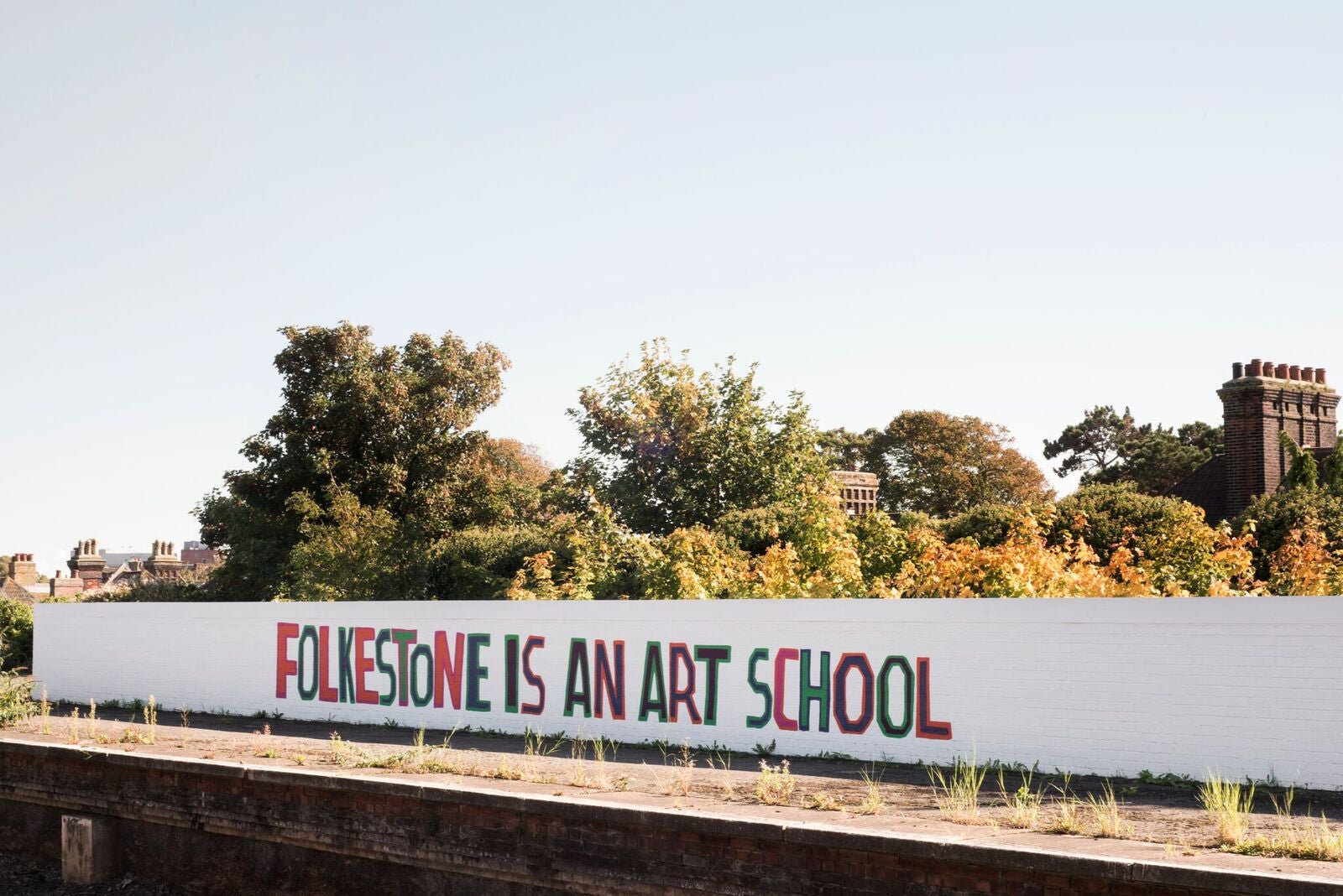
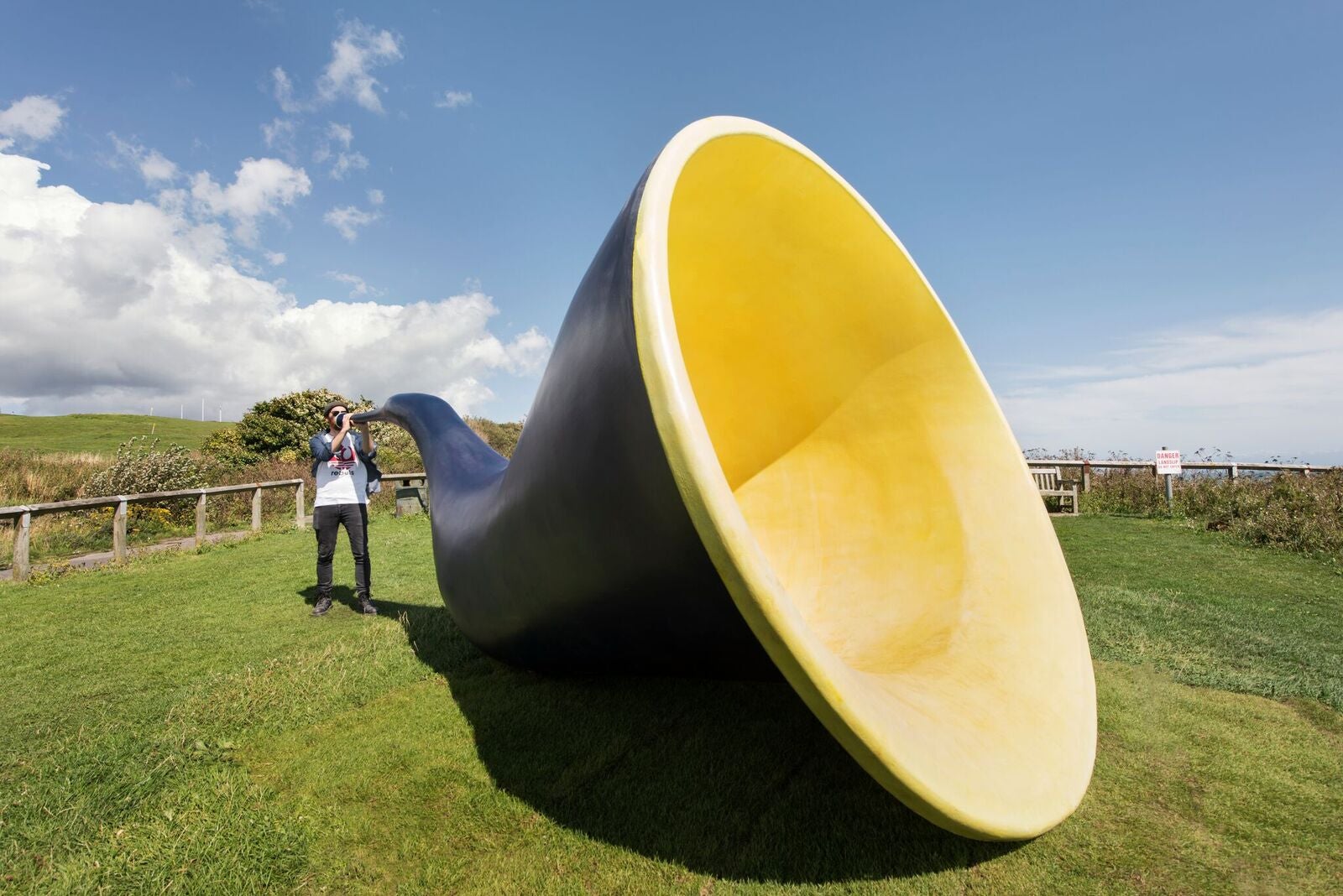
He’s referring to the town’s huge array of outdoor sculptures – the UK’s largest urban contemporary art exhibition – which has an ever-changing and expanding collection of 74 works.
It’s the most obvious expression of Folkestone’s upward spiral; the town is a veritable smorgasbord of visual treats. As we wander towards the sea, we encounter at least 10 without even trying, each more evocative than the last.
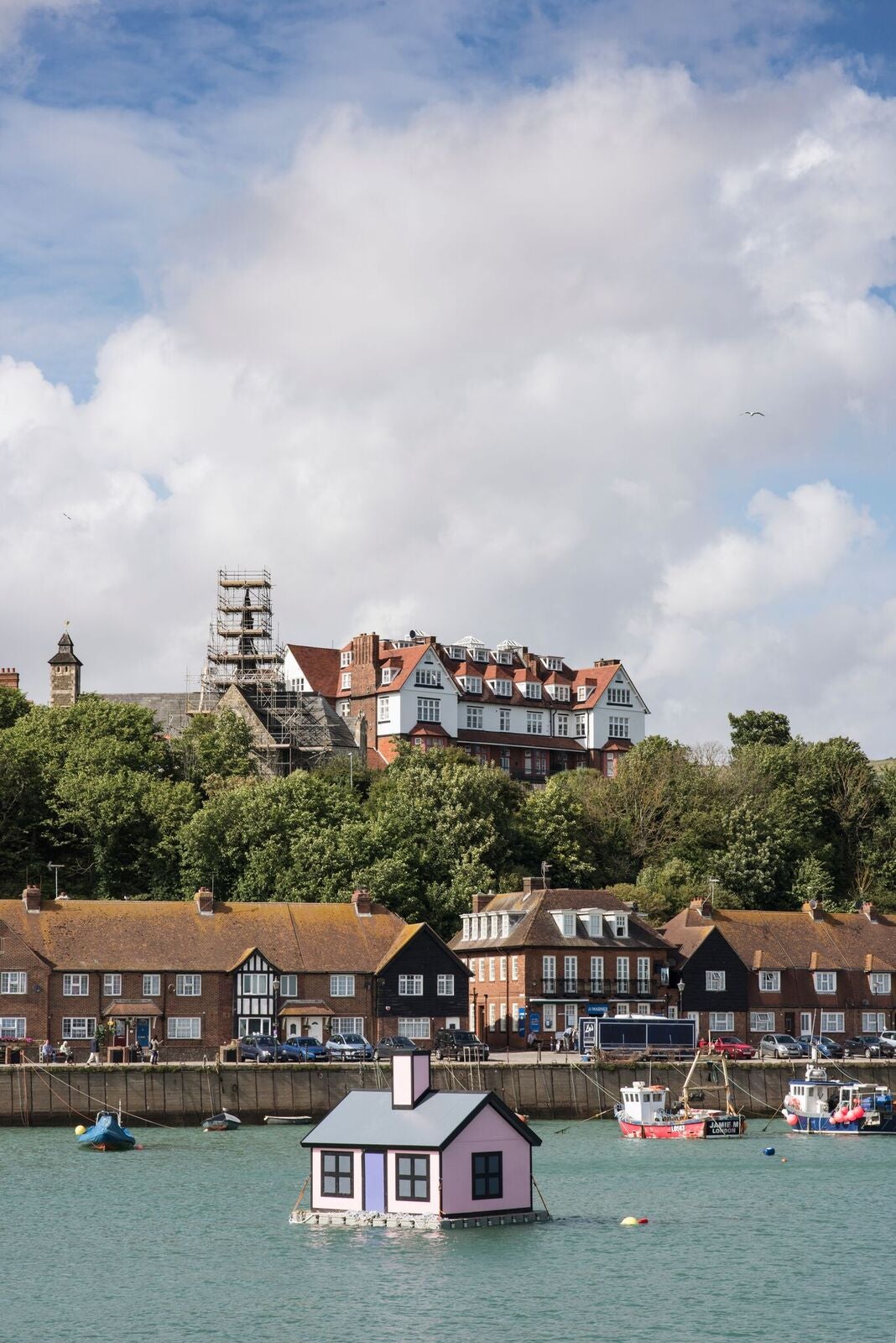
Here’s one of Richard Woods’ Holiday Home pieces – a brightly coloured house in miniature floating in the sea, its bubblegum pink façade popping against the teal-green waves. Here’s Casa Anacaona by Venezuelan artist Sol Calero, a riotously coloured cabana set among the beach pebbles that’s used as a public space (including for yoga classes with unbeatable ocean views). Here’s the Folkestone Mermaid, the town’s answer to Copenhagen’s more famous iteration, reclining on the rocks and staring plaintively out to sea. Rumour has it the figure was cast using a local woman, which is a pretty cool claim to fame.
It’s not all big, showy pieces either – some are intentionally tucked away, just waiting to be stumbled upon. Long-time curator Lewis Biggs encourages us up a steep flight of stairs and onto a small viewing platform.
“Oh no,” I think – someone’s obviously dropped a baby’s cardigan and it’s been draped over the railings. It takes me a minute to realise it’s not a real item of clothing at all but a bronze cast, one of a set of four created by Tracey Emin. “Baby Things” comprises the cardigan, a child’s mitten, sock and shoe, all hidden around the town. (There are no plaques or signs next to them, at Emin’s request.)
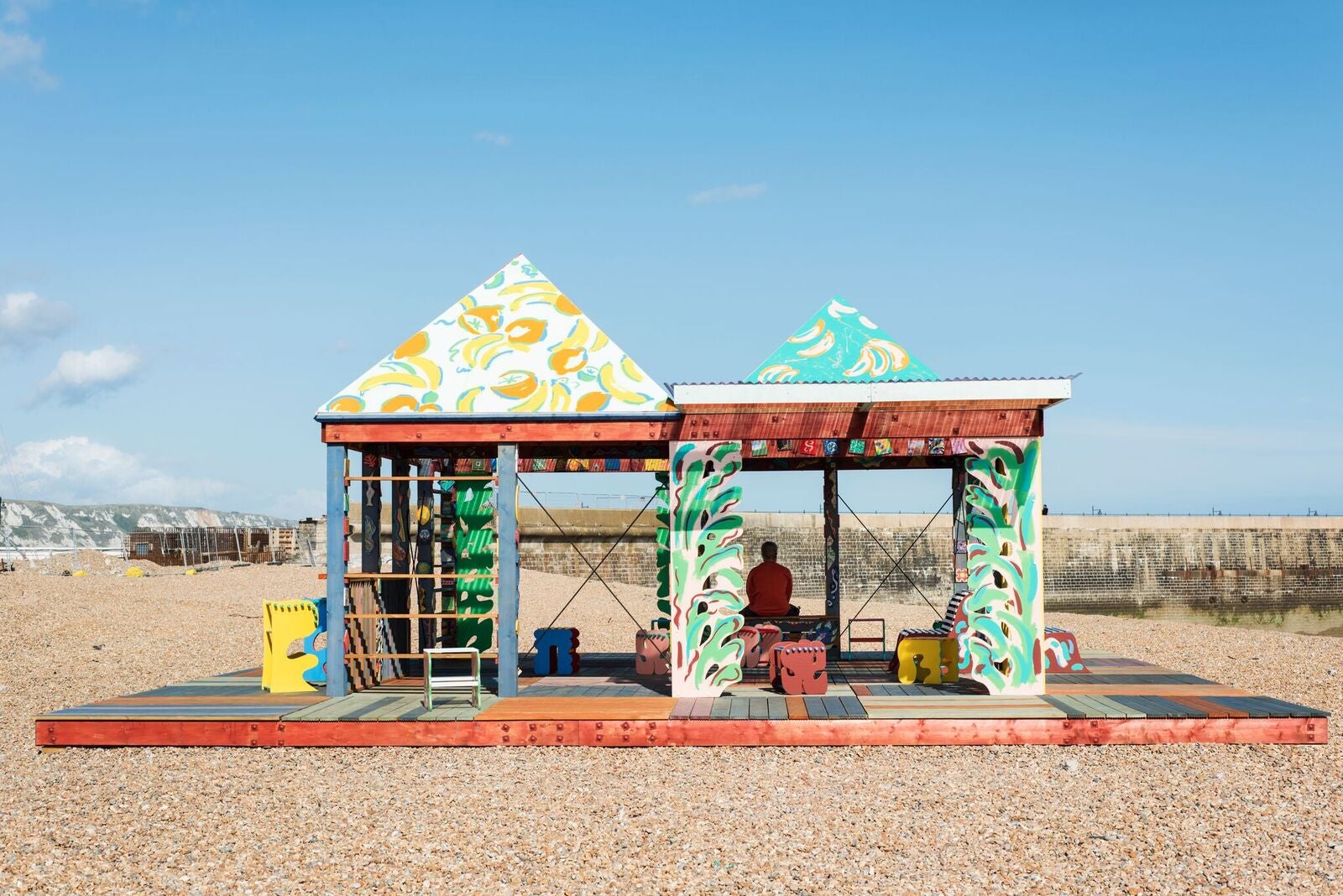
The collection has been lovingly built up over the last decade, with more added every three years as part of Folkestone Triennial, which invites a host of artists to create new site-specific work.
Although all this is the physical outpouring of the town’s creative spirit, there’s a lot more going on behind the scenes that is at the very heart of why this revival has stuck. There are currently 530 creatives, from performance artists to dressmakers, dancers to graphic designers, living in Folkestone’s Creative Quarter. We meet one of them, Malcolm Allen, at his studio-gallery on the Old High Street, as he casually puts some finishing touches to a canvas.
“The involvement with the wider community has been really good,” he says thoughtfully. “The Triennial bridges the gap between the Creative Quarter and the locals. Because they get something out of it, y’know? Attractive places to sit, the kids can climb on the sculptures. It works.”
He invites us to the flat upstairs where he lives with his wife – it’s packed to the gills with art and has, be still my beating heart, an actual spiral staircase up to a roof terrace – where he muses on how the town has evolved over the last decade.
“The change has been subtle; it creeps up on you. It’s always getting better, there are always new things happening, new people moving in. There’s always scaffolding going up – it’s annoying, but it’s progress.”
Part of Creative Folkestone’s remit means that the artists like Malcolm who are responsible for the town’s resurgence won’t be priced out; rents for its properties have to stay below market rate. It’s arguably far preferable to the organic regeneration found in places like Hoxton, which saw the very artists who made it cool forced out by soaring living costs.
There’s a buzz in Folkestone that goes beyond the more obvious artworks, too. The old train station, painstakingly refurbished and repurposed as a gorgeous public path to reach the harbour, evokes New York’s High Line; the rejuvenated Harbour Arm (another word for pier), is home to copious street food outlets and quirky restaurants and businesses crammed into old shipping containers. It all points to a place on an upward trajectory.
Of course, that doesn’t mean this town’s underlying problems have all disappeared: 5.3 per cent of young people aged 18-24 are currently unemployed, 1.9 per cent per cent higher than the national average. And the total number of unemployed people here has soared by 29.3 per cent since February 2018. It’s a sobering thought.
Over lunch at Rocksalt, a seafood restaurant on the seafront that capitalises on the excellent views with floor-to-ceiling windows, I muse on Alistair’s original statement. My gaze falls on another of Richard Woods’ Holiday Homes, this one brick-orange with a purple door. At the end of the Harbour Arm, giant letters spelling out the name of the town are a bright spot on the otherwise dull-coloured stone stretch.
So yes, maybe art can’t save a town. But it sure can make it beautiful.
More information
The next Folkestone Triennial takes place in 2020. Find out more at creativefolkestone.org.uk.