
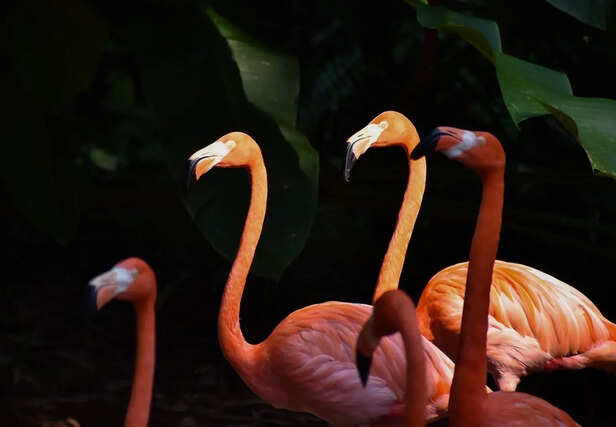
Flamingos look almost unreal when you see them standing still in water. Bright pink feathers. Long curved neck. And that strange habit of balancing perfectly on one leg for minutes or even hours. For years, this posture looked like a mystery with no clear explanation.
Was it comfort? Balance? Or something far deeper hidden in their biology? Scientists were just as curious as the public. And what they discovered slowly changed the way we understand this elegant bird’s survival strategy in the wild.
Heat Conservation Secret
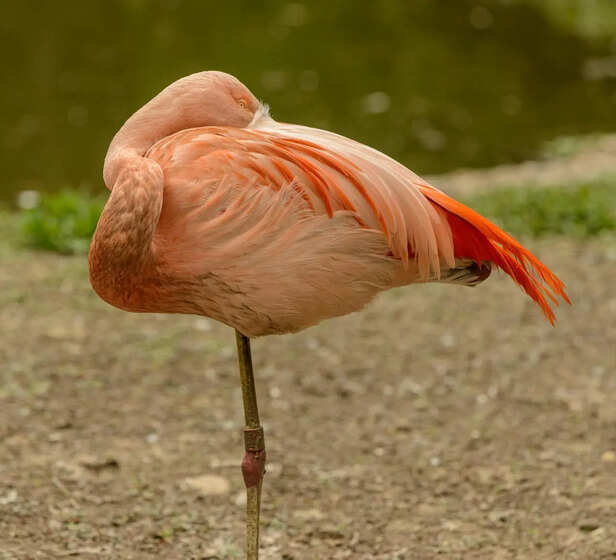
Flamingos spend long hours standing in cold or shallow water while feeding or resting. Scientists found that lifting one leg close to their body helps reduce heat loss. Their legs have very little feather cover, so they lose warmth quickly when exposed. By keeping one leg tucked, they limit surface contact with cold water. This simple action helps maintain body temperature naturally. What looks like a relaxed pose is actually a survival technique. In colder conditions, this behavior becomes even more important, allowing flamingos to stay comfortable without needing extra energy to stay warm.
Energy Saving Balance System
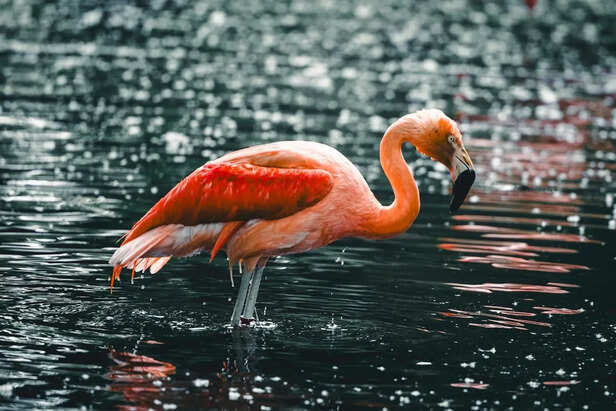
One of the most surprising discoveries is how little energy flamingos use in this position. Their leg joints lock naturally, allowing them to stand with almost no muscle strain. Researchers found that once they balance properly, their body weight is supported in a way that reduces effort. In fact, standing on one leg can be more energy-efficient than standing on two. This explains why flamingos can sleep while standing without falling. Their body works like a natural tripod system, designed for stability in wet environments where long periods of rest are needed.
Built for Perfect Stability
Flamingos have extremely long and thin legs that might look fragile but are perfectly adapted for balance. Their center of gravity is positioned in a way that makes one-leg standing surprisingly stable. Even wind or gentle water movement does not easily disturb them. Scientists believe this posture may also reduce muscle vibration caused by water currents. This stability is crucial because flamingos often rest in open wetlands with little shelter. What appears delicate is actually one of nature’s most efficient balancing systems, shaped by millions of years of evolution.
Nature’s Universal Strategy
Flamingos are famous for this behavior, but they are not the only birds that do it. Herons, storks, and ducks also stand on one leg while resting. This suggests the behavior is not random but deeply linked to survival. It may help reduce heat loss, improve comfort, and allow better rest in watery environments. However, flamingos use this posture more frequently and visibly than others. That is why they became the global symbol of one-leg balance. Nature often repeats successful survival strategies across species in slightly different forms.
Celebrate the bond with your pets, explore Health & Nutrition, discover Breeds, master Training Tips, Behavior Decoder, and set out on exciting Travel Tails with Times Pets!