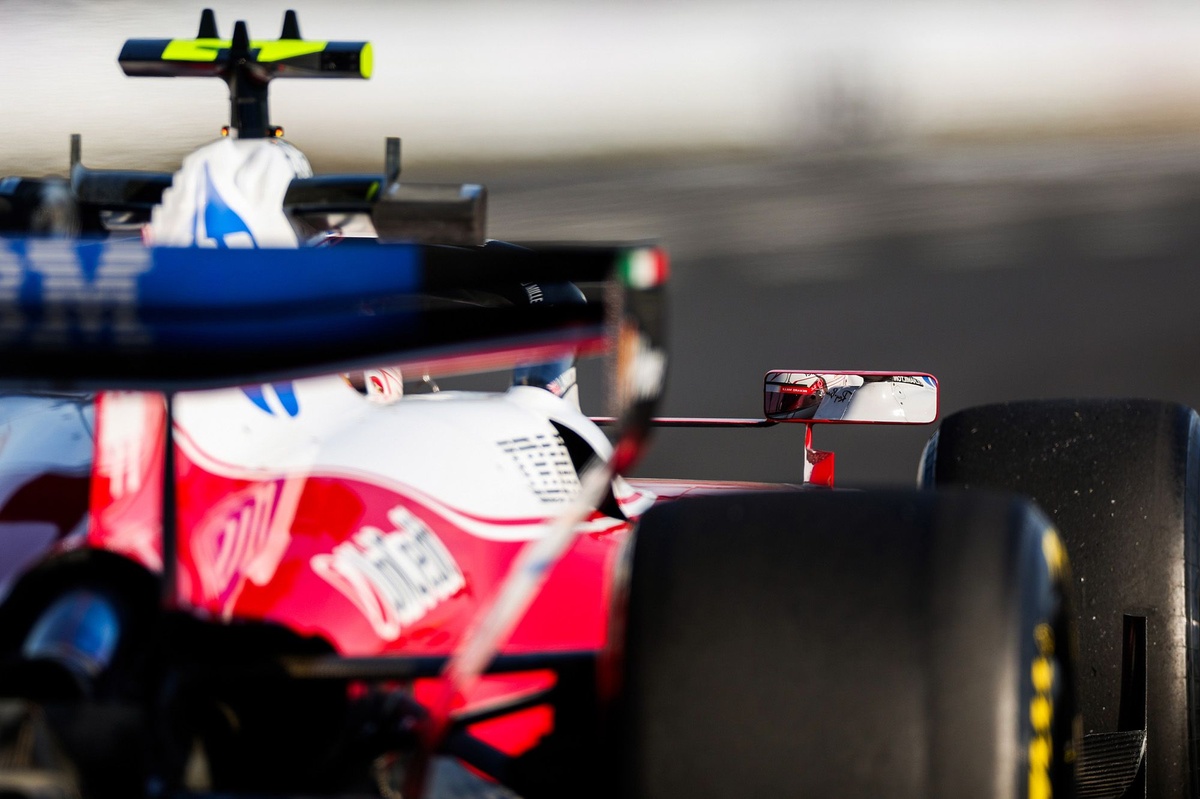
Ferrari brought its so-called (by team boss Frederic Vasseur) 'Macarena' wing to the Formula 1 Japanese Grand Prix. But ahead of free practice on Friday, it decided to not to use the innovative rotating rear wing flap, even though there were enough spare parts in the Suzuka garages to build two cars.
The SF-26s will therefore contest the third round of the calendar with no major changes, even though some rivals have brought development parts to Japan. As early as the end of last season, Vasseur confirmed that unless any new components were believed to be worth a substantial lap time improvement, or were inexpensive to transport, Ferrari would abstain from adding developments to its cars in the early 'flyaway' races.
Now freight is part of the budget cap, it has forced teams to plan the introduction of new parts that much more carefully – especially large ones. Nevertheless, Ferrari's plans have changed slightly in response to the cancellation of the Bahrain and Saudi Arabian GPs.
Ahead of this weekend Charles Leclerc, without revealing too many secrets, admitted that he didn't expect to close the gap to Mercedes at Suzuka. Without writing this event off, Ferrari is prepared to weather some pain here so it can dedicate the month of April – where there will no be no races at all – to fast-tracking some of the planned developments.
Among the main aims is to spare weight from the car ahead of the Miami GP at the beginning of May. In common with several other cars on the grid, the SF-26 is not yet at the minimum weight limit.
The 'Macarena' wing will therefore continue to be fine-tuned on the static bench in Maranello: the solution, currently at the first stage of development, still needs to pass all the reliability tests before being further revised and improved.
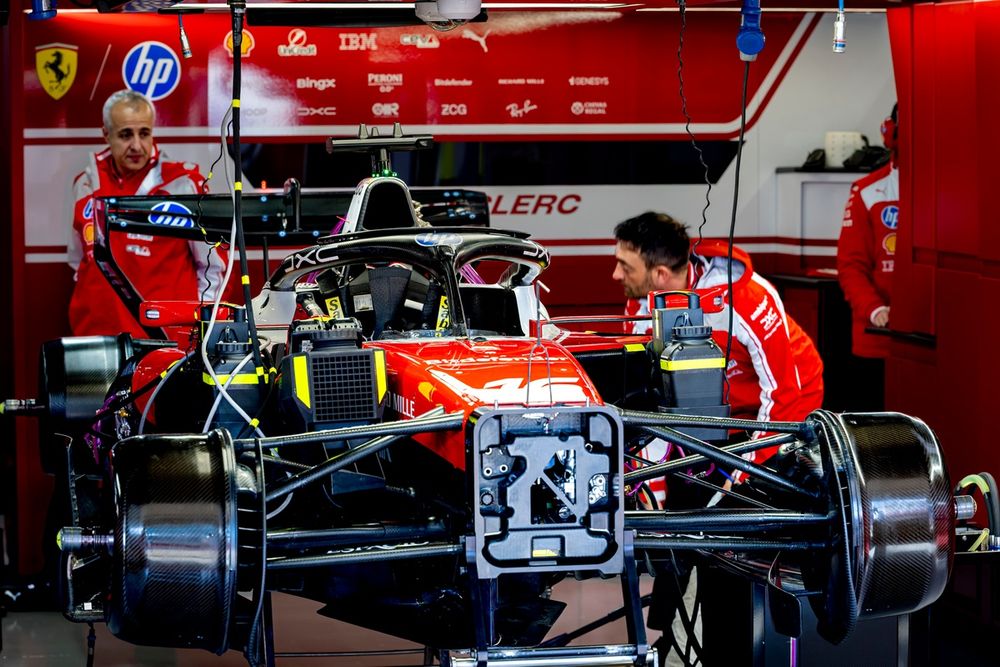
In the current spec, Ferrari measured an increase in straightline performance, but also observed that it induced greater instability than the conventional design when the rear flap was closed. While all the 2026 cars undergo some order of balance shift in the transition between straightline mode and cornering mode – owing to the change of load on the tyres and the centre of pressure migrating forwards – Ferrari concluded the Macarena wing's movement wasn't correlated as well as it could be with that of the front wing.
It's too early to write the rotating rear wing off as an interesting failure but it clearly needs more work, and Ferrari's thinking may shift in response to developments on other cars. Mercedes' front wing remains a topic of debate as to whether its two-phase movement is accidental or deliberate, but it is legal by the letter of the law.
The direct coupling of the effects of the front and rear wings as they transition in and out of straightline mode means the two components have to be developed with a view to them working harmoniously. This adds to the challenge of imitating other competitors' innovations.
Ferrari also brought a new halo flap, made of a different material, to Suzuka for potential evaluation. But on Friday's running it focused on managing the 067/6 power unit with the aim of improving battery charging capacity, which is rather lacking in a direct comparison with the Mercedes.
The Scuderia doesn't plan to abandon the original engine concept, which is shaped around a smaller turbo compressor, but it is keen to use the internal combustion engine even more aggressively.