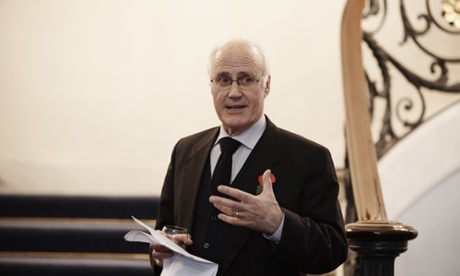
The question is often asked: why should young British people worry about learning other languages if everyone else in the world places such an emphasis on the importance of developing a perfect command of English? But that is exactly the point. In the words of the Australian specialist in language education, Jo Lo Bianco: “There are two disadvantages in global language arrangements: one is not knowing English; and the other is knowing only English.”
Things have changed dramatically in my lifetime. I spent an undergraduate year abroad in Italy in 1968 and had no trouble improving my imperfect Italian since very few people I met spoke English.
When I go back now, I find most young Italian professionals speak English and often some French and/or German. Many years later I married a Dane, and trying to improve my far from perfect Danish outside the home is a very different experience. If you start a conversation in bad Danish, people tend to switch immediately to English! And it’s not just that they speak a bit of English; they by and large speak it very well, certainly well enough to conduct their professional business with clarity and precision, and without hesitation or confusion. The same goes for many other countries, not just in Europe but in the emerging economies. The issue then becomes: why would an international business hire a monolingual English speaker when it can hire a bilingual, trilingual or quadrilingual German, Swede, Korean or Chinese? When it comes to international employment, by sitting on our linguistic laurels we disadvantage the United Kingdom. So I would turn the argument on its head: the fact that we have English only, whereas others have very good English plus another language, means that they are ahead of the game, and we need to catch up.
Education Policy
If we look at the international context, the UK education system is very unusual. Most systems require a broader spread of subjects, and have school-leaving examinations that are more like the International Baccalaureate – requiring a balanced portfolio in which there is room to continue languages together with other essential subjects such as maths, natural sciences, arts and humanities. In Britain by contrast we narrow the focus very early, moving from eight, nine or ten GCSEs to only three A-levels in the last two years of secondary school. The recent move towards the development of the so-called English Baccalaureate has restored languages to their rightful place as one of the core subjects within the academic curriculum, and thus as a good stepping stone towards university admission. The downside is that languages have tended to retrench back into the private sector of education, with the attendant risk of social stratification between those people who have a command of languages and those who do not. We need to ensure that languages have a place at the heart of the curriculum for all our pupils, and that it is possible to continue to study them (and their associated cultures) throughout the school years.
Asset Languages
In the UK we have large numbers of different communities who speak a whole range of languages. I have worked for many years in Manchester, where somewhere between 150 and 200 languages are spoken by long-term residents of the city. Moreover, many of these languages are, like Kurdish and regional varieties of Arabic, on the list of languages identified in Lost for Words, a British Academy report on the need for languages in UK diplomacy and security, as of strategic importance to us as a nation. Yet we have no developed system for accrediting this knowledge. There was until recently a qualification available under the rubric Asset Languages, so that, if you were a native speaker of say Urdu or Turkish, you could get a qualification outside of the national exam system and have something that you could build on in future work. Yet this has now been discontinued. In the same way we see English GCSE as an absolute necessity for native English school leavers, we should develop qualifications for the vast wealth of native speakers of other ‘heritage’ or ‘asset’ languages.
At the same time we must stop conflating command of languages with issues of national identity and immigration. For example, a recent survey posed the question: ‘Can you be English if you don’t speak English?’ By tying together both the language and the nationality issues, such a question renders more difficult the public discussion of either.
In short, there are many challenges that face us in the domain of languages. We urgently need to find ways to meet them if we are to keep up in the global race for excellence.
Guardian Language Festival
The British Academy has partnered with the Guardian to raise the profile of language learning in the UK and celebrate the many benefits of foreign language skills for individuals and society. The second national Language Festival was launched on 17 October and will run until 28 November.
You can find out more about the 2014 Language Festival on the Guardian website, including how to join in existing events and host your own, and by following the#languagesdebate on Twitter.
Professor Nigel Vincent is chair of the Languages and Quantitative Skills Advisory Group and ex-vice president for research and higher education policy at the British Academy.