One of the last bastions of inscrutable paper-based bureaucracy is going digital. George Osborne has announced in the budget the death of the annual tax return and the impending creation of “digital tax accounts” that can be managed on electronic gadgets, with real-time two-way updates throughout the year. No longer will there be that thrilling rush to file your return by 31 January. Giving money to the government in order to top up the profits of privatised industry – sorry, I mean “for schools and hospitals” – will henceforth be so much easier. “Tax really doesn’t have to be taxing,” Osborne punned hilariously.
But maybe tax should be taxing, as well as taxonomic and for some, no doubt, taxidermic. I submit that tax should not be something to be easily managed on your smartphone, like an Ocado shopping list or a menu of dating-app sex partners. Tax should not be friendly. On the contrary, so that we feel the full gravity of giving thousands of pounds to George Osborne, and the full potential violence of the state apparatus that looms behind his face, completing one’s tax obligations ought properly to be an overwhelming bureaucratic nightmare that, in the ingenious opacity of its instructions, is designed specifically to baffle even the experienced assembler of Ikea furniture, and instils a proper paranoia of getting caught even though one has done nothing wrong.
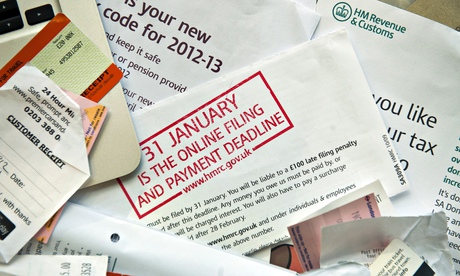
And so it has hitherto been; there was even perverse pleasure in it. As a freelance writer I have always had to fill in a “self-assessment” return. (I have so far resisted the strong temptation to scrawl along the top of each page: “My self-assessment is that I AM AWESOME.”) You’ve been able to submit the thing online for many years, but the end result is still a pdf facsimile of the paper return. And, naturally, there is still an awful lot of other paper around. I already feel nostalgic for the extreme sport of leaving my annual tax adventure until precisely 31 January every year and then spending a whole hideous day trying to sort hundreds of paper scraps into piles and then add up the figures, making educated guesses as to the fare scrawled hurriedly by biro-fisted taxi drivers, or what it was from WH Smith for which the receipt’s rapidly faded violet ink no longer even shows the price.
Let us lament, too, the soon-to-vanish camaraderie of knowing that everyone else is doing the same thing at around the same time, unless they belong to that incomprehensible species of human that handles admin weeks or months early. (You might get run over by a bus, and then wouldn’t it be posthumously annoying to have spent your last day on Earth doing your tax return when it wasn’t necessary?) Indeed, the universal tax deadline has been a watercooler moment for grumblers and virtuosos of brinksmanship everywhere. In abandoning it, the government is arguably abandoning another symbol of its urgently coercive power. We have already lost the mysterious poetry and satisfying rhythm of the department’s old name, Inland Revenue, in favour of the banal alphabetic string HMRC. (Did not the Inland Revenue seem to be a huge black fortress somewhere with a single red eye atop it, staring malevolently out across the country?) It seems possible that if you make the tax system too approachable, people might take it less seriously, and reason in greater numbers that what’s good for tax-dodging corporations is good for them too.
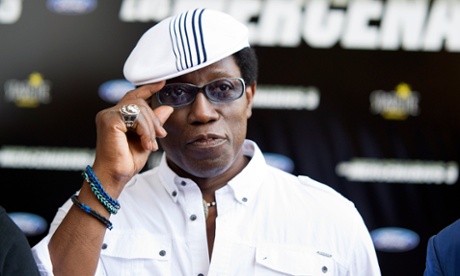
Creative types in particular have, of course, historically struggled with such obligatory bean-counting. Evading tax has perhaps been the prerogative of our greatest artists – from William Shakespeare, who was pursued by authorities in Bishopsgate for non-payment of tax in the late 1590s, to Wesley Snipes, star of the vampire movie series Blade, who was sentenced to three years in prison for tax fraud in 2010. For the rest of us, however, there is a certain grim satisfaction in arriving finally at the correct figure, holding one’s nose while paying it, and then crying into bowls of instant noodles for the next month.
Yet all of this will soon be a distant memory, as people do bits of their tax at random times of the year on their tablets or even their Apple watches. Citizens will even, the government promises, be able to pay their tax “at a time in the year that suits them”. Which does prompt the irritable thought: how stupid do they think we are? Paying your tax a single day before you have to is essentially giving the government an interest-free loan.
The worst part of this news, though, is that it threatens to make worrying about tax part of our daily lives instead of a once-a-year ordeal. Spreading out the pain into a permanent low-level ambient stress is not obviously a psychological improvement. And just imagine: in the future you will never know, when someone is ignoring you in a bar to fiddle with their phone, whether instead of checking their Twitter notifications or sexting a mutual acquaintance they are actually managing their tax affairs. Surely nothing could be more insulting.