I work in business development for a technology company called Publishing Technology and prior to this position I ran a startup mobile marketing company. Before that I worked for 12 years in book publishing. The starkest contrast between technology and publishing, and by a county mile I might add, is the number of women working in the industry. In the five years I spent running the mobile company I only came across one other woman doing something similar to me.
I would attend numerous testosterone-filled trade shows that would always leave me with the overwhelming sensation that I was something of a black sheep. Nine out of 10 attendees at the technology events I went to were men, compared to publishing events, which are almost completely split down the middle. The statistics also reflect this. Since 2001, the number of female IT graduates in the UK entering the field of technology has dropped by almost 50%.
Initially, I was given the opportunity to defect from publishing to mobile by an entrepreneur friend. He persuaded me that I could have a career in technology and that technology jobs are actually very creative. I have to admit I didn't believe him, but wanted to try something different so decided to jump in feet first.
Having now worked in the technology sector for six years, I know that, contrary to common perception, it isn't actually the preserve of the geeks. It's a vibrant, innovative, creative sector that is booming, but sadly there is still a dearth of women attracted to it.
Is this because of the way women view the sector? This year the technology recruiter FDM Group, stated its belief that the relatively low numbers of women who pursue careers in technology stems from perceptions formed in childhood.
As technology has become increasingly critical to and at the forefront of so many industries, from advertising to travel, from logistics to finance, it has evolved significantly, requiring a whole new level of creatively than ever before. When we now refer to IT, we are no longer talking about turning our computers off and on. Indeed within my own specific sector of technology for book publishers there is a huge amount of problem-solving and creative thinking needed to help transition this creative industry from a print-based model to a media, online, digital and print industry.
It is well known that women are more prone to using the right side of their brain, the more imaginative and artistic side, which generally propels them to more creative careers. One could argue that men, tending to make better use of the logical left side of their brains, would be naturally more suited to a career in IT. But that would be the IT of 10 years ago, when a job in the IT sector meant fixing people's computers.
Technology has transitioned at an astonishing rate during the past decade, and software and services have become fundamental to many industries. Nowadays, one of the key qualities of a good technologist is creativity, idea-generation, multitasking, problem-solving and a general keenness to think of new ways of doing things. Are these not attributes that make women ideal candidates for jobs in technology?
There is no shortage of inspiring role models and examples of women who are excelling through careers in technology, many of which appear to have come up through the fast-paced dot-com route. This includes the most innovative online technology companies out there; Facebook, Google and eBay, to name a few. These women have consistently proved that it is possible to climb the ladder and make a name for oneself in the male-dominated IT sector. They also demonstrate that technology's migration towards a more people-centric, creative environment is the ideal hunting ground for many women.
In my opinion, the perception in women of what a job in technology means needs to change. If we continue to view it as a profession that deals with fiddling with wires and servers we will never know the truth or become as successful as these inspirational female thinkers and leaders.
Meg Whitman, CEO of Hewlett Packard
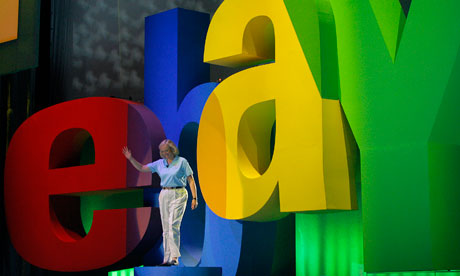
President and CEO of Hewlett-Packard, Meg previously served as an executive in The Walt Disney Company, DreamWorks, Procter & Gamble and Hasbro, before moving to eBay in 1998, where she became president and CEO. During her 10 years with the company, she oversaw expansion from 30 employees and $4m (£2.5m) in annual revenue to more than 15,000 employees and $8bn in annual revenue.
Justine Roberts, founder of Mumsnet
Mumsnet was conceived in early 2000 out of a disastrous family holiday. The idea was to create a website where parents could swap advice about holidays, pushchairs and last night's TV. Eleven years later and who'd have thought it would come to this – the site gets nearly 4m visits per month.
Sandy Carter, vice-president, IBM Software Group Business Partners, IBM
Sandy Carter is a leader in social business, a bestselling author, and a web 2.0 technology expert. She is responsible for setting the direction for IBM's social business initiative, a $100bn market opportunity. In 2009 and 2010, CRN magazine named her one of the 100 most powerful women in social media, internationally.
Marissa Mayer, vice-president, Google
Marissa Mayer leads the product management and engineering efforts of Google's local, mobile and contextual discovery products including Google Maps, Local Search, Google Earth, Street View, Latitude. She started at Google in 1999 as their 20th employee and first female engineer. Fortune magazine has listed her for the past three years on their annual Most Powerful Women's list, and she was also the youngest ever to appear on this list.
Jocelyn Goldfein, director of engineering, Facebook
Jocelyn Goldfein is director of engineering at Facebook, where she helps manage the engineering team and oversees new product design and architecture. Presently, she is focused on Facebook News Feed and Facebook Search. Prior to joining Facebook, she was vice-president of R&D at VMware. Before that, she was director of engineering at email management startup MessageOne.
Martha Lane Fox, lastminute.com
One of the original dot-com entrepreneurs, Lane Fox made £18 million when her company lastminute.com was sold. She is a non-executive director of Marks & Spencer and Channel 4, and is leading the campaign to help Britain's under-privileged have access to the internet.
Jane Tappuni is business development director at Publishing Technology. She joined the company in 2009, after spending 16 years in the publishing industry.
This content is brought to you by Guardian Professional. To get more content and advice like this direct to your inbox, sign up for our weekly Careers update.