Heads you make a fortune, tails you can blame past management and escape with your reputation intact. That, we must assume, is the bargain that has brought Richard Rose and Jim Sutcliffe to Quindell, the beleaguered insurance claims handler.
The duo will share almost 20m share options and are not even obliged to hang around for long to see them. Vesting takes place over the next 12 months and exercise prices start at 68.6p, versus the 107p price to which Quindell’s share price immediately shot.
The pair make a credible double act, no question. Rose, who will be Quindell’s non-executive chairman, had success at credit hire firm Helphire and now chairs Booker and AO World. Sutcliffe was chief executive of Old Mutual and ran Prudential UK. From the point of view of Quindell’s shareholders, the trade is simple and perhaps rational: throw a load of options at experienced managers, and hope you can buy credibility and then revival after the farce of the past year that led to founder Rob Terry’s exit.
But one would hope that Quindell, if it wants to be in the reputation-restoring business, would have the grace to spell out why bumper potential rewards are necessary. Sutcliffe sits on the Financial Reporting Council, so will know what section D.1.3. of the UK corporate governance code says: “Remuneration for non-executive directors should not include share options or other performance-related elements.”
Sutcliffe will be an executive director, so the clause doesn’t apply to him, but Rose will be a non-executive. Why is he being allowed to join the share option fray, rather than policing it from a position of independence? That question is pertinent, since management’s tally of options has now reached an astonishing 12.9% of the share capital.
The plea, naturally, will be “exceptional circumstances”, but companies (even Aim companies) are still expected to spell out what this means in their own cases. The same could be said of the arrangement whereby Quindell will buy consultancy services from a firm where Sutcliffe is a director. Maybe this is a smart move, but, come on – investors deserve a statement about the governance safeguards.
Interim chairman David Currie didn’t provide one, but should have done. He’s upgraded the board, but communication remains a vacuum.
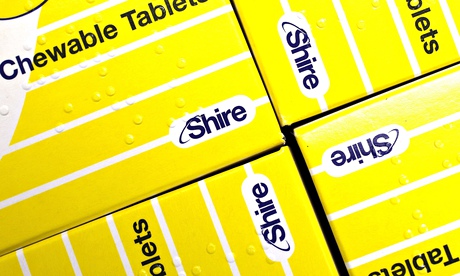
Shire’s indigestion risk
It is only three months since Shire’s deal to sell itself to AbbVie for $54bn collapsed when the US company took fright at the US Treasury’s clampdown on tax inversions.
Shire received a handy $1.6bn break-fee from that episode and it always seemed unlikely that chief executive Flemming Ornskov would let the cash burn a hole in the corporate pocket. So here it is: an agreed $5.2bn cash offer for NPS Pharma, a US biotechnology firm.
The identity of the target is no surprise. NPS is almost a mini-version of Shire in that it concentrates on rare ailments. The odd part, though, is that Shire has struck terms just days before NPS learns whether the US Food & Drug Administration will approve Natpara, the target’s intended treatment for hypothyroidism. Shire is on the hook for the full $5.2bn regardless of the FDA’s decision.
A thumbs-down would reduce NPS’s appeal substantially. NPS has other products, notably Gattex, a treatment for short bowel syndrome that is already on the market in the US, but Natpara might be worth, say, a quarter of the company’s value.
Ornskov is confident the FDA will be as impressed by the clinical data as Shire obviously is. Shire is taking a calculated risk, he argues, and compares it to the difference between buying a baked cake and an “almost baked” cake. OK, but there’s not much of a discount for taking the almost-approved version. Shire is paying a 51% premium to NPS’s share price before the market got a whiff of the deal. At that price, the risk is serious indigestion if the FDA says no, whatever the medium-term potential for cost savings. That cake had better come out perfectly.
Oil price game-changer
If oil analysts could see the future, they would not now be scrambling to catch up. Goldman Sachs’ pundits are the latest to confess that $85 a barrel for Brent in the current quarter is not going to happen. The new forecast is $47, in line with yesterday’s price. Of more significance is Goldman’s long-term forecast to 2018: its assumption falls from $90 to $70 as marginal costs of production fall. If it happens, it’s a game-changer. Consolidation and restructuring, another Goldman prediction, would be a dead cert.