
Today most people fill every spare moment with distractions.
Scroll. Swipe. Tap.
And this is killing our creativity.
Dr Nancy Andreasen, a neuroscientist and the author of The Creating Brain, studied the brains of highly creative people and identified a surprising and striking pattern in their lives.
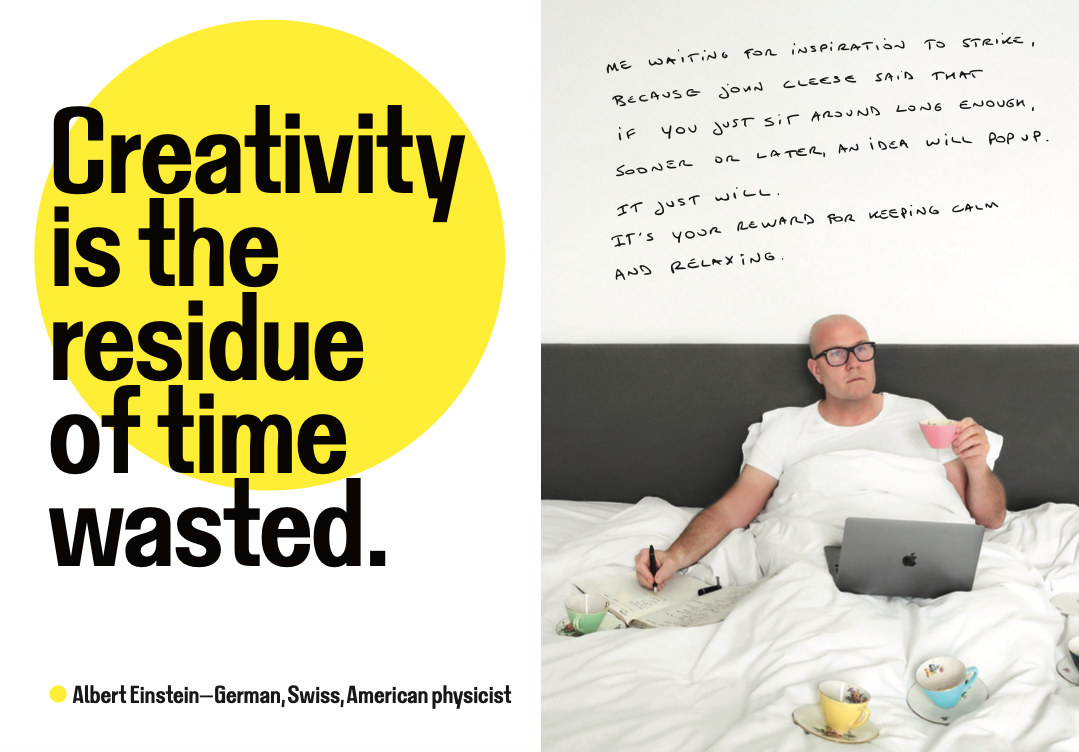
They all took time to do nothing.
Einstein would stare out of the window for long stretches of time, letting his mind wander.
Mozart composed with astonishing speed, but that speed was likely made possible by long, quiet periods of internal processing – not visible 'doing'.
It might feel like you’re doing nothing in these moments – but your brain is actually hard at work.
Doing nothing isn’t passive – it’s active recombination.
Beneath the surface, a network of regions called the Default Mode Network (DMN) lights up. This is your brain’s backstage crew, quietly preparing the next act of inspiration while the spotlight is off. The DMN is activated when you’re not focused on a specific task.
It thrives in the in-between spaces when you’re daydreaming, reflecting, thinking about the past or future, or imagining someone else’s thoughts. It’s the engine of empathy, memory, and mental time travel. Most importantly, it’s where creativity begins to simmer.
When you’re solving a clear-cut problem, your brain switches to a different mode: focused, logical, linear. But when you loosen your grip and let your attention wander, the DMN kicks in. That’s why your best ideas often sneak up on you when you least expect them: mid-shampoo, on the toilet, while doodling, or as you’re drifting off to sleep.
You're not trying – and that's the point.
The DMN connects ideas, stirs memories, and forms new patterns in those quiet moments when you’re not looking directly at the problem.
This is why some of the most powerful creative tools are the simplest: rest, reflection, movement, play, and purposeful pauses.
When you stop pushing your brain and let your mind wander, you’re not wasting time – you’re opening the door to insight.
This isn’t just theory. Creatives across several disciplines have noticed it too.
It appears that I have my best ideas just as I wake up. When my mind is not thinking about daily stuff yet and I am still lingering in that twilight zone of wondering.
Paul McCartney wrote Yellow Submarine in that twilight zone, as he was drifting off to sleep.
Designer Massimo Vignelli explained that he gets his ideas while shaving, which he emphasises, is the reason why he doesn’t have a beard.
So remember: sometimes the best way to create is to stop creating – just for a moment – and let your backstage brain take over.
Isn’t it wonderful that some of your best works are created while you’re 'not working' at all?
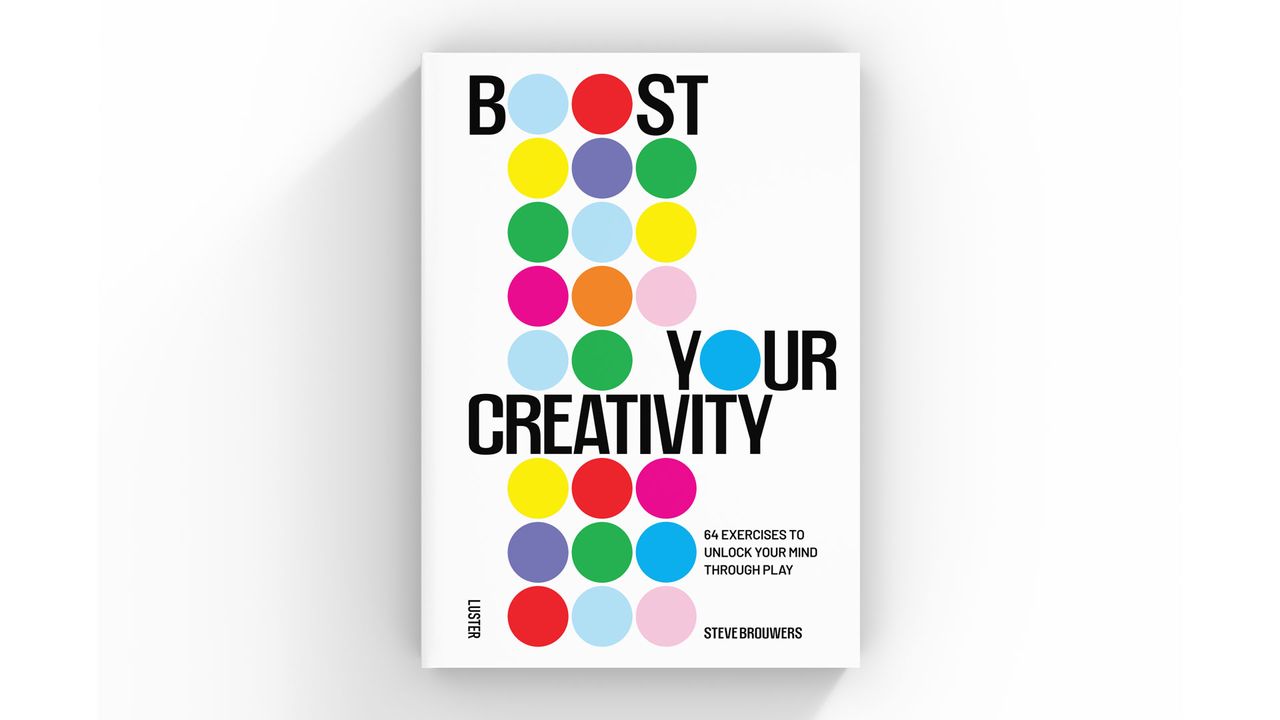
This is an extract from Boost Your Creativity by Steve Brouwers, published by Luster and available now from all good bookstores.