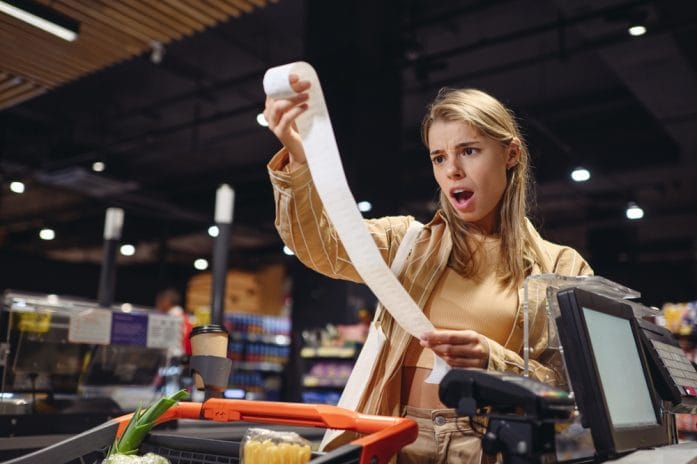
That moment at the checkout hits like a jump scare. You didn’t buy lobster or fancy olive oil, yet the total looks like you accidentally financed a small appliance. Grocery shopping has turned into a weekly ritual of raised eyebrows, frantic receipt scanning, and quiet math in the parking lot.
It’s not just you, and it’s not just imagination. A mix of economics, logistics, packaging tricks, and human psychology all collide under those fluorescent lights, turning routine errands into budget stress tests.
Inflation Is Not Just A Buzzword
Inflation is the headline act behind grocery sticker shock, and it works in layers rather than a single dramatic leap. Food prices rise when the costs of fuel, labor, fertilizer, and packaging rise, and those increases stack on top of one another. Even a small increase at each step of the supply chain can noticeably raise the final shelf price. Inflation also tends to linger in groceries longer than in some other categories because food production relies on physical inputs that cannot be easily replaced or automated away.
Seasonal factors add another twist, as weather disruptions or poor harvests can tighten supply and raise prices quickly. When inflation cools elsewhere, grocery prices often stay elevated, which makes them feel especially stubborn.
The Long And Expensive Journey From Farm To Cart
Food does not teleport from farms to shelves, even if it sometimes feels like it should. A single item may be harvested, processed, packaged, stored, transported, and stocked by several different companies before you see it. Each handoff involves fuel, wages, equipment, and insurance, all of which have become more expensive in recent years.
Transportation costs matter more than many shoppers realize, especially for refrigerated and frozen items that require constant energy use. Global disruptions, such as shipping delays or geopolitical tensions, can also ripple into local grocery prices. By the time your groceries reach the store, they are carrying the financial weight of a very long trip.
Subtle Package Changes That Fool The Eye
Sticker shock often comes from comparing today’s prices with yesterday’s memories, and packaging plays a quiet role in that confusion. Many products now contain less than they used to, even though the box or bag looks nearly identical. This practice allows companies to raise the effective price without changing the shelf tag as dramatically. Your brain expects the old quantity, so the new price feels unfair even when the math technically checks out. Over time, repeated small reductions add up, leaving shoppers feeling like money disappears faster than groceries. It is not deception in the legal sense, but it absolutely affects how expensive shopping feels.
Why Your Brain Thinks Groceries Cost More Than They Do
Grocery shopping triggers a unique kind of price awareness because purchases are frequent and unavoidable. You might not remember what you paid for a couch five years ago, but you remember last week’s milk price. This constant comparison makes even modest increases feel dramatic. The layout of stores also emphasizes spending, with totals climbing steadily as items pile into the cart. Digital receipts and loyalty apps reinforce this awareness by tracking every penny. Because groceries are necessities, there is little emotional payoff to soften the sting, unlike dining out or travel.

The Same Cart Feeling Heavier Every Year
Even when prices rise gradually, the emotional impact compounds over time. Wages often lag behind food costs, creating the sense that grocery bills are racing ahead. Shoppers respond by switching brands, skipping treats, or buying in bulk, yet the total still feels high. This creates frustration, because effort does not always equal relief. Over time, grocery shopping becomes less about choice and more about compromise. That emotional weight is a big reason sticker shock feels personal rather than abstract.
Why This Shock Feels So Personal
Grocery sticker shock is the result of many small forces working together, not a single villain hiding in aisle five. Inflation, supply chains, packaging changes, and human psychology all play their parts. Understanding these factors does not lower the total, but it can make the experience feel less mystifying.
Everyone has their own grocery moment that made them stop and stare at the receipt. Tell us your thoughts or favorite stories in the comments section below.
You May Also Like…
How To Regularly Save Money At The Grocery Store
The 6 Best Ways To Save At The Grocery Store In 2026
9 Everyday Items You’re Wildly Overpaying For at the Grocery Store
7 Tactics Grocery Stores Use to Keep You From Thinking About Price
How Your Grocery Store Loyalty Card Could Trigger Higher Prices
The post Why Does Grocery Shopping Create So Much Sticker Shock appeared first on The Free Financial Advisor.