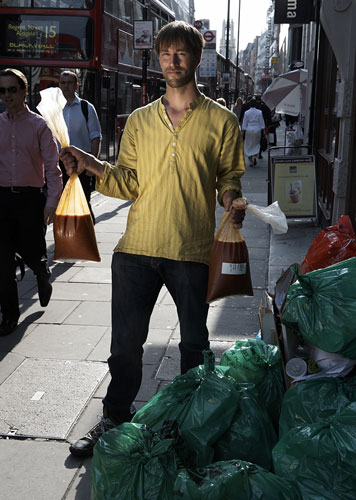
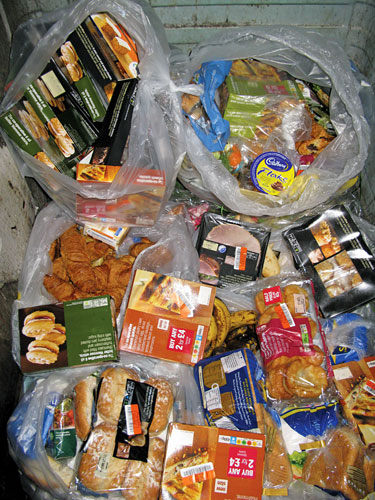
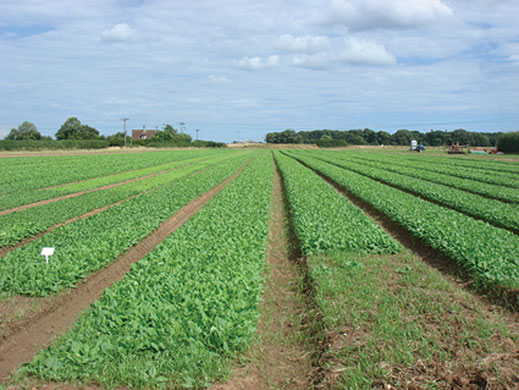
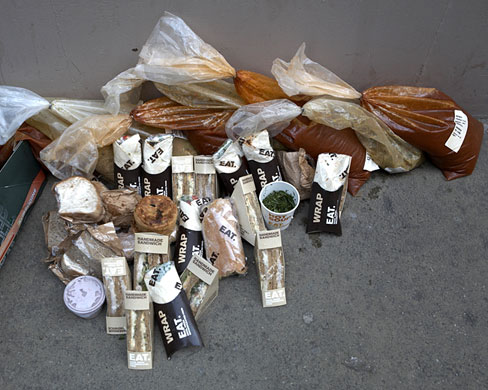
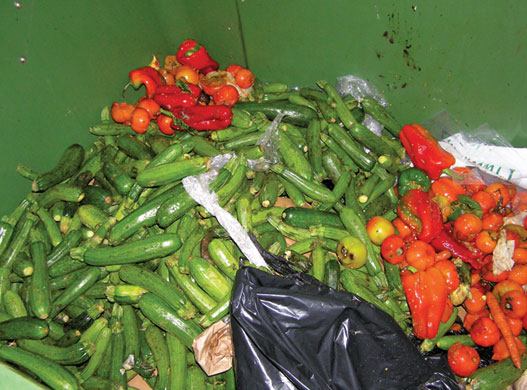
Tristram Stuart with large bags of spicy tomato and basil soup discarded by the sandwich chain Eat four days before its sell-by datePhotograph: Andy HallThe contents of a bin outside a village shop in SussexPhotograph: Tristram StuartA crop of spinach rejected by a retailer because there was some grass growing among it, left to rot in the field in NorfolkPhotograph: Laura Yates
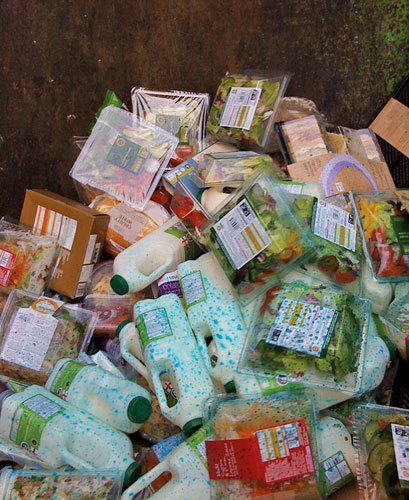
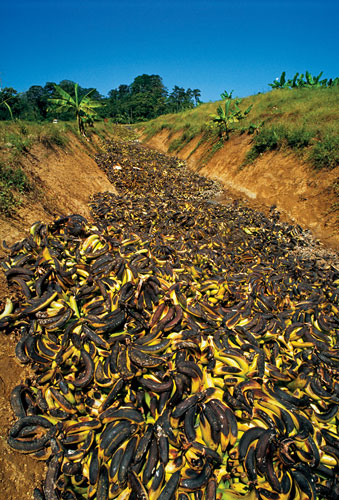
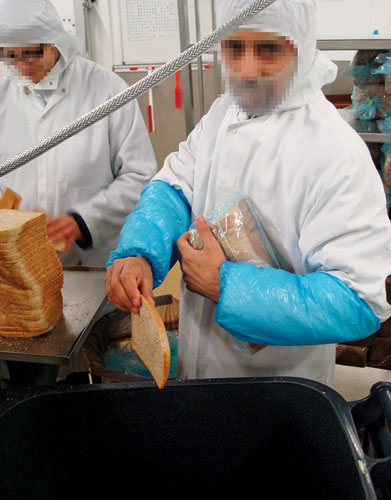
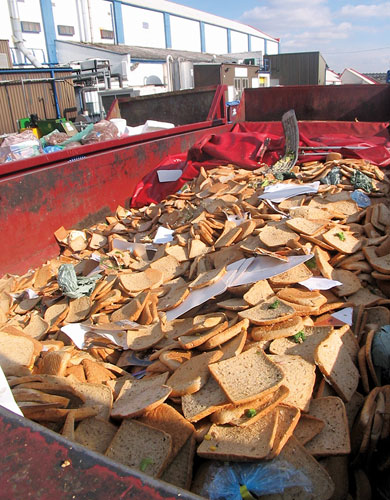
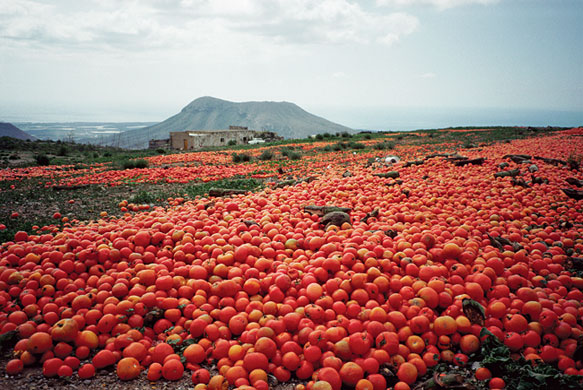
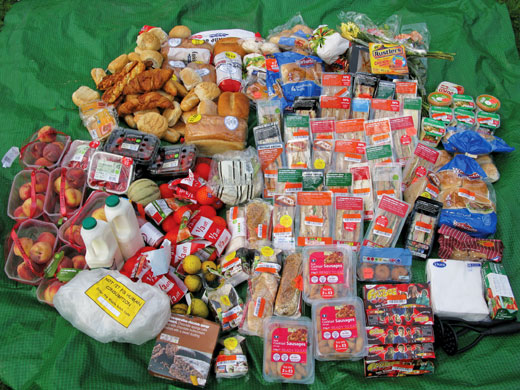
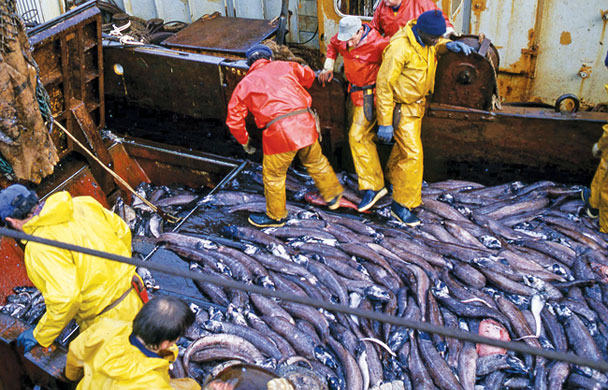
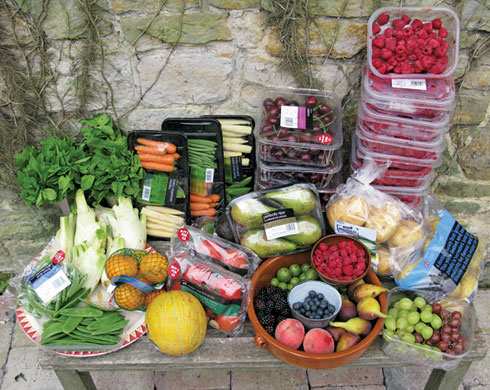
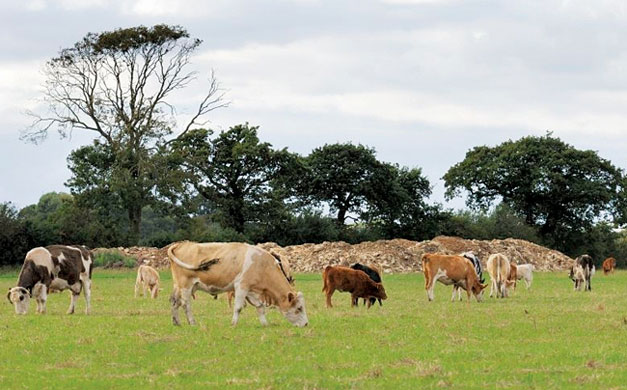
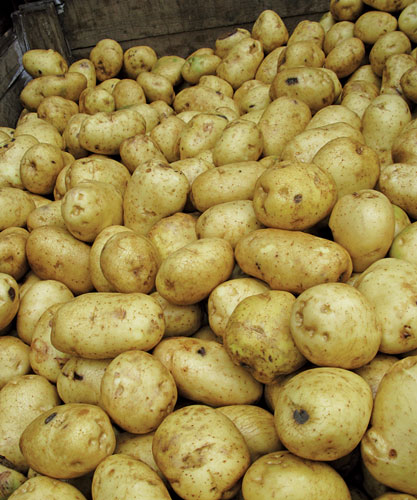
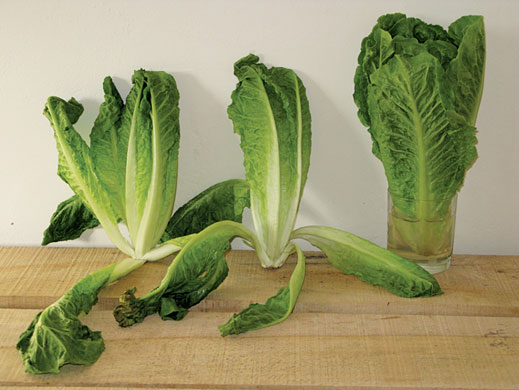
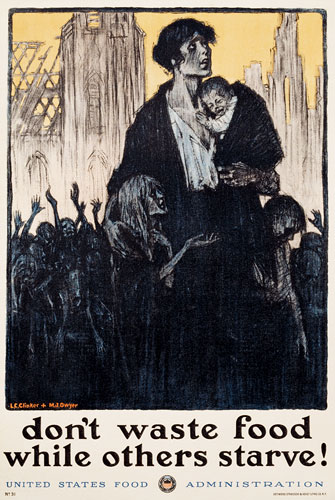
Contents of the bins of a Marks & Spencer supermarket in central London, sprayed with blue dyePhotograph: Phillip BirchThousands of imperfect bananas lie in a drainage ditch, dumped by United Fruit, in Rio Estrella, Costa RicaPhotograph: Gary Braasch/CorbisMarks & Spencer requires its sandwich supplier, Hain Celestial Group, to discard four slices from each loaf: the crust and the first slice at either endPhotograph: Simon InglethorpeThis practice means 13,000 slices of fresh bread are discarded every day from a single factoryPhotograph: Simon InglethorpeSurplus oranges in California, USA Photograph: Roger Ressmeyer/CorbisSoups and sandwiches discarded by the sandwich chain Eat in Holborn, LondonPhotograph: Andy HallThe contents of the bins of an organic fruit and vegetable shop in SussexPhotograph: Tristram StuartSurplus tomatoes dumped on farmland in TenerifePhotograph: Sally A. Morgan/Ecoscene/CorbisThe contents of the bins of a village Co-op store, including: 86 bread rolls, 12 loaves, 248 cocktail sausages, 42 sandwiches, 30 peaches, 36 oranges, 117 tomatoes, one melon, one cauliflower, nine lemons, six sausage rolls, six pork pies, 11 cheese twists, 10 croissants, 45 tubes fromage frais, four pots of yoghurt, four pints of milk, 18 scotch pancakes, one chocolate cake, one toffee cake, two packets of crisps, seven sauces and dips, one smoothie and one pack of chocolatesPhotograph: Tristram StuartUnwanted fish discarded from an industrial trawlerPhotograph: Lionel FlageulA selection of fresh produce from the bins of Tristram Stuart's local WaitrosePhotograph: Tristram StuartA heap of composted poultry byproducts maturing next to a field of grazing cattle. One bullock is grazing right up against the heapPhotograph: supplied by Robert PerseyPotatoes rejected for cosmetic reasons at a potato farm in Kent that supplies TescoPhotograph: Tristram StuartThree identical Romaine lettuces purchased at the same time and stored for ten days, from left to right 1) at room temperature 2) in the fridge and 3) in a glass of water like cut flowersPhotograph: Tristram StuartA first world war-era poster from the US food administrationPhotograph: LLC/Corbis
Sign up to read this article
Read news from 100’s of titles, curated specifically for you.