
In any given year in Edinburgh, a new clutch of “YouTube comedy stars” pitch up to try their hand at live comedy, fringe-style. We’re a decade in to the age of online comedy, or at least the phase that saw it recognised by the industry as a major medium for comedy. As indeed it was – even if a reliable production line linking YouTube to live performance hasn’t materialised. The breakthroughs remain sporadic and unpredictable, although the failures fail in interesting ways.
To cite a few recent examples, the American act Miranda Sings – real name Colleen Ballinger – was roundly panned at last year’s fringe for a show that pandered to her (mainly teenage) online devotees at the expense of the uninitiated.
Humza Arshad came to the 2013 festival styling himself “the most viewed comedian in the UK”, on the basis of the 47m YouTube views for his series Diary of a Bad Man. His act was promising, but basic, and, contrary to the bombastic billing, lacking in confidence. (Arshad has lately been recruited by East Midlands police to combat extremism in schools, so his live career has taken off, albeit in an unexpected direction.)
That same summer, the online stars of CollegeHumor.com, Jake and Amir, took a juvenile set about cock, balls and cretinous US culture to Soho theatre, London.
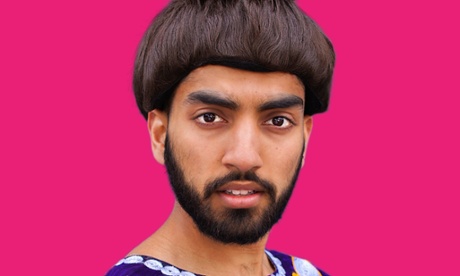
This week, I saw Maawan Rizwan’s show FLUU at the Pleasance. You can’t discuss online comedy stars without the stats to substantiate them, so let me just say that Rizwan’s YouTube channel MalumTV has attracted 20m hits and 100,000 subscribers. He didn’t have the most successful show on my visit: the crowd was low-level rowdy (always a danger if your gig starts at midnight) and Rizwan understandably got distracted. As with Arshad – although their acts are totally different – Rizwan looked like a performer who was still finding his live comedy feet, and had yet to adjust to the higher standard to which fringe, as opposed to YouTube, comedy is held.
To begin with, he looks pretty distinctive in online comedy terms, in that he’s practising an art form – clown – that is as live as it gets. If you crossed Sam Simmons with Dr Brown (whom Rizwan recalls with his beard, Oriental robes and sultry air), you wouldn’t be far from this flirty-absurdist mashup, as our host tries to eat popcorn with clothes-peg fingers, makes a step ladder vanish (it’s not hard to see where), and challenges us to a game of “Jamaican or Geordie?” accents. It all tapers off a bit, though, as Rizwan’s clown persona falls away in favour of self-conscious tomfoolery (“It’s just stupid – what are we doing in this cabin?”) and narky backchat with the crowd.
The world of online comedy is now too vast to generalise about, and ranges from bedroom hobbyists – which is how the greatest of them all, Bo Burnham, started – to professional performers using the web as a way in to comedy. On this year’s fringe, Jenny Bede perhaps fits in the latter category. It’s clear, however, that the online context – where attention spans are short, and where the audience tends to be younger – is more forgiving of broad, quick-hit comedy, which can look pretty attenuated across a long-form hour on the Edinburgh fringe.
And of course, recorded comedy and live comedy are different beasts. We never expected David Jason to perform live comedy; there will be many YouTube stars who’ve found their ideal medium and will stay there.
New routes of entry can only be good for comedy, of course. Without the internet, we may never have had Limmy (“Is he the first dotcomic?” the Guardian asked eight years ago) and the Rubberbandits, to cite two fantastic examples. There are plenty more online stars up here – Damien Slash is one – whose live work I’m keen to see. But online is another country: they do things differently there. And YouTube stardom is no guarantee of glory in three dimensions.












