Nancy Muller is continually impressed by the grace and ingenuity of girls dealing with their menstrual periods. "Every month, all around the world," she says, "there are girls who don't know what's happening when they get their first menstrual period, who face shame and embarrassment and taboos around the subject, and on top of all that, who don't have easily available means to absorb the blood."
Menstruation, says Nancy, program officer with PATH's Technology Solutions program, is a complex subject with repercussions for public health, global development, women's empowerment, and beyond. To commemorate the first global Menstrual Hygiene Day, we asked Nancy to help us understand the issues by answering one seemingly simple question:
Why do girls need sanitary pads to stay in school?
Nancy Muller: You start to see a real difference in rates of school attendance for boys and girls as they move from primary school to secondary school. Rates for girls can be 8 to 10% lower than for boys. There are a lot of reasons for this. If there's a need for help in the home, for example, often a girl may be held back.
Nancy explains why girls need more options for menstrual hygiene and offers some alternatives in this video from Ignite Seattle.
Now, if a girl doesn't have access to sanitary pads or a safe and clean place at school to change them, that becomes another reason to keep her home. She starts missing a few days every month, she falls behind, and she may eventually drop out. In fact, several studies in Sub-Saharan Africa found that if you provide a girl with underwear, sanitary pads, and health education, her chances of staying in school are 20 to 50% higher. This is especially true in rural settings.
Keeping girls in school is important to health and development—not only for the girls but for their communities and countries. When girls stay in school, they are less likely to get HIV infection, wages go up, teenage pregnancy rates go down, and the children they have are healthier. You educate a girl and you change the world.
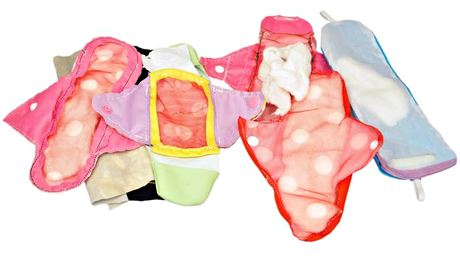
So, why not make sanitary pads more widely available? There are challenges, and one of the biggest is the ongoing cost. Another is that most sanitary pads are disposable. In countries that don't have a good sanitation or waste disposal system, that can be big problem.
At PATH, we're exploring potential solutions that are appropriate and affordable. For example, we've been looking at ways to make a hybrid reusable pad less expensive, easier to wash, and quicker to dry. Maybe we could even package those with a booklet so girls could learn what's happening when they start to menstruate.
And another option that I'm excited about right now is the menstrual cup. These cups catch blood and can last for a decade. And they can be used for 10 to 12 hours at a stretch—a full school day. Think of what that could mean to a girl!
This piece originally appeared on the PATH blog .
All content on this page is produced and controlled by PATH.