For a moment, it really did look like Brett Ratner might never work in Hollywood again. In October 2017, a former talent agency employee accused the Rush Hour director of rape. Days later, as Ratner began suing her for libel, a further six women came forward to accuse him of sexual misconduct.
Olivia Munn alleged he had “furiously” masturbated in front of her on a film set. Another actor, Natasha Henstridge, claimed he “physically forced” her to perform oral sex. Arriving in the wake of the high-profile allegations against Harvey Weinstein that sparked the #MeToo movement, the accusations were taken seriously. Within days, Ratner’s multi-million-dollar production deal at Warner Bros had been shredded, and Playboy announced that his planned Hugh Hefner biopic had been, like the filmmaker himself, decisively cancelled.
Thus began a period of Hollywood exile for Ratner, who “categorically” denied all the allegations against him and has never faced charges. Once considered one of the most bankable filmmakers in the industry, it has been over a decade since the 56-year-old last brought a film to theatres.
That will change this weekend when Ratner returns with Melania, a feature-length documentary about the First Lady, holding its premiere Thursday night at Washington DC’s Kennedy Center. Ratner’s connection to Donald Trump dates back to 2011, when he filmed scenes for Tower Heist at Trump Tower. Trump later told guests at former Treasury Secretary Steven Mnuchin’s 2017 wedding that he was a fan of Ratner’s work — particularly Rush Hour.
Ratner’s decision to answer Melania Trump’s call in 2024 has since led to additional Trump-focused projects, including a documentary on the Abraham Accords. According to The Wall Street Journal, the director has grown close to the couple while living in an eight-bedroom house in Mar-a-Lago.
Next, he is set to direct Rush Hour 4, a sequel to his blockbuster action-comedy trilogy, which Paramount greenlit after the president personally requested it. Ratner’s unexpected career resurgence is further evidence of an old adage he’s long dedicated himself to proving: It pays to have friends in high places.
Born in Miami Beach in 1969, Ratner got his first taste of life on a film set when he appeared as an extra in 1983’s Scarface. A few years later, while studying at New York University, he became friends with Def Jam co-founder Russell Simmons and began making music videos for his artists. In recent years, Simmons has himself faced multiple accusations of rape and sexual misconduct.
After establishing himself as a music video director, Ratner was just 28 when he made his feature debut with Money Talks in 1997. The Chris Tucker and Charlie Sheen-led comedy was widely panned by critics but proved a box-office success, grossing nearly double its $25 million budget.
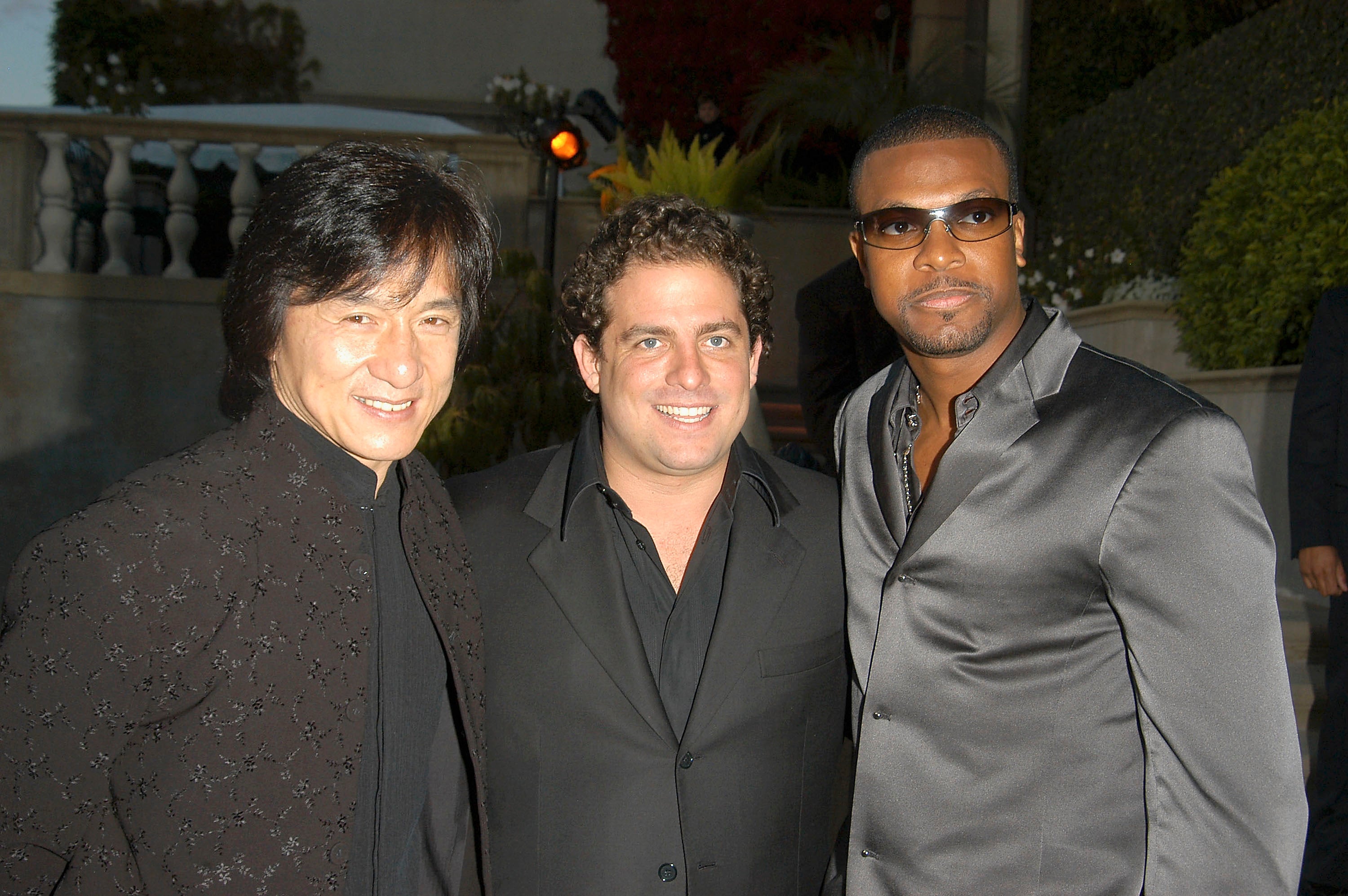
The following year, Ratner had the runaway success that really made his name. He paired Tucker with Hong Kong martial arts icon Jackie Chan for Rush Hour, which made $245 million on a $35 million budget. Ratner recalled later that he celebrated by calling Quentin Tarantino and saying: “I got the biggest check of my life and I have never been on a jet so I am renting one, let’s go to Vegas!”
From his earliest days in the industry, Ratner surrounded himself with high-profile figures he considered friends and mentors, such as The Godfather producer Robert Evans. When he received a star on the Hollywood Walk of Fame early in 2017, he told Variety: “My closest friends are James Toback, Roman Polanski, Warren Beatty, Bob Evans.”
Just months later, Bugsy screenwriter Toback became another high-profile subject of #MeToo allegations and was recently ordered to pay a total of $1.7 billion to 40 women who accused him of sexual abuse and other crimes. Polanski, meanwhile, pleaded guilty to having sexual intercourse with a 13-year-old in 1977 before fleeing the United States, and has since faced further rape accusations.
Ratner’s successful box office run continued into the 2000s, a decade which saw him direct two Rush Hour sequels as well as big-budget entries in the Silence of the Lambs (2002’s Red Dragon) and X-Men (2006’s The Last Stand) franchises. During this period, he styled himself as a jet-setting playboy, throwing lavish parties at his home at Hilhaven Lodge, the Beverly Hills estate once owned by Casablanca star Ingrid Bergman. He dated Serena Williams, making an appearance in the tennis superstar’s reality show Venus & Serena: For Real in 2005, in which he repeatedly yelled “Sexy legs!” at her sister Venus during a match. Serena broke up with him, on air, soon after.
In 2008, a reporter for the Jewish Journal wrote that while interviewing Ratner in the “gold lamé disco basement” at his home, he asked her out on a date, before claiming to be misunderstood. “I don’t drink; I don’t do drugs,” he said. “Do I like to have fun? Yeah. Do I like to enjoy myself, enjoy my life? Yeah. But I’m not a decadent person. I’m not into dark stuff. I’m just a nice Jewish kid from Miami Beach who loves movies and pretty girls.”
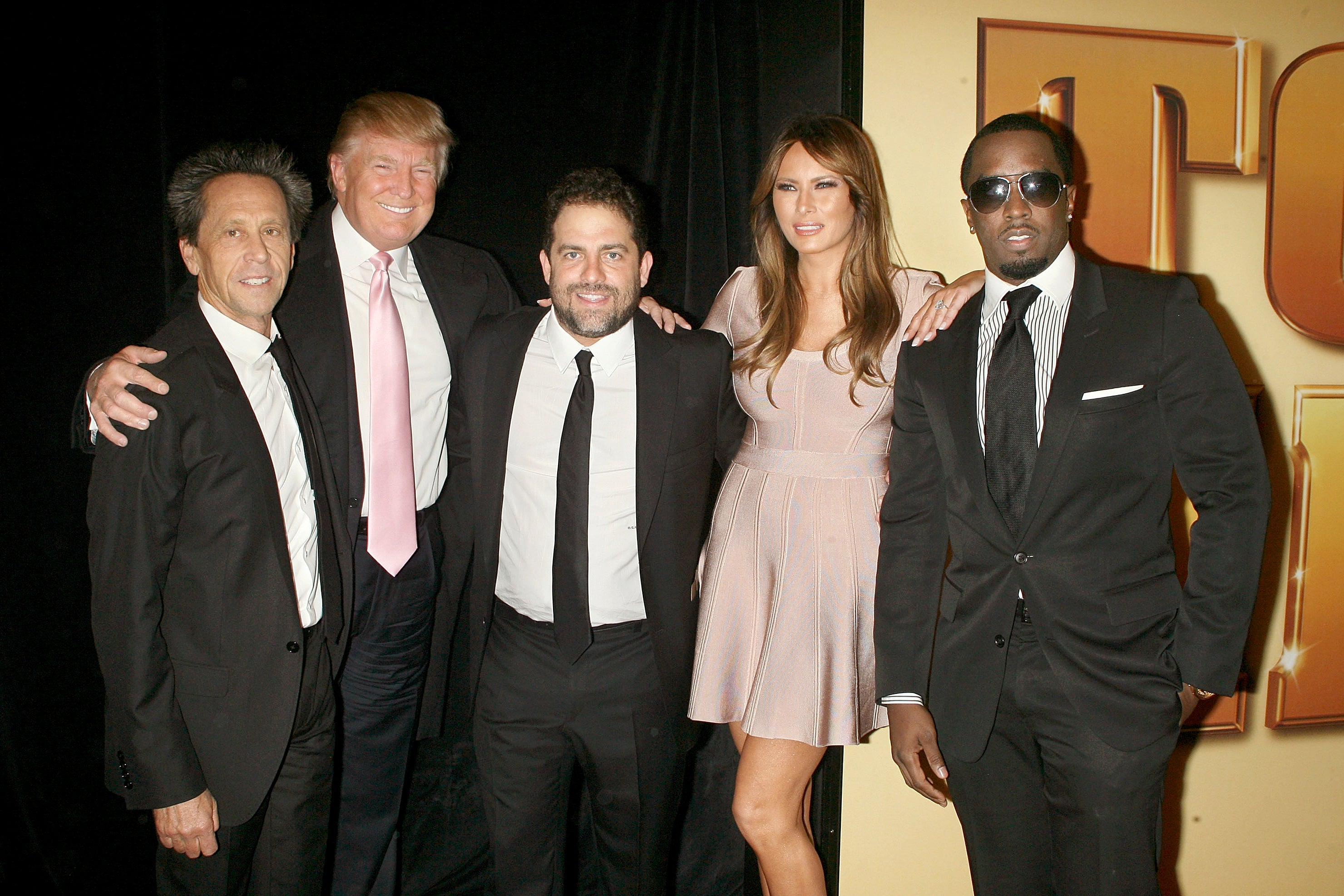
Ratner came into contact with the Trumps in 2011 when he directed the action comedy Tower Heist, based on an idea by Eddie Murphy, who originally pitched the film as “Trump Heist” and envisioned an all-Black crew of disgruntled workers stealing from Trump Tower. In the final film, all references to Trump had been removed, although several of his New York properties were used in the production. At the New York premiere, Ratner was photographed alongside Donald, Melania and disgraced rap mogul Sean “Diddy” Combs, who is currently serving a four-year sentence for prostitution-related charges.
Even before #MeToo, Ratner’s brash arrogance had begun to get him into trouble. While promoting Tower Heist, the director used a homophobic slur when he declared: “Rehearsal is for f***.” He apologized, but was nonetheless forced to resign from producing that year’s Oscars.
After his exile from Hollywood, Ratner continued to display an unerring ability to attach himself to the wealthy and powerful. In 2023, he relocated to Israel, where he became close with Israeli Prime Minister Benjamin Netanyahu. That same year, he posted a photograph of himself with Netanyahu at the United Nations General Assembly on Instagram, writing: “Whatever your political predispositions are, a historic Peace between Israel and Saudi Arabia is good for the world. WE should all be rooting for it!!!!”
He is less keen to brag about some of his other powerful connections. Last month, a photograph of Ratner was among the files released by the Department of Justice related to their investigation into Jeffrey Epstein. In an undated picture, Ratner is seen hugging a topless man who has been identified as the late model agent and Epstein associate Jean-Luc Brunel. Brunel died by suicide in a prison cell in Paris in 2022 while facing charges of raping a minor.
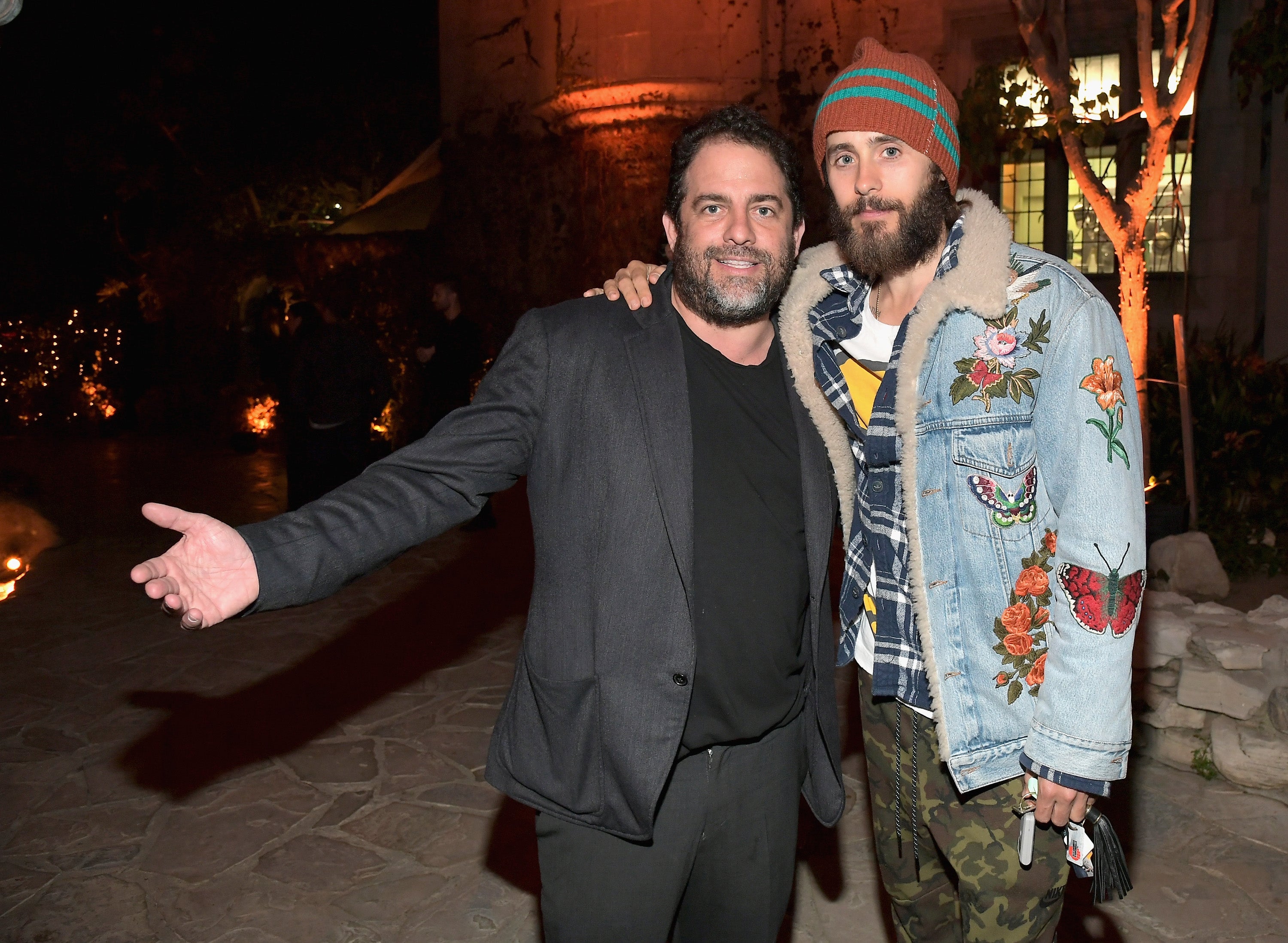
When Melania Trump decided she wanted to make a documentary about herself late in 2024, it was Ratner who answered the call. “He understood how to bring this cinematic, stylized quality to the film that the First Lady envisioned,” Marc Beckman, Melania’s senior advisor, told The Times.
Beckman, who has known Ratner since his advertising agency hired the director in 2007 for a provocative jeans campaign starring a topless Heidi Klum, also negotiated the unusually high $40 million deal for the documentary with Amazon MGM.
“I thought I was being punked,” one veteran agent told Puck last year about learning of the inflated fee, while Hollywood insiders have noted that Amazon did the deal weeks after Jeff Bezos’s Washington Post pulled their endorsement of Kamala Harris and Bezos appeared prominently at Trump’s inauguration.
Ratner’s big-screen comeback, then, might not prove to be the tell-all revelation it is being marketed as. Still, the film has already made at least one fan happy.
“MELANIA, the Movie, is a MUST WATCH,” wrote Donald Trump on social media this week. “Get your tickets today — Selling out, FAST!”
Melania premiere live: Most of Donald Trump’s kids, including Barron, skip event
Former Radio 1 DJ Andy Kershaw ‘unable to walk’ after cancer diagnosis
Melania documentary pulled from South African theaters for ‘political reasons’
The secret life of Melania Trump – and what her new movie tells us about her marriage
How the Melania Trump documentary became 2026’s most mysterious film
Frederick Wiseman: the best American filmmaker you’ve (probably) never heard of